
Las Vegas Window-Covering Safety
Compare cordless blinds, motorized shades, shutters and secure custom-fit options for children, pets, rentals, businesses and high windows.
What Does Las Vegas Window-Covering Safety Require?
Safe window coverings use cordless or inaccessible controls whenever possible, remain securely mounted, operate without forcing, and stay clear of cribs, beds, furniture, pets, doors and electrical hazards. In homes where young children live or visit, cordless blinds, cordless shades, shutters, motorized shades and other products without accessible operating cords are the preferred options.
Existing corded products should be inspected for free-hanging loops, damaged cords, missing tension devices, loose brackets and accessible inner cords. Moving furniture away from windows can reduce climbing access, but it does not make a hazardous corded product equivalent to a cordless one. Damaged or outdated coverings may need replacement rather than an improvised repair.
Motorized products add convenience and can remove many exposed controls, but they still require proper motor sizing, safe battery access, secure brackets, clear travel and qualified electrical work when hardwired. Commercial shades, exterior solar screens and large high-window products should be installed with appropriate equipment and property approval.
Why Window-Covering Safety Matters in Las Vegas
Window coverings are used every day, yet many safety problems remain easy to overlook. A dangling cord may look harmless until a child climbs onto a sofa. A loose bracket may hold for months before a large shade pulls away from the wall. A rechargeable motor above a staircase may require unsafe ladder access. A commercial roller shade may interfere with a door or alarm sensor if it was measured without reviewing the room.
Las Vegas homes often have large windows, sliding doors, high ceilings and expansive glass. Summerlin and Henderson properties may include second-story or twenty-foot openings. Older homes in Las Vegas and Winchester may have uneven frames or aging corded blinds. Rental homes and multi-unit properties may contain products installed by different owners over many years.
Landlords, property managers, parents, grandparents, renters, interior designers and business operators all have a role in safety. The safest product is not simply the newest product; it is the product that matches the window, remains securely mounted, has an appropriate control system and can be operated and maintained without creating a fall, cord, electrical or impact hazard.
This guide explains safer product choices, warning signs, homeowner checks and situations where repair, upgrade or replacement deserves consideration.
Cordless Controls and Window Blind Cord Safety
Why accessible cords are a concern
Pull cords, continuous loops, inner lift cords and tilt cords can create entanglement hazards for young children. Hazards can exist even when a cord is partly hidden behind fabric or furniture.
Cordless lift
Cordless blinds and shades are raised by moving the bottom rail or using a concealed internal mechanism. The product should lift evenly and remain at the selected height. If it drops, tilts or binds, stop forcing it and request service guidance.
Motorized control
Motorized shades use a remote, wall switch, app or schedule. They remove the need for many exposed lift cords, though power cables, charging cords and control chains must still be managed safely.
Shutters
Plantation shutters use framed panels and louvers rather than lift cords. Panels need secure hinges, magnets or catches, and louvers should move without excessive force.
Short or inaccessible controls
Some specialty products may use short helper cords or controls designed to remain inaccessible. Confirm how the exact system complies with current safety requirements and how it should be installed.
Existing older corded products
Do not tie cords together, create new loops or use makeshift hooks. If young children live in or visit the property, replacement with a current cordless product is the safer direction to consider.
Child-Safe Window Covering Planning
Choose cordless products
In nurseries, bedrooms, playrooms, family rooms and homes visited by young children, start with cordless blinds, cordless cellular shades, roller shades, shutters or motorized products.
Move climbable furniture
Cribs, beds, sofas, toy chests, chairs and shelving should not provide access to windows or controls. Children can climb quickly, so furniture placement should be reviewed whenever a room is rearranged.
Secure every bracket
Window coverings should be mounted with hardware appropriate for the wall, trim or frame. A shade that pulls loose can fall or expose hardware.
Keep controls inaccessible
Remotes, charging cords and wall switches should be placed where children cannot play with them. Continuous-loop controls require their approved tension or hold-down device.
Inspect inner cords and damaged slats
Broken slats, torn fabric and exposed internal cords can create sharp edges or new loops. Damage should be addressed promptly.
Do not rely only on supervision
A room can become unsafe during a brief distraction. Product choice, installation and furniture placement should reduce reliance on constant adult intervention.
Pet-Safe Blinds, Shades and Shutters
Cats and climbing
Cats may climb drapery, paw at cords or sit on window sills. Cordless products and rigid shutters reduce accessible strings, but panels and slats still need secure installation.
Dogs and low windows
Dogs may push against shades or blinds to see outside. Flexible slats can bend, and bottom rails can strike the animal when released. Consider shutters, durable roller shades or raised stopping positions where appropriate.
Chewing hazards
Charging cables, remote cords and low chains should remain inaccessible. Damaged electrical accessories should be removed from service.
Shade travel
Motorized products should move through a clear path. Pet beds, toys and furniture should not sit where the bottom rail closes.
Exterior screens
Exterior solar screens are not pet barriers unless specifically designed as such. Do not assume standard mesh will restrain an animal or support weight.
Window-Covering Safety Comparison Table
| Safety Concern | What Homeowners May Notice | Why It Matters | Safe Initial Action | When Professional Help May Be Appropriate |
|---|---|---|---|---|
| Accessible pull cord | Dangling or looped cord near furniture | Can create an entanglement hazard | Keep children away and restrict access | Replace with a current cordless product, especially where children are present |
| Continuous-loop chain | Loose loop or missing tension device | Loop may become accessible | Stop using if the approved device is missing or loose | Install or service the correct tension device |
| Loose mounting bracket | Shade shifts, rattles or pulls from wall | Product may fall or bind | Stop operation and inspect from floor level | Re-secure using appropriate hardware |
| Uneven cordless shade | Bottom rail tilts or shade falls | Internal lift may be damaged | Lower gently and stop forcing | Adjustment, repair or replacement |
| Jammed motorized shade | Motor hums, stops or fabric rubs | Forcing can damage motor or fabric | Stop the command and clear visible obstacles | Motor, limit or mounting diagnosis |
| Damaged shutter louver | Crack, loose pin or stiff tilt | May break or create sharp edges | Avoid bending or forcing | Minor louver or hardware service |
| High battery access | Charging requires unsafe ladder use | Creates fall risk | Do not climb on furniture | Use safe access, extension charging or hardwired planning |
| Exposed electrical wiring | Loose transformer, damaged cable or open connection | Shock or fire risk | Disconnect only if safely accessible | Qualified electrical or product service |
| Blocked door or exit | Shade overlaps handle or egress path | Can interfere with safe movement | Keep product raised and path clear | Re-measure or remount |
| Exterior screen alteration | Loose frame or unauthorized modification | Wind, egress and HOA concerns | Stop using damaged screen | Approved repair or replacement |
Safety Considerations by Product Type
Horizontal blinds
Inspect slats, bottom rails, tilt mechanisms and any operating controls. Cordless models should remain level and hold position. Broken slats may create sharp edges.
Roller shades
Check the roller tube, brackets, clutch or motor, bottom rail and fabric tracking. Continuous-loop controls require the correct tension device. Do not allow the loop to hang loose.
Cellular shades
Cellular shades may use cordless, motorized, top-down bottom-up or specialty controls. The rail should remain level, and fabric should not pull away from the operating system.
Roman shades
Older Roman shades may contain accessible rear cords. Current products should be evaluated for the exact control system and installation. Do not assume decorative fabric makes inner cords inaccessible.
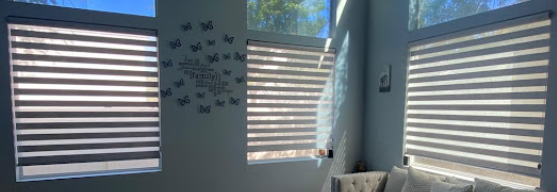
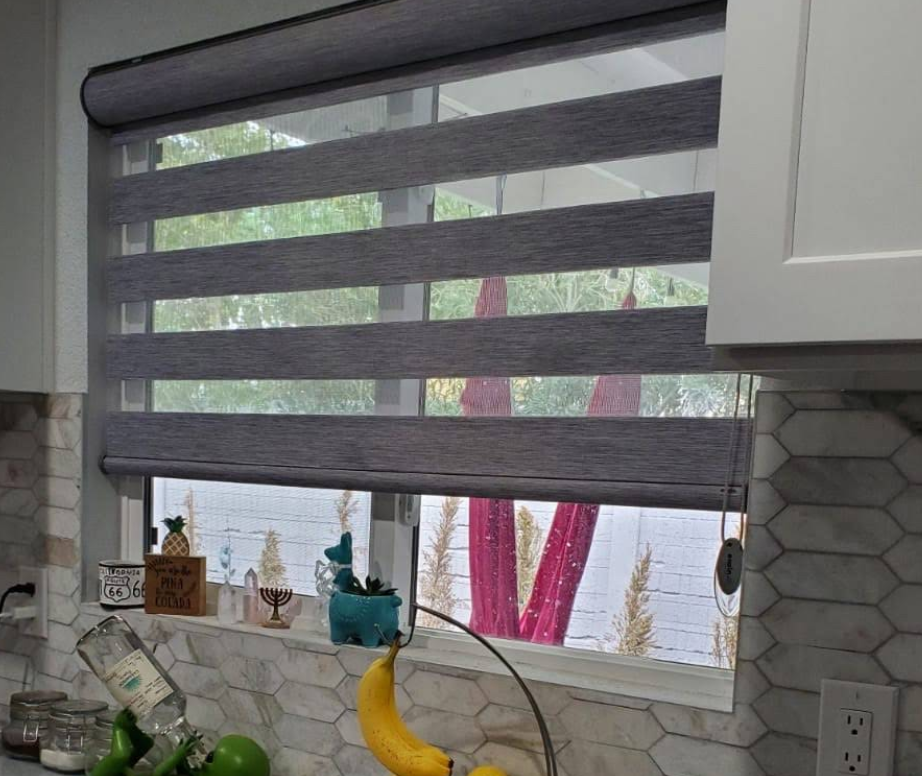
Zebra shades
Inspect the layered fabric, roller, bottom rail and control. Motorized options reduce handling, while chain systems need proper tensioning.
Plantation shutters
Check frame attachment, hinges, magnets, panels, louvers and tilt rods. A sagging panel or stiff louver should not be forced.
Exterior solar screens
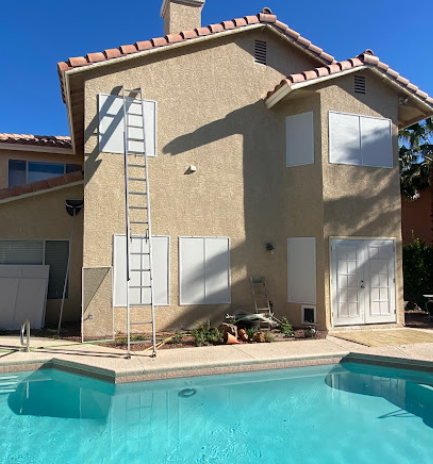
Frames should be secure, removable as designed and clear of egress. Wind exposure, stucco attachment and HOA rules matter.
Motorized drapery
Tracks, carriers, fabric stacks, power and wall clearance should be planned so moving fabric does not catch furniture, signs or people.
Motorized and Smart Shade Safety
Motor sizing
Motor torque must match shade width, height, fabric weight and roller tube. An undersized motor can stall, overheat or stop inconsistently.
Battery access
Rechargeable motors should have a safe charging method. High windows may need extension charging, removable battery wands or hardwired power.
Hardwired power
Hardwired systems require proper electrical planning. Electrical connections should not be improvised or handled by unqualified occupants.
Travel path
Furniture, décor, doors, signs and pet beds must remain clear. A motor should not repeatedly close a shade onto an obstruction.
Limits and calibration
Upper and lower stopping points should be set correctly. Incorrect limits can pull fabric into the roller or drive the bottom rail into a sill.
Remote and app access
Keep controls from becoming toys. Businesses and rental properties should document account ownership and remove former users.
Internet outages
Ask which functions remain available without internet access. A dedicated remote or wall switch is a useful backup.
Unexpected movement
Schedules and sensors can move shades automatically. Occupants should know when movement is expected and how to stop or override it.
Secure Mounting, Inside Mount and Outside Mount
Inside mount
Inside-mounted products attach within the window opening. Adequate depth, strong substrate and clearance from handles are required. Shallow or damaged frames may not support the proposed hardware.
Outside mount
Outside-mounted products attach to trim, wall or ceiling. They can provide more overlap but may be heavier and extend into the room. Fasteners must match the substrate.
Drywall alone
Large shades should not rely on unsuitable fasteners in weak drywall. Blocking, studs, wood trim, masonry or approved anchors may be needed.
Stucco and masonry
Exterior solar screens and interior products near masonry require proper fasteners and drilling methods. Unknown cavities may contain wiring or plumbing.
Bracket spacing
Wide shades often require intermediate brackets or stronger tubes. Skipping specified brackets can cause deflection or failure.
Final pull test
Installation should include a careful operational and security check appropriate to the product. Occupants should not perform aggressive pull tests on installed shades.
Furniture Placement and Window Access
Cribs and beds
Keep sleeping furniture away from windows and operating controls. Children can climb or reach farther than expected.
Sofas and chairs
Furniture beneath a window can provide access to cords, chains, sills and remotes. It can also block shade travel.
Desks and counters
Office desks and kitchen counters may make controls difficult to reach, leading users to pull fabric or use unstable stools. Motorization or different control placement may be safer.
Sliding doors
Window coverings must not block handles, locks or walking paths. Vertical products and drapery should stack clear of the opening.
High windows
Do not plan a battery system that requires frequent unsafe ladder access. Consider hardwired power or safe service access.
Commercial Window Shade Safety
Doors and egress
Storefront shades should not interfere with exits, panic hardware, locks, required signs or accessible routes.
High-access installation
Commercial glass may require lifts, scaffolding or after-hours work. Heavy shades should not be installed from improvised ladders.
Staff controls
Remotes and wall switches should be labeled. Staff should understand how to stop a motorized shade and report damage.
Medical and hospitality spaces
Controls should remain appropriate for patients, guests and children. Cords and chains should not become accessible in waiting areas or guest rooms.
Cleaning procedures
Cleaning staff should know which products allow moisture and where motors or electrical components are located.
Property coordination
Landlords and building managers may require approval for mounting, wiring, exterior appearance and work near safety systems.
Safe Homeowner and Property-Manager Checks
Checks that may be done safely from floor level
- Look for accessible cords and loops.
- Check whether a tension device is loose or missing.
- Observe whether brackets move during normal use.
- Check whether a cordless shade stays level.
- Look for broken slats or louvers.
- Inspect visible fabric damage.
- Replace accessible remote batteries.
- Charge reachable battery motors.
- Confirm the hub or remote is online.
- Move furniture away from windows and controls.
- Check whether doors and handles remain clear.
- Review HOA rules before exterior changes.
Actions to avoid
- Do not stand on unstable furniture.
- Do not remove large shades without assistance.
- Do not work near wiring without proper knowledge.
- Do not disassemble motors.
- Do not force a jammed motorized shade.
- Do not pull hard on a stuck cord.
- Do not allow children to play with controls.
- Do not tie cords together or create loops.
- Do not use harsh chemicals without instructions.
- Do not pressure-wash interior shades.
- Do not bend shutter louvers.
- Do not drill into unknown wall cavities.
- Do not alter exterior screens without approval.
- Do not install heavy commercial shades without suitable equipment.
When to Clean, Repair, Upgrade or Replace
Cleaning
Cleaning is appropriate when the product operates normally, dust is the main issue and the manufacturer provides a safe method. Cleaning does not correct damaged cords, loose brackets or failing motors.
Minor repair
A loose bracket, remote battery, replaceable tilt mechanism, control chain, shutter magnet or programming issue may be serviceable when the rest of the product remains safe and compatible parts are available.
Safety upgrade
Upgrading is worth considering when a home still has accessible cords, a business needs safer staff controls, high windows need motorization or a rental property needs a standardized cordless system.
Replacement
Replacement may be more practical when cords are outdated or damaged, multiple slats are broken, the headrail fails, the product falls unevenly, mounting is poor, the motor is obsolete or parts are unavailable.
Cost factors
Pricing depends on measurements, product category, material, control, motorization, power, mounting, access, quantity, custom shapes and removal. Request an itemized quote instead of relying on one fixed price.
Las Vegas Safety Conditions and Local Installation Factors
Las Vegas properties often combine high ceilings, strong sun, large sliders, stucco construction and modern glass walls. These features affect safe access, motor selection, bracket strength and control placement.
Summerlin, The Ridges, Red Rock Country Club, Southern Highlands and MacDonald Highlands homes may have tall windows where hardwired motorization is safer to maintain than frequently charging a battery from a ladder. Older homes in Winchester, Downtown Las Vegas and North Las Vegas may still contain aging corded blinds or uneven frames.
Rental homes in Spring Valley, Enterprise and Henderson benefit from standardized cordless products and documented controls. HOA communities may regulate exterior solar screens, so safety repairs should also follow current architectural rules.
Desert dust can hide wear around clutches, chains and brackets. Regular visual inspection during cleaning helps identify problems before they become more serious.
Detailed Safety Inspection Checklist by Room
Nurseries
Use cordless or motorized products without accessible controls. Keep cribs, changing tables and storage furniture away from the window. Check that brackets are secure, the bottom rail remains level and remotes or charging cords are inaccessible.
Children’s bedrooms
Review the room whenever furniture changes. A desk or bed moved beneath a window can create access to controls that were previously out of reach. Inspect slats, inner cords, tilt mechanisms and any tension devices.
Living rooms
Sofas and chairs often sit below windows. Cordless shades, shutters or motorized products reduce exposed controls. Make sure pets and children cannot push or climb behind furniture into the shade path.
Kitchens
Controls should not require reaching over a hot cooktop or wet sink. Keep chains and charging cables away from heat and water. Use a control position that can be reached from the floor.
Bathrooms
Moisture-suitable products should be securely mounted. Electrical accessories and chargers should remain dry. A privacy shade must not block required ventilation or safe window operation.
Home offices
Desks can obstruct manual controls and encourage unsafe reaching. Motorized or properly placed cordless products may be more practical. Power cords should not create trip hazards.
Sliding doors
Vertical shades, panel tracks and drapery should stack clear of handles and walking paths. Bottom rails should not swing into people or pets.
High foyers
A system that requires frequent ladder access is not ideal. Hardwired power, long-life motors or safe extension charging should be considered during product selection.
Rental units
Property managers should document every control, remote, charger and safety device. Damaged or missing components should be corrected before turnover. Standardized cordless products simplify inspections.
Commercial waiting areas
Children may visit medical, dental, restaurant and office spaces. Accessible cords and chains should be avoided. Furniture and play areas should remain away from controls.
Understanding Continuous-Loop Controls and Tension Devices
Continuous-loop chains and cords are used on some roller shades, large shades and specialty products because they provide controlled lifting. The loop should remain secured with the approved tension or hold-down device specified for the product. The device is not decorative; it helps keep the loop from hanging freely.
Warning signs
A loose device, detached screw, cracked housing, stretched loop or chain that can be pulled away from the mounting surface should be addressed. Do not continue normal operation if the loop is no longer secured as designed.
Do not improvise
Do not replace the device with a cup hook, adhesive clip, nail or homemade knot. Improvised hardware may not maintain the required tension or durability.
Mounting surface
The tension device must attach to a suitable surface using the appropriate fasteners. Weak drywall, damaged trim or an inaccessible position may require a different installation approach.
Replacement decisions
If the original safety device or compatible part is unavailable, replacement of the product may be more practical than adapting an unverified component.
Safety Documentation for Landlords and Businesses
Keep an inventory
Record product type, location, control style, motor model, power source and installation date when known. Note which rooms may be used by children or guests.
Include controls in turnover
Remotes, chargers, setup codes and wall-switch instructions should transfer between tenants or staff. Missing controls can lead users to pull fabric or force the product.
Create a reporting process
Tenants and employees should know how to report a loose bracket, damaged cord, unusual motor noise or missing tension device. Unsafe products should be taken out of normal use until reviewed.
Schedule visual reviews
Window coverings can be inspected during routine property maintenance. Check furniture placement, cord access, bracket movement and product operation without performing aggressive tests.
Retain written estimates and product documents
Specifications and care instructions make future repairs safer because compatible parts and cleaning methods can be identified.
Custom-Fit vs Ready-Made Window Covering Safety
Fit affects more than appearance
A ready-made blind or shade that is too narrow may leave large gaps, while one that is too wide can bind against the frame. Binding encourages users to pull harder, twist the rail or operate the product unevenly. A custom-fit product is measured for the opening, hardware, trim and operating clearance, which can reduce those problems.
Mounting deductions
Inside-mounted shades are often manufactured slightly narrower than the opening so they can move freely. Those deductions should be intentional and product-specific. A homeowner should not trim or alter rails, cords or motorized components unless the manufacturer provides an approved method.
Ready-made cordless products
Some ready-made cordless products can be suitable when the opening closely matches the available size and the product is installed according to instructions. The buyer should still verify that brackets attach securely, the rail remains level and the shade holds position.
DIY installation limits
Small, accessible products may be within the ability of an experienced homeowner, but high windows, heavy shutters, oversized shades, masonry mounting and hardwired motors create additional risk. The installer must know what lies behind the mounting surface and use appropriate fasteners.
Custom shapes and doors
Arched windows, corner glass, bay windows and sliding doors require specialty planning. Improvised mounting can interfere with locks, handles, exits or panel movement. Custom measurement is especially valuable in these situations.
Online measurement responsibility
Online-only retailers often rely on homeowner measurements. A small mistake can result in a product that does not fit or cannot be securely mounted. Before ordering, the buyer should understand who is responsible for deductions, installation hardware and compatibility with the opening.
Big-box and national lead-generation services
Large retailers and lead-generation platforms vary in how measurement and installation are handled. Property owners should ask who performs the work, who is responsible for safety devices, and who returns if the product binds or pulls loose.
Safety Considerations for Specific Control Systems
Cordless spring-assist systems
These shades use an internal spring or lift mechanism. The bottom rail should move smoothly and stay where placed. Uneven tension, dropping or sudden recoil can indicate a problem. Users should operate the rail from the center when instructed rather than pulling one corner.
Continuous-loop clutch systems
These systems provide controlled lifting for larger shades. The loop must remain secured with the approved tension device. The clutch should turn smoothly without requiring excessive force. A chain that skips, binds or separates needs attention.
Wand controls
Some blinds use a tilt wand instead of a cord. The wand should remain attached and rotate without sharp resistance. A cracked or loose wand can fall or create a sharp edge.
Top-down bottom-up controls
These shades use two moving rails. Both rails should stay level and operate independently without exposing loose internal cords. Furniture should not interfere with either rail.
Remote-controlled motors
Remotes should have clearly labeled channels. A shade that moves unexpectedly may be assigned to the wrong group or schedule. Keep spare batteries and programming instructions with the property records.
App-connected smart shades
Apps can add schedules, scenes and remote access. Account ownership, user permissions and setup codes should be documented. A former tenant, employee or contractor should not retain control after access is no longer needed.
Sun and temperature sensors
Sensors may trigger automatic movement. Their thresholds should be tested so shades do not cycle excessively or close onto open windows, decorations or furniture.
Wall switches
Wall controls should be mounted where they can be reached safely from the floor and where children are less likely to treat them as toys. Wired switches and keypads should be installed according to electrical requirements.
Repair Decisions for Damaged Cords, Rails, Slats and Motors
Damaged operating cords
A frayed, knotted or altered operating cord should not be ignored. Replacing a cord may be possible on some products, but the repair should use compatible components and preserve the intended safety design. A repair that recreates an accessible loop is not an improvement.
Exposed inner cords
Inner lift cords may become accessible when slats break, fabric separates or the product is handled incorrectly. Do not cut, tie or reroute them without approved instructions. Replacement may be the safer option when the original design is outdated.
Loose headrails
A headrail that shifts during ordinary operation may have loose screws, unsuitable anchors or damaged mounting surfaces. Stop using the product until the mounting can be reviewed. Tightening a screw into stripped material is not a lasting repair.
Broken slats
One slat may be replaceable if a matching component is available. Multiple broken slats, brittle material or damaged ladders may indicate that the blind has reached the end of practical service.
Uneven bottom rails
A cordless shade that sits unevenly may need adjustment, restringing or replacement. Pulling harder on one side can worsen the problem.
Shutter panel sag
A sagging shutter panel can rub the sill or frame and stress hinges. Minor hinge adjustment may help, but cracked frames or repeated sagging require a more complete review.
Motor noise or stalling
A motor that hums, stalls or changes speed may be overloaded, obstructed or losing power. Stop repeated commands. Continuing to cycle the shade can damage the motor, fabric or roller tube.
Obsolete electronics
Older motors, bridges and remotes may no longer have compatible replacement parts. Upgrading the motor or replacing the shade may be more practical than combining incompatible controls.
Safety Planning for High Windows and Large Openings
Avoid routine ladder dependence
If a shade will need regular charging, resetting or cleaning, the service method should not depend on balancing on furniture or an unstable ladder. High-window products should be planned around safe access from the beginning.
Battery and rechargeable options
Rechargeable motors are convenient in many retrofit installations, but battery location matters. A removable battery wand, extension charging cable or accessible service position may be necessary.
Hardwired and low-voltage systems
Hardwired power can reduce routine battery access on tall windows. It requires early coordination, appropriate wiring and qualified electrical work. Power supplies and junctions should remain serviceable.
Large roller tubes
Wide shades need strong tubes and sufficient brackets. Deflection can cause fabric tracking problems and place uneven loads on the mounting hardware.
Multiple shades at mullions
Dividing one large opening into several shades may improve reliability and service access. Each unit needs its own brackets, motor or controls, and the design should preserve a clean appearance.
Sliding glass doors
Products should clear handles, locks and walking paths. Motorized drapery, panel tracks or vertical cellular shades may be safer and more practical than one oversized horizontal shade.
Commercial lifts and access equipment
High storefronts, hotel lobbies and atriums may require powered lifts or scaffolding. Installation and future service access should be included in the project scope.
Window-Covering Safety for Renters, Landlords and Property Managers
Move-in inspection
Renters and managers should inspect visible cords, tension devices, brackets, slats, rails and remotes at move-in. Existing damage should be documented before normal use.
Report rather than improvise
Tenants should not replace chains, drill new brackets or open motors without permission. A clear reporting process helps prevent unsafe temporary fixes.
Standardized replacements
Property managers may benefit from using a consistent range of cordless blinds or roller shades across units. Standardization simplifies parts, training and turnover inspection.
Children who visit
A rental may not house children permanently but can still be visited by young relatives or guests. Accessible cords should not be dismissed because no child is listed on the lease.
Remote and charger handover
Motorized products need complete handover records. Missing remotes or chargers may encourage tenants to pull fabric manually or leave the shade in an unsafe position.
Damage responsibility
Written lease terms and inspection records can help distinguish ordinary wear from misuse, but safety repairs should not be delayed while responsibility is disputed.
Common-area installations
Multi-unit lobbies, gyms, leasing offices and lounges may be used by children, pets and visitors. Commercial shades in these areas should use appropriate controls and secure mounting.
Window-Covering Safety and Cleaning
Inspect before cleaning
Before touching a shade, check whether brackets, rails and controls appear secure. Cleaning a loose product can pull it from the wall.
Keep moisture away from motors
Motorized headrails, charging ports, transformers and wall controls should remain dry. Apply approved cleaner to the cloth rather than spraying toward electrical components.
Do not overreach
Use safe floor-level tools or appropriate access equipment. A dusty high shade is not worth a fall.
Support rigid parts
When wiping slats or louvers, use light pressure and support the component. Aggressive bending can crack material or loosen pins.
Watch for hidden damage
Cleaning can reveal frayed cords, cracked chains, exposed inner cords and loose end caps. Stop and report those issues instead of covering them with decorative tape or glue.
Use manufacturer-approved methods
Harsh chemicals can weaken cords, discolor plastic, damage finishes and affect fabric. Product-specific care instructions should govern cleaning.
Questions to Ask Before Hiring a Window-Covering Company
- Is the recommended control cordless or inaccessible?
- Is it appropriate for homes where children visit?
- Does a continuous loop require a tension device?
- Is the product custom measured?
- What mounting surface and fasteners are planned?
- Will brackets attach to suitable structure?
- Will the shade interfere with handles, locks or furniture?
- What motor and power source are included?
- How will a high battery be charged safely?
- Are electrical services included or separate?
- Does the quote include installation and removal?
- Are remotes, wall switches and hubs included?
- How does the system operate during an outage?
- Are replacement parts available?
- Can damaged slats or louvers be replaced?
- Does an exterior product require HOA approval?
- What safety instructions and product documents are provided?
- Will I receive a written estimate before ordering?
Window-Covering Safety Red Flags
- Accessible cords recommended for a nursery or child-occupied room.
- Continuous loop installed without its approved tension device.
- No discussion of furniture placement.
- No measurement of mounting depth or substrate.
- Loose or undersized brackets.
- Motor proposed without load or power planning.
- High battery system with no safe charging method.
- No backup control for a smart shade.
- Shade travel crosses a door, sign or obstacle.
- Improvised cord knots, hooks or connectors.
- Pressure to keep using damaged cords.
- No child- or pet-safety discussion.
- No written installation scope.
- No clear local business identity or Google Maps presence.
- Installer cannot explain who handles electrical work.
Why Consider Las Vegas Blinds, Solar Screens & Shutters Window Coverings Center?
Las Vegas Blinds, Solar Screens & Shutters Window Coverings Center is a local option for homeowners, landlords, renters, property managers, designers and businesses comparing safer cordless, motorized and custom-fit window coverings.
The team can help compare cordless blinds, roller shades, cellular shades, plantation shutters, motorized shades, smart controls, blackout products, commercial shades and exterior solar screens. A useful consultation should consider children, pets, furniture placement, mounting, access, control type, power and long-term service.
Call (702) 237-4401, request a window-covering safety consultation, browse the window-covering product catalog, review motorized shades in Las Vegas, or compare plantation shutters.
Business owners may also read the guide to the best shades for Las Vegas businesses. View the Las Vegas window-covering location on Google Maps.
Areas Served
The business serves customers in these communities from its Las Vegas location. Service in a community does not imply a separate physical office there.
Frequently Asked Questions About Las Vegas Window-Covering Safety
What are the safest window coverings for homes with young children?
Cordless blinds, cordless shades, shutters and motorized products without accessible operating cords are the preferred options. Furniture should also remain away from windows.
Are continuous-loop shade chains safe?
They require the correct approved tension or hold-down device and secure installation. A loose loop or missing device should be addressed before normal use.
Are motorized shades safer than corded blinds?
Motorized shades remove many exposed operating cords, but they still require secure mounting, clear travel, safe power and accessible service.
How can I tell if a cordless shade is damaged?
Warning signs include an uneven bottom rail, dropping, binding, unusual noise or failure to hold position. Stop forcing it and request service guidance.
Are plantation shutters child- and pet-friendly?
Shutters avoid lift cords, but panels, hinges, magnets and louvers must remain secure. Furniture should not block panel movement.
Should old corded blinds be repaired or replaced?
Where young children live or visit, replacing older corded products with current cordless options is generally the safer direction to consider.
Can smart shades move automatically?
Yes. Schedules and sensors can trigger movement. Keep the travel path clear and make sure occupants know how to stop or override the system.
How can I request a Las Vegas window-covering safety consultation?
Call Las Vegas Blinds, Solar Screens & Shutters Window Coverings Center at (702) 237-4401 to ask about current consultation, measurement and installation availability.
Find the Las Vegas Location
Las Vegas Blinds, Solar Screens & Shutters Window Coverings Center is located at 3871 S Valley View Blvd #6, Las Vegas, NV 89103. Call before visiting to confirm current availability.
Discuss Safer Window Coverings for Your Las Vegas Property
Call Las Vegas Blinds, Solar Screens & Shutters Window Coverings Center at (702) 237-4401 to compare cordless blinds, shutters, motorized shades and secure custom-fit solutions for homes, rentals and businesses.