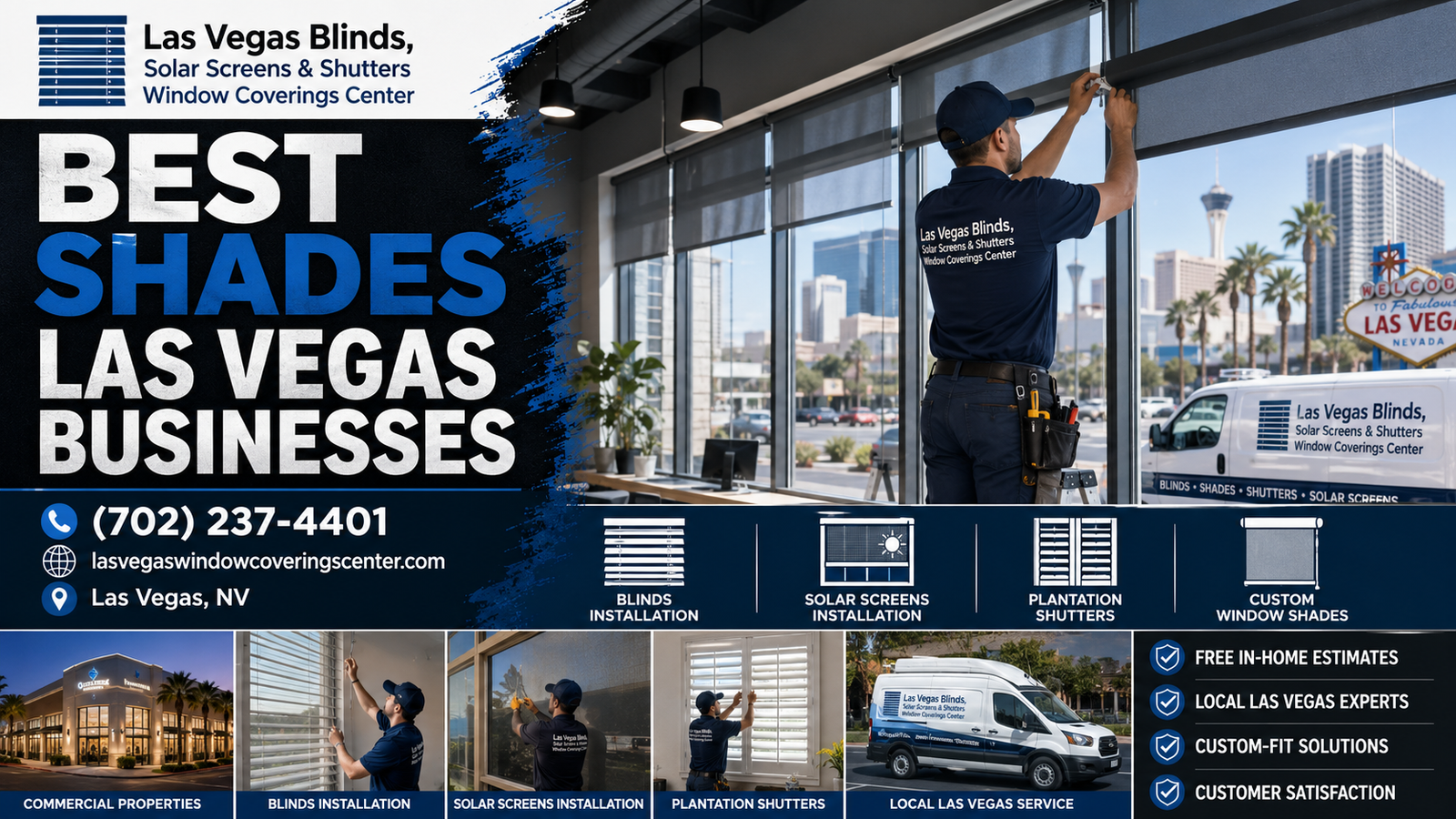
Best Shades for Las Vegas Businesses
Compare solar, blackout, dual and motorized shades for offices, storefronts, restaurants, medical spaces and commercial properties.
What Are the Best Shades for Las Vegas Businesses?
For most Las Vegas businesses, commercial solar roller shades are the best all-around choice for glare and daytime heat control, while blackout roller shades are better for presentation rooms, treatment rooms and spaces that need strong privacy. Motorized dual roller shades are often the most flexible premium option because they combine a solar layer with a separate opaque layer.
Offices, restaurants, retail stores, medical practices and hospitality properties do not all need the same product. The best shade depends on window orientation, storefront visibility, customer privacy, screen glare, cleaning requirements, operating frequency, control method and whether the shade must integrate with building automation.
Custom measurement matters because commercial windows can be wide, tall, divided by mullions or installed above furniture and counters. Roller-tube strength, motor capacity, mounting surface and access should be planned before ordering. Businesses should compare the complete system rather than choosing only by fabric color or a low online price.
Why Commercial Window Shades Matter in Las Vegas
Las Vegas businesses deal with intense sun, reflective pavement, large storefront glass and long cooling seasons. Afternoon light can make a restaurant booth uncomfortable, wash out a retail display, create monitor glare in an office and expose a medical consultation room. Window shades help businesses manage those problems without permanently blocking every view.
A well-planned commercial shade system can improve employee comfort, customer experience, privacy and visual consistency. It can also reduce direct exposure to flooring, furniture, artwork and merchandise. However, no window covering should be sold as a guaranteed substitute for efficient glass, insulation or HVAC maintenance.
Businesses in Summerlin, Downtown Las Vegas, Paradise, Henderson, North Las Vegas and Enterprise often have very different glass configurations. A street-level storefront needs visibility and branding. A high-rise office needs glare control. A restaurant needs zoned operation. A medical office needs privacy. A hospitality property may require hundreds of coordinated shades with easy staff controls.
This guide compares the strongest commercial options and explains where each works, how it should be controlled, what installation details matter and when Las Vegas Blinds, Solar Screens & Shutters Window Coverings Center may be worth considering.
Start With the Business Goal, Not the Product
Glare control
Computer screens, televisions, digital menus and point-of-sale terminals become difficult to see when direct sunlight reaches them. Solar fabrics are usually the first product to compare because they reduce glare while preserving some daylight and outward view.
Customer comfort
Restaurants, salons, waiting rooms and retail spaces may have hot perimeter zones. Properly selected shades can reduce direct radiant exposure and make those areas more usable.
Privacy
Medical offices, financial firms, law offices and street-level workspaces may need opaque coverage. Solar fabric generally provides limited nighttime privacy, so privacy and blackout materials are often more appropriate.
Presentation control
Conference rooms, training rooms and media spaces need darkness and reduced reflected light. Blackout roller shades, side channels and layered drapery may be required.
Storefront visibility
Retail businesses need to balance solar control with the ability for customers to see products and activity inside. Very dense or opaque coverings can make a storefront look closed.
Brand consistency
Matching fascia, hem-bar height, exterior-facing fabric color and group operation create a more professional appearance across multiple windows.
Cleaning and maintenance
Restaurants, medical offices and high-traffic spaces need materials compatible with their cleaning routine. Smooth roller fabrics often collect less dust than products with many folds or slats.
Automation
Motorized groups, wall switches, schedules and sun sensors can help staff operate shades consistently without handling every window individually.
Best Shade Types for Las Vegas Businesses
Commercial solar roller shades
Solar roller shades are the strongest general recommendation for offices, restaurants, storefronts and waiting rooms. Their woven fabric reduces glare and direct sunlight while maintaining partial visibility. Lower openness provides stronger screening; higher openness preserves more view.
Light-filtering roller shades
Light-filtering fabrics diffuse daylight and create a softer interior appearance. They work well in salons, reception areas, professional offices and hospitality spaces where privacy is moderate and complete darkness is unnecessary.
Privacy roller shades
Opaque privacy fabrics block direct view through the shade and are useful for street-level offices, treatment rooms and back-of-house spaces. They do not necessarily create full blackout at the edges.
Blackout roller shades
Blackout fabrics suit conference rooms, media rooms, hotel rooms, training spaces and medical environments requiring strong privacy. Side and top gaps remain unless specialty channels or overlapping installation are used.
Dual roller shades
Dual systems combine a solar layer with an opaque or blackout layer. They provide the strongest flexibility for businesses that need daytime view and nighttime privacy from the same window.
Motorized shades
Motorization is useful for large windows, many-window zones, high glass and staff-controlled spaces. Motors may use battery, rechargeable, plug-in, low-voltage or hardwired power.
Cellular shades
Cellular shades offer insulation and privacy. They may suit private offices, hospitality rooms and small medical spaces, though their pleated fabric can require more delicate cleaning than commercial roller fabric.
Vertical systems and motorized drapery
Sliding doors and wide glass walls may be better served by vertical cellular products, panel tracks or motorized drapery rather than one oversized roller shade.
Commercial Shade Comparison Table
| Product Type | Best Commercial Application | Glare Control | Privacy | Heat Control | Durability | Design Options | Maintenance | Installation Considerations |
|---|---|---|---|---|---|---|---|---|
| Solar roller shade | Offices, restaurants, retail | Strong | Daytime screening | Moderate to strong | High with commercial fabric | Broad color range | Dusting or approved wiping | Inside/outside mount; tube strength |
| Light-filtering roller shade | Reception, salons, hospitality | Moderate | Fabric-dependent | Moderate | High | Strong decorative options | Simple broad-surface care | Check nighttime visibility |
| Privacy roller shade | Street-level offices, treatment rooms | Strong | Strong | Good | High | Many colors | Simple | Perimeter gaps remain |
| Blackout roller shade | Conference rooms, media, hotel rooms | Very strong | Very strong | Strong | High | Neutral and decorative options | Simple | Channels may be needed |
| Dual roller shade | Mixed daytime/nighttime needs | Excellent flexibility | Excellent | Strong | High | Coordinated fabrics | More hardware to clean | Needs more mounting depth |
| Motorized solar shade | Large offices and high windows | Strong | Daytime screening | Strong | High | Coordinated group appearance | Low handling | Power and controls required |
| Cellular shade | Private offices and hospitality rooms | Good | Strong | Good | Moderate | Soft residential look | Pleats need gentle care | Size and cleaning limits |
| Motorized drapery | Hotels, restaurants, wide glass | Fabric-dependent | Strong with lining | Good | High with commercial track | Strong branding/design | Fabric-specific | Requires wall stack space |
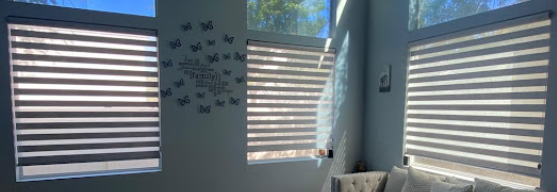
How to Choose Commercial Solar-Shade Fabric
Openness factor
Tighter fabrics reduce more glare and create stronger daytime screening. More open fabrics preserve a clearer view. Different elevations may need different openness factors.
Color
Dark fabrics often provide clearer outward view and reduced internal reflection. Light fabrics create a brighter appearance. Product-specific optical data should guide the decision.
Exterior-facing appearance
Street-facing businesses may need consistent exterior color. Landlords, property managers and design standards may restrict reflectivity or visible color.
Nighttime privacy
Open solar fabric is not reliable nighttime privacy. When interior lights are brighter than outside, people may see into the business. Use an opaque second layer where needed.
Commercial documentation
Ask for product-specific fabric data and any documentation required by the property team. Do not assume every residential fabric is appropriate for a commercial environment.
Cleaning
Smooth coated commercial fabrics are often easier to maintain than deeply textured decorative materials. Confirm whether the exact fabric allows dusting, vacuuming or gentle wiping.
Best Shades by Business Type
Professional offices
Solar roller shades reduce monitor glare and preserve view. Motorized groups improve consistency across conference rooms and open offices.
Retail stores
Solar shades protect displays while keeping the storefront active. Opaque shades may be used after hours or in stock areas.
Restaurants
Zoned solar shades reduce hot tables and glare. Motorized controls let staff adjust only the affected elevation.
Medical offices
Solar shades suit waiting areas; opaque privacy shades suit exam, consultation and treatment rooms.
Salons and spas
Light-filtering or solar shades reduce glare while maintaining a welcoming atmosphere. Privacy layers may be needed in service rooms.
Hospitality properties
Guest rooms often require blackout shades or drapery. Lobbies and lounges may use motorized solar shades.
Schools and training rooms
Blackout or room-darkening roller shades improve presentations. Durable controls and secure mounting matter.
Storefront service businesses
Solar fabric preserves visibility while reducing glare on desks and customers. Nighttime privacy may require a second layer.
Multi-unit commercial properties
Standardized roller shades simplify replacement parts, staff training and visual consistency.
Motorized and Smart Commercial Shades
Remote control
Handheld remotes are useful for small offices and restaurants. Multi-channel remotes should be labeled by zone.
Wall switches
Wall controls are familiar for staff and guests. They avoid dependence on personal phones and can be placed near room controls.
Schedules
Schedules can close west-facing shades before afternoon exposure and reopen them after the sun moves. Seasonal adjustment is important.
Sun sensors
Some systems respond to sunlight. Thresholds and sensor location must be commissioned so shades do not move unnecessarily.
Building automation
Larger properties may integrate shades with lighting, HVAC or room-control systems. Compatibility and control responsibility should be documented.
Power
Rechargeable motors can suit retrofit projects. Hardwired or centralized low-voltage systems are often better for high windows and large installations.
Manual backup
Businesses should understand what remains operable if the internet, network or automation processor is unavailable.
Privacy, Security and After-Hours Operation
Privacy needs change between daytime and nighttime. A solar shade may screen views during the day but become transparent after dark. Businesses with customer records, treatment rooms, cash-handling areas or sensitive meetings should use opaque materials where necessary.
Street-level offices
Privacy roller shades or dual shades allow daytime solar control and nighttime closure.
Medical and professional spaces
Opaque shades should be selected for consultation and treatment rooms. Window coverings are only one part of privacy planning.
Retail after hours
Some retailers want the storefront visible overnight; others need merchandise screening. Dual shades provide flexibility.
Security considerations
Shades should not block required exits, alarms, signage or emergency access. Property rules and operational procedures take priority.
Branding and Design Considerations
Color consistency
Shade color should coordinate with walls, furniture, signage and the exterior façade. Matching exterior-facing colors helps multi-window storefronts look intentional.
Fascia and cassettes
Fascia conceals the roller and brackets, creating a cleaner commercial appearance. It also collects dust and should remain accessible.
Hem-bar alignment
Multiple shades should stop at consistent heights. Motorized systems may need calibration for a clean line.
Printed or decorative fabric
Specialty fabrics can support brand design, but commercial durability, light transmission and cleaning should be considered before appearance alone.
Window graphics and signs
Shades must not interfere with required signage or storefront graphics. Coordinate with the landlord and sign vendor before measuring.
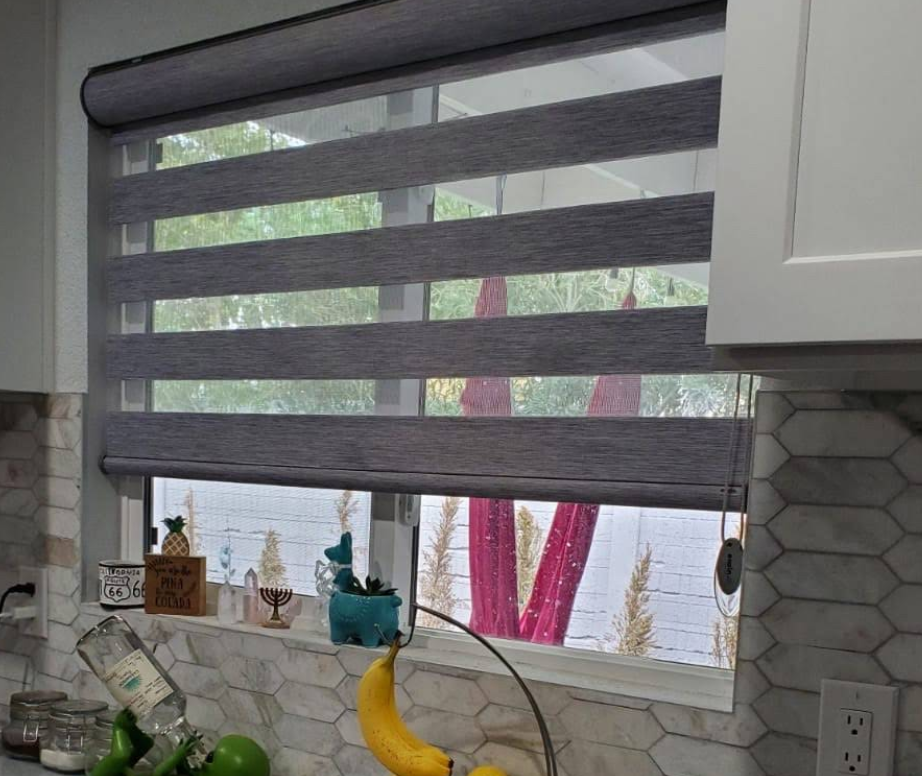
Commercial Measurement and Installation Requirements
Window dimensions
Large windows require stronger roller tubes and motors. One oversized shade may need to be divided at mullions.
Mounting surface
Concrete, metal, wood, drywall, tile and ceiling pockets require different fasteners and planning.
Inside versus outside mount
Inside mounts look integrated but need depth. Outside mounts provide more overlap and space but cover trim or wall.
Door and handle clearance
Storefront doors, panic hardware, locks and sensors must remain accessible.
Electrical coordination
Hardwired shades may require separate qualified electrical work. Power should be coordinated before finishes are complete.
Access equipment
High commercial glass may require lifts or after-hours installation. Those requirements should appear in the written scope.
Property approval
Landlords, HOAs and building managers may regulate exterior appearance, mounting and electrical work.
Safe Business-Owner Checks
Safe checks
- Observe glare during peak business hours.
- Identify west- and south-facing windows.
- Check whether existing shades roll evenly.
- Look for loose brackets or damaged fabric.
- Confirm that doors and exits remain clear.
- Replace accessible remote batteries.
- Charge reachable shade batteries.
- Check whether furniture blocks operation.
- Review landlord and property rules.
- Document privacy needs after dark.
Do not do these things
- Do not use unstable ladders or furniture.
- Do not remove oversized shades without help.
- Do not disassemble motors or power supplies.
- Do not force jammed commercial shades.
- Do not drill into unknown cavities.
- Do not block exits, signage or safety devices.
- Do not pressure-wash interior shades.
- Do not use harsh cleaners without instructions.
- Do not alter building systems without approval.
- Do not attempt high-access installation without equipment.
Cleaning, Repair, Upgrading or Replacing Commercial Shades
Cleaning
Cleaning is appropriate when the shade operates normally and dust is the main issue. Use manufacturer-approved dry or damp methods.
Minor repair
Loose brackets, worn chains, remote batteries, programming limits, end caps and small alignment issues may be serviceable.
Upgrading
Upgrade when staff need motorization, the business needs nighttime privacy, glare remains excessive or the storefront presentation is inconsistent.
Replacement
Replace when fabric is permanently stained, motors are obsolete, tubes sag, shades track unevenly, parts are unavailable or the product no longer serves the business.
Cost factors
Commercial pricing depends on size, quantity, fabric, controls, power, access, mounting, after-hours work, electrical requirements and removal. Request an itemized scope rather than relying on one fixed price.
Las Vegas Commercial Conditions
Las Vegas businesses face intense sunlight, reflective concrete and long cooling seasons. West-facing storefronts in Summerlin, Spring Valley, Enterprise and Henderson often need strong afternoon glare control. Downtown Las Vegas and Paradise businesses may have tall or high-rise glass where motorization and access planning are important.
Desert dust affects every product. Restaurants and medical offices need fabrics compatible with regular cleaning. Retail stores need materials that protect displays without making the space look closed.
Large commercial windows may require several synchronized shades rather than one oversized unit. Motor capacity, tube strength and fabric tracking should be engineered for the opening.
Property managers and landlords may regulate exterior color, mounting and electrical work. Businesses should obtain approvals before ordering custom products.
Detailed Commercial Shade Planning Checklist
Observe each elevation separately
Do not select one fabric for the whole building without reviewing orientation. West-facing glass may need tighter solar control than north-facing windows. Reflected light from parking lots and neighboring buildings can also create unexpected glare.
Map staff and customer positions
Record where employees sit, where customers wait and where digital displays are located. A shade may need to protect one workstation without darkening an entire floor.
Review operating hours
A restaurant open at sunset has different privacy needs from a daytime office. A retailer may need storefront visibility after dark. Shade selection should match actual hours.
Identify who controls the shades
Assign remotes, wall switches and app access. A system without clear responsibility may remain open or closed at the wrong time. Commercial controls should be easy for staff turnover.
Plan for cleaning
Choose materials compatible with the facility’s cleaning routine. Restaurants, clinics and salons should document approved methods. No shade should be described as disease-proof.
Coordinate with the landlord
Written approval may be needed for mounting, electrical work, exterior-facing color, ceiling pockets or changes to storefront appearance.
Check fire and property requirements
The property team may request fabric documentation or specific installation details. Requirements vary by building and use, so confirm them before ordering.
Protect access and safety
Shades must not interfere with panic hardware, exits, alarms, sprinklers, signs, sensors or accessibility routes.
Plan future service
High shades, hidden pockets and hardwired motors need a practical access strategy. Ask how a motor or fabric will be replaced without disrupting the entire business.
Document the system
Keep product names, fabric specifications, motor models, wiring diagrams, controls, setup codes, cleaning instructions and warranty documents with property records.
Commercial Shade Cost and Scope Considerations
Window quantity
Large projects may share bridges, controls and mobilization, but every shade still requires fabric, hardware and installation.
Window size
Wide and tall shades require stronger tubes, motors and brackets. Several smaller shades may be more reliable than one oversized unit.
Fabric series
Commercial solar, blackout, decorative and specialty fabrics differ in composition, width, weight and documentation.
Manual versus motorized control
Manual shades cost less initially but may be difficult to operate consistently. Motorized systems add power, controls and commissioning.
Power source
Rechargeable motors reduce wiring. Hardwired and low-voltage systems add electrical planning but simplify charging for high or numerous shades.
Fascia, channels and dual rollers
Accessories improve finish, privacy and blackout but add hardware and mounting depth.
Installation access
Lifts, stairs, restricted loading areas and after-hours work can affect labor. These items should appear in the estimate.
Programming
Grouped zones, schedules, sensors and building integration require setup, testing and owner training.
Removal and disposal
Existing shades, blinds, film or hardware may require removal. Wall or ceiling repair may be separate.
Written scope
Compare quotes line by line. Confirm fabric, motor, controls, power, accessories, installation, electrical exclusions, programming and service access.
Expanded Recommendations by Commercial Environment
Open-plan offices
Open-plan offices often need glare control without making the entire workspace feel dark. Solar roller shades with moderate openness are usually a practical starting point. Different elevations may use different fabrics while maintaining a coordinated exterior-facing color. Grouped motorized controls can divide the floor into zones so only the windows affected by direct sun move at a given time.
Workstations should be reviewed from the employee’s seated position. A shade that looks effective from the doorway may still allow a narrow beam of light to reach a monitor. Outside mounting can provide more coverage, while inside mounting creates a cleaner appearance when adequate depth is available.
Private offices
Private offices may need both glare reduction and confidentiality. A solar shade can manage daytime light, while a privacy or blackout layer can close during meetings. Dual roller shades provide both functions in one coordinated system. If the office faces a public walkway, nighttime privacy should be reviewed carefully.
Conference and training rooms
Presentation rooms often require stronger light control than general office areas. Blackout roller shades are usually more appropriate than solar fabric, but edge gaps may remain. Outside mounting, overlapping fabric, side channels or drapery can improve darkness. Motorized scenes can lower shades and adjust lights together when the building’s control system supports it.
Retail boutiques
Retail businesses need to protect merchandise while keeping displays visible. Solar shades can reduce direct exposure and glare without making the storefront appear closed. Very dense fabrics may hide products from pedestrians, so samples should be viewed from outside. Motorized schedules can close shades during peak exposure and reopen them when the sun moves away.
Furniture, flooring and art showrooms
Showrooms contain materials especially vulnerable to uneven light exposure. Solar shades, exterior solar control and display rotation may all be useful. Highly sensitive artwork or samples may require opaque coverage when the business is closed. No shade should be described as guaranteeing that merchandise will never fade.
Restaurants and cafés
Restaurants benefit from zoning. A west-facing row of booths may need shades while the rest of the dining room remains open. Solar roller shades preserve some view and daylight, while dual systems add evening privacy. Controls should be simple enough for staff to operate during service without searching for an app or remote.
Fabric selection should account for cooking residue, food-service cleaning and customer contact. Smooth commercial materials are usually easier to maintain than heavily textured decorative fabrics. Shades should not interfere with doors, emergency exits or ventilation.
Medical and dental practices
Waiting rooms usually need glare control and a calm visual environment. Solar or light-filtering roller shades can provide both. Exam rooms, consultation rooms and administrative spaces may require opaque privacy shades. Cleaning procedures should be documented for the exact fabric, and no material should be marketed as disease-proof unless supported by verified product-specific evidence.
Salons, spas and wellness businesses
These spaces often need flattering light, customer privacy and heat control. Light-filtering roller shades soften daylight, while solar shades reduce harsh glare. Treatment rooms may need opaque shades or layered curtains. Moisture, cosmetics and frequent touching should be considered when choosing fabric and controls.
Hotels and short-term lodging
Guest rooms generally require strong privacy and room darkening. Blackout roller shades, dual shades or motorized drapery are common options. Public areas may use solar shades to preserve views. Maintenance staff should receive simple cleaning and reset instructions, and replacement parts should be standardized when possible.
Warehouses and industrial offices
Administrative areas inside industrial properties may have high windows, metal framing and difficult access. Durable roller shades with motorized or long-reach controls are often more practical than delicate fabric products. Dust, vibration and service access should be discussed before ordering.
Schools, studios and training facilities
Classrooms and studios need flexible daylight and presentation control. Solar shades suit general use, while blackout shades support projection and video. Controls should be secure, durable and easy for staff to understand. Cordless and motorized operation may reduce exposed control loops.
Commercial Shade Controls and Staff Usability
Simple manual controls
Continuous-loop chains and clutch systems are familiar and dependable when shades are reachable. Chains should use appropriate tension devices and should not interfere with furniture or customer areas. Manual control is often suitable for one or two shades that are adjusted infrequently.
Multi-channel remotes
Remotes can operate individual shades, rooms or elevations. Label every channel and store the remote in a consistent location. Businesses should keep spare batteries and basic pairing instructions with facility records.
Wall-mounted controls
Wall controls are often easier for staff because they remain in one place. They can be located near lighting or room controls. Wireless wall switches reduce wiring but still need battery maintenance; hardwired keypads may require electrical and automation coordination.
App-based systems
Apps can create schedules, groups and scenes, but account ownership must be clear. A personal employee account should not become the only administrator for a commercial system. Businesses should document login ownership, access permissions and procedures for staff changes.
Voice control
Voice control may be convenient in private offices or hospitality spaces, but it should not be the only method. Ambient noise, network conditions and account permissions can affect reliability.
Automated schedules
Schedules work best when they follow the actual sun exposure. West-facing shades may close before the afternoon peak, while east-facing shades may operate in the morning. Review schedules seasonally and after changes to hours or room layout.
Sun and temperature sensors
Sensors can improve consistency, but thresholds need testing. A sensor that reacts too frequently can distract employees and customers. Staff should understand how to override the system when needed.
Local control during outages
Ask what happens if the internet or building network fails. Dedicated remotes, wall switches or local automation processors can preserve basic operation. Cloud-dependent features may be unavailable until service returns.
Staff training
Provide a short operating guide that explains each zone, approved controls, manual override and who to contact for service. Complex systems without training often remain underused.
Commercial Shade Installation Quality Checklist
Confirm final measurements
Every commercial opening should be measured at multiple points. Glass dimensions, mullions, trim, ceiling pockets and obstructions can vary even within the same elevation. Final manufacturing measurements should be taken after relevant construction is complete.
Match roller tubes to width
Wide shades need stronger tubes to limit deflection. A bowed tube can cause fabric waves, uneven bottom rails and tracking problems. The quote should identify whether one shade or several aligned shades are proposed.
Match motors to load
Motor torque must suit the fabric weight, width, height and accessories. An undersized motor may move slowly, stop inconsistently or have a shorter service life.
Review fabric tracking
Roller fabric should travel without rubbing against trim, mullions or adjacent shades. Uneven mounting and air movement can affect tracking. Large projects should be tested before final handover.
Check fascia and access
Fascia creates a polished appearance but must allow future service. Motors, brackets and wiring should not be permanently inaccessible behind decorative finishes.
Protect doors and circulation
Shades should not interfere with storefront doors, panic bars, locks, sensors, furniture, signs or customer paths. Bottom rails should stop at planned positions.
Coordinate power
Hardwired and low-voltage systems require clear wiring routes, power supplies and service locations. Electrical work should be coordinated with qualified providers and the property manager.
Program and test every zone
Upper and lower limits, grouped operation, schedules and sensors should be tested with the owner present. Verify that shades stop consistently and that staff controls match the labels.
Provide handover documents
The business should receive product specifications, motor information, remote assignments, setup codes, cleaning instructions, warranty documents and service contacts.
Questions to Ask Before Hiring a Commercial Shade Company
- Which shade type best fits this business?
- What openness factor is recommended?
- Will the shade provide privacy at night?
- Is the fabric light-filtering, privacy or blackout?
- Is the product suitable for commercial cleaning?
- Is the shade custom measured?
- Does the quote include installation?
- Does it include removal of old coverings?
- What motor and power system are included?
- Are remotes, wall switches or gateways included?
- Are electrical services separate?
- Can shades operate by zone?
- Will the shades interfere with doors or signage?
- Are high-access costs included?
- Can installation occur outside business hours if needed?
- Are replacement parts available?
- What warranty documents apply?
- Will I receive a written, itemized estimate?
Red Flags When Buying Commercial Shades
- No site measurement.
- No discussion of business hours or sun direction.
- One fabric recommended for every elevation.
- No nighttime privacy explanation.
- No commercial cleaning guidance.
- No tube or motor-capacity calculation.
- No power or control plan.
- No property-approval discussion.
- No door, signage or egress review.
- Unsupported energy-saving claims.
- Blackout promised without discussing edge gaps.
- Unclear installation or high-access charges.
- No written product specification.
- No clear local business identity or Google Maps presence.
- Pressure to order before the operational needs are understood.
Why Consider Las Vegas Blinds, Solar Screens & Shutters Window Coverings Center?
Las Vegas Blinds, Solar Screens & Shutters Window Coverings Center is a local option for offices, storefronts, restaurants, medical practices, hospitality properties, landlords and commercial property operators comparing business window shades in Southern Nevada.
The team can help compare commercial roller shades, solar shades, blackout shades, dual shades, cellular shades, motorized products and custom-fit window coverings. A useful consultation considers glare, privacy, customer comfort, cleaning, storefront appearance, controls and installation access.
Call (702) 237-4401, discuss commercial window shades, browse the window-covering product catalog, or review motorized shades in Las Vegas.
For a related maintenance topic, read three easy-clean window coverings for Las Vegas homes and businesses. View the Las Vegas window-covering location on Google Maps.
Areas Served
The business serves commercial customers in these communities from its Las Vegas location. Service in a community does not imply a separate physical office there.
Frequently Asked Questions About Shades for Las Vegas Businesses
What are the best shades for Las Vegas businesses?
Commercial solar roller shades are the strongest general option for glare and daytime heat control. Blackout and dual shades are better where privacy or presentation darkness is required.
Are solar shades good for storefronts?
Yes. Solar shades reduce glare while preserving partial visibility. The openness factor should be selected carefully so the storefront does not look closed.
What shades are best for restaurants?
Zoned solar roller shades are useful for hot tables and glare. Motorized controls help staff adjust only the affected windows.
What shades provide privacy for medical offices?
Opaque privacy or blackout roller shades are generally more appropriate than open solar fabric for consultation and treatment rooms.
Can commercial shades be motorized?
Yes. Commercial roller, solar, blackout and dual shades can use remote, wall-switch, scheduled or integrated controls depending on the system.
Are blackout shades suitable for conference rooms?
Yes. Blackout fabrics help presentations, but side and top gaps may remain unless channels or overlapping installation are used.
How should commercial shades be cleaned?
Use the method approved for the exact fabric. Smooth commercial roller fabrics may allow dusting, vacuuming or gentle wiping, but not every material is washable.
How can a Las Vegas business request a consultation?
Call Las Vegas Blinds, Solar Screens & Shutters Window Coverings Center at (702) 237-4401 to ask about current consultation, measurement and installation availability.
Find the Las Vegas Location
Las Vegas Blinds, Solar Screens & Shutters Window Coverings Center is located at 3871 S Valley View Blvd #6, Las Vegas, NV 89103. Call before visiting to confirm current availability.
Final Commercial Shade Selection Reminder
Before approving a commercial shade order, confirm the exact business goal for every window zone. Review the fabric type, openness factor, privacy level, nighttime appearance, exterior-facing color, mounting method, roller-tube size, motor capacity, power source, controls, cleaning instructions and access for future service. Ask whether the quote includes measurement, installation, programming, removal of old coverings, high-access equipment and electrical exclusions.
The best shades for Las Vegas businesses are not always the darkest or most expensive products. The strongest system is the one that reduces glare and customer discomfort while preserving the view, privacy, storefront appearance and daily usability the business actually needs. A restaurant may need zoned solar shades, a medical office may need privacy rollers, and a conference room may need blackout coverage. Matching the product to the room produces a more useful result than installing one generic fabric throughout the property.
Compare Commercial Shades for Your Las Vegas Business
Call Las Vegas Blinds, Solar Screens & Shutters Window Coverings Center at (702) 237-4401 to compare solar, blackout, dual and motorized shades for offices, storefronts, restaurants and commercial properties.