

3 Easy-Clean Window Coverings
Compare faux-wood blinds, plantation shutters and smooth roller shades for Las Vegas homes, rentals, offices and commercial properties.
What Are the 3 Easiest Window Coverings to Clean?
For most Las Vegas homes and businesses, the three easiest window coverings to maintain are faux-wood blinds, plantation shutters and smooth roller shades. Faux-wood blinds and composite shutters can usually be dusted or wiped one slat or louver at a time. Roller shades have a broad, mostly flat surface with fewer dust-catching parts, making them especially practical when the selected fabric permits gentle wiping.
The best choice depends on the room. Faux-wood blinds are practical for kitchens, rentals and everyday living spaces. Plantation shutters are durable, structured and easy to reach for routine dusting. Smooth roller shades are a strong choice for offices, bedrooms, storefronts and modern interiors where minimal hardware and a clean profile are priorities.
No window covering is completely maintenance-free. Desert dust, cooking residue, fingerprints, pet hair and HVAC airflow all affect cleaning frequency. Before using water or cleaner, follow the instructions for the exact material, finish and fabric. Custom measurement also matters because a treatment that rubs against trim, counters or furniture will become dirty and damaged faster.
Why Easy-Clean Window Coverings Matter in Las Vegas
Las Vegas has a dry desert climate, frequent fine dust and long periods when windows remain closed while air-conditioning systems circulate indoor air. Dust can settle quickly on horizontal slats, shutter louvers, roller tubes, bottom rails and decorative fabric folds. In kitchens and restaurants, airborne grease can combine with dust and create a more stubborn film. In rental homes and commercial spaces, several people may touch the same controls each day.
Easy-clean window coverings reduce the time needed for routine maintenance, but they also support a more consistent appearance. A row of dusty blinds can make a clean room look neglected. Unevenly stained storefront shades can affect customer perception. Medical offices, salons, restaurants and hospitality spaces may need materials that fit regular cleaning routines without being described as antimicrobial or disease-proof.
Homeowners in Summerlin, Henderson, Spring Valley, Enterprise and North Las Vegas often want products that can handle sunlight and dust without complicated care. Landlords need durable coverings that can be refreshed between tenants. Property managers need replacement parts and simple controls. Interior designers need finishes that look polished without demanding specialty cleaning every month.
This guide focuses on three realistic low-maintenance choices and explains where each performs best, how to clean it safely, and when another product may be more appropriate.
What Makes a Window Covering Easy to Clean?
Smooth surfaces
Flat, nontextured surfaces hold less dust than deeply woven or pleated materials. Smooth faux wood, composite shutter finishes and coated roller fabrics are generally easier to wipe than natural woven shades or heavily textured textiles.
Fewer parts
Every ladder cord, fabric fold, decorative tape and exposed mechanism creates another place for dust to settle. Roller shades have relatively few exposed components. Shutters and blinds have more surfaces but remain accessible.
Moisture tolerance
Some products allow light damp wiping, while others should only be dusted or vacuumed. Kitchens, bathrooms and commercial spaces benefit from materials that tolerate the approved cleaning method.
Accessible hardware
Headrails, tilt rods, bottom rails and control chains should remain reachable. A shade installed behind deep furniture or above a staircase may be easy to clean in theory but difficult in practice.
Stain visibility
Very dark products may show pale dust, while very light products may reveal fingerprints or cooking residue. Mid-tone finishes often hide ordinary dust better between cleanings.
Durable finish
A finish should tolerate routine dusting without scratching, peeling or becoming glossy in spots. Manufacturer care instructions should guide every cleaning method.
Simple removal when needed
Some roller shades and screens can be removed for deeper service, but large products should not be taken down without suitable assistance. Routine cleaning should ideally occur while the product remains installed.
Easy-Clean Option #1: Faux-Wood Blinds
Faux-wood blinds are a practical low-maintenance choice for Las Vegas homes because the slats are rigid, accessible and usually more moisture tolerant than real wood. They provide adjustable privacy and light control and are commonly used in kitchens, rentals, bedrooms and living areas.
Why they are easy to clean
Each slat can be closed into a flat plane for dusting. A microfiber cloth, approved blind duster or low-suction vacuum attachment can remove routine debris. When the manufacturer allows it, a lightly damp cloth can address fingerprints and cooking residue.
Where dust collects
Dust settles on the upper edge of each slat, the headrail, bottom rail, tilt mechanism and decorative tapes if present. Closing the blind in both directions helps expose different surfaces.
Best rooms
Faux-wood blinds are useful in kitchens, laundry rooms, rental properties, home offices and family rooms. They provide adjustable light without delicate fabric folds.
Main tradeoffs
Horizontal slats create many individual surfaces, so a full cleaning takes longer than wiping one roller-shade panel. Dust can accumulate at ladder cords and around rout holes. Large blinds can also become heavy to raise.
Cleaning method
Lower the blind completely, close the slats, dust from top to bottom, reverse the tilt and repeat. Support slats gently so they are not bent. Use only approved moisture and cleaners. Dry any damp areas promptly.
When faux wood is not ideal
Very wide windows may require several blinds or stronger headrails. Rooms requiring complete blackout need another product because light passes through slat edges and cord routes.
Easy-Clean Option #2: Plantation Shutters
Plantation shutters use framed panels with wide louvers. Composite or suitable finished shutters are popular for homeowners who want a permanent architectural treatment with straightforward dusting and strong light control.
Why shutters are easy to maintain
Wide louvers are easy to reach with a microfiber cloth. The frame and panels remain rigid, so they do not move away from the cloth like lightweight fabric. Tilt rods, hinges and magnets are visible and can be inspected during cleaning.
Best rooms
Shutters work well in living rooms, bedrooms, kitchens, bathrooms when the material is suitable, home offices and street-facing spaces where privacy matters.
Dust collection
Horizontal louvers still collect desert dust. The frame corners, hinges, tilt rods and lower sill need attention. Louvers should be cleaned in sections rather than pushed or bent.
Cleaning method
Close the louvers, wipe the broad faces, then rotate them to reach the opposite side. Use a narrow soft brush around hinges and frame corners. Follow finish-specific instructions before using moisture.
Main tradeoffs
Shutters contain more frame components than roller shades and require panel-swing clearance. They are a more permanent visual feature and may cost more than basic blinds.
Minor service
Loose magnets, hinges, tilt rods or individual louvers may be serviceable. Avoid forcing a stiff panel or bending a louver. A small hardware issue should be addressed before repeated operation causes more damage.
Easy-Clean Option #3: Smooth Roller Shades
Smooth roller shades are one of the simplest products to dust because the visible covering is usually one broad sheet of material. They fit modern residential and commercial interiors and are available in solar, light-filtering, privacy, room-darkening and blackout fabrics.
Why roller shades are easy to clean
There are no horizontal slats or deep decorative folds. Routine dust can often be removed with a microfiber duster or low-suction upholstery attachment. Some coated fabrics allow careful spot wiping; others require dry methods only.
Best rooms
Roller shades suit bedrooms, offices, storefronts, restaurants, medical waiting rooms and large modern windows. Solar fabrics are useful for glare, while opaque fabrics provide privacy.
Where dirt collects
Dust settles on the fabric face, hem bar, roller, fascia and control chain. Fingerprints often appear near the bottom rail when users pull on the fabric instead of using the control.
Cleaning method
Lower the shade fully, inspect for damage, dust from top to bottom and use only the cleaning technique approved for the fabric. Do not saturate the material or allow water to enter a motor, clutch or roller tube.
Main tradeoffs
Fabric can hold stains if the wrong material is selected for a kitchen or restaurant. Textured, natural or delicate fabrics are harder to clean than smooth coated materials. A single stain may be more visible on a flat panel.
Motorized roller shades
Motorization reduces fingerprints because users do not touch the fabric. Controls can include remotes, wall switches, schedules and compatible smart-home systems. Power and motor service must remain accessible.
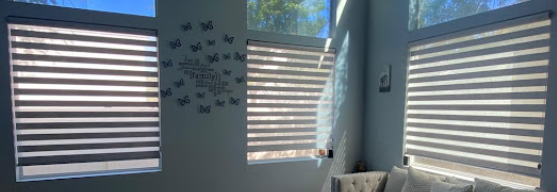
Easy-Clean Window-Covering Comparison
| Product | Best For | Typical Cleaning | Dust Collection Points | Light Control | Privacy | Motorization | Main Drawback |
|---|---|---|---|---|---|---|---|
| Faux-wood blinds | Kitchens, rentals, family rooms | Dusting plus approved damp wiping | Slats, ladder cords, headrail | Adjustable | Moderate | Motorized tilt or lift varies | Many individual surfaces |
| Plantation shutters | Whole-home use, kitchens, offices | Microfiber wiping; finish-specific moisture | Louvers, frames, hinges | Adjustable | Strong when closed | Motorized louver options vary | Permanent frame and panel clearance |
| Smooth roller shades | Bedrooms, offices, storefronts | Dusting; spot clean only if approved | Fabric, hem bar, fascia | Fabric-dependent | Fabric-dependent | Widely available | Stains can show on flat fabric |
| Cellular shades | Bedrooms and insulation | Gentle vacuuming or dusting | Pleats and cells | Fabric-dependent | Strong | Available in many systems | Pleats can trap dust |
| Roman shades | Decorative rooms | Vacuuming or specialty fabric care | Folds and lining | Strong when closed | Strong with lining | Available | More fabric folds |
| Zebra shades | Modern rooms | Gentle dusting | Layered bands and roller | Adjustable | Moderate | Commonly motorized | Layers are harder to wipe |
| Natural woven shades | Decorative dry spaces | Soft brush or low suction | Textured weave | Filtered | Variable | Some options | Texture catches dust |
| Exterior solar screens | Exterior heat control | Outdoor rinsing per instructions | Mesh and frame | Filtered | Daytime screening | Specialty systems | Outdoor dust and access |
Safe Cleaning Methods by Material
Microfiber dusting
Microfiber attracts fine dust without requiring aggressive pressure. Use a clean cloth and fold it frequently so collected grit is not dragged across the finish.
Low-suction vacuuming
A soft upholstery or brush attachment can remove dust from roller and cellular fabrics. High suction can pull fabric out of alignment or damage pleats.
Light damp wiping
Use moisture only when the manufacturer permits it. The cloth should be damp rather than dripping. Test an inconspicuous area first and dry the surface promptly.
Spot cleaning
Blot rather than scrub. Rubbing can spread a stain, change fabric texture or create a clean-looking halo around the spot. Use only approved solutions.
Compressed air
Compressed air can drive dust deeper into headrails or fabric and may spread debris through the room. It is rarely the best routine method.
Steam and pressure washing
Do not steam-clean or pressure-wash interior products unless the manufacturer specifically approves the method. Heat and force can damage adhesives, finishes, motors and fabrics.
Commercial cleaning routines
Businesses should document the approved cleaner, cloth type and frequency. Staff should know which products are wipeable and which require dry care.
Best Easy-Clean Product by Room
Kitchens
Faux-wood blinds or suitable composite shutters are practical because they can be wiped. Smooth coated roller fabrics may work when positioned away from splashes and cooking residue.
Bathrooms
Use moisture-suitable faux wood, composite shutters or approved roller materials. Ventilation remains important.
Bedrooms
Smooth blackout roller shades are easy to dust and provide privacy. Shutters offer a durable architectural alternative.
Living rooms
Shutters provide accessible louvers; roller shades offer the fewest exposed parts. Faux wood works well when adjustable light is the priority.
Nurseries
Cordless or motorized roller shades reduce dangling controls and are easy to dust. Keep furniture away from windows.
Rental properties
Faux-wood blinds are durable and familiar. Simple roller shades can also work when replacement fabric and controls are available.
Restaurants
Coated commercial roller shades and wipeable shutters may fit regular cleaning routines. Fabric selection must account for grease and food-service conditions.
Medical offices
Smooth roller shades reduce dust-catching detail. Product choice should match facility cleaning policies without claiming disease prevention.
Storefronts and offices
Commercial solar roller shades provide a clean profile, glare control and straightforward scheduled operation.
Desert Dust, HVAC Airflow and Cleaning Frequency
Las Vegas dust is fine enough to settle on narrow slat edges, shutter frames and roller fabric. Open doors, construction, landscaping, pets and nearby roads can increase accumulation. HVAC airflow may carry dust toward windows, especially where supply registers direct air across the covering.
No universal cleaning schedule
A quiet bedroom may need only occasional dusting, while a kitchen, storefront or pet-friendly room may need attention much more often. Clean based on visible accumulation and the product’s care instructions.
Start at the top
Dust headrails, fascia and upper louvers before lower areas so debris does not fall onto cleaned surfaces. Finish with the sill and floor.
Use clean tools
A dirty duster redistributes grease and dust. Launder microfiber cloths without fabric softener when possible because residue can reduce dust pickup.
Reduce unnecessary touching
Use lift controls, remotes and handles instead of pulling fabric or slats. Motorization can reduce fingerprints in high-use rooms.
Inspect while cleaning
Cleaning is a good time to notice loose brackets, frayed cords, uneven rails, damaged louvers and noisy motors before the issue grows.
Custom-Fit vs Ready-Made Easy-Clean Coverings
Ready-made products
Ready-made blinds and shades may suit temporary rooms and standard openings. They can leave extra gaps, rub against trim or require shortening, which complicates cleaning and operation.
Custom-fit products
Custom measurement helps keep slats, fabric and rails clear of handles, counters, furniture and uneven frames. A cleaner installation is easier to access and less likely to scrape or collect dirt at contact points.
Inside mount
Inside-mounted products look built in but place fabric and hardware close to the glass and sill, where condensation and dust can collect. Adequate depth is required.
Outside mount
Outside mounting provides more clearance and coverage but extends over wall or trim surfaces. The wider product needs enough room to remain accessible.
Large windows
One oversized product may be difficult to remove or clean. Dividing shades at mullions can improve access and serviceability.
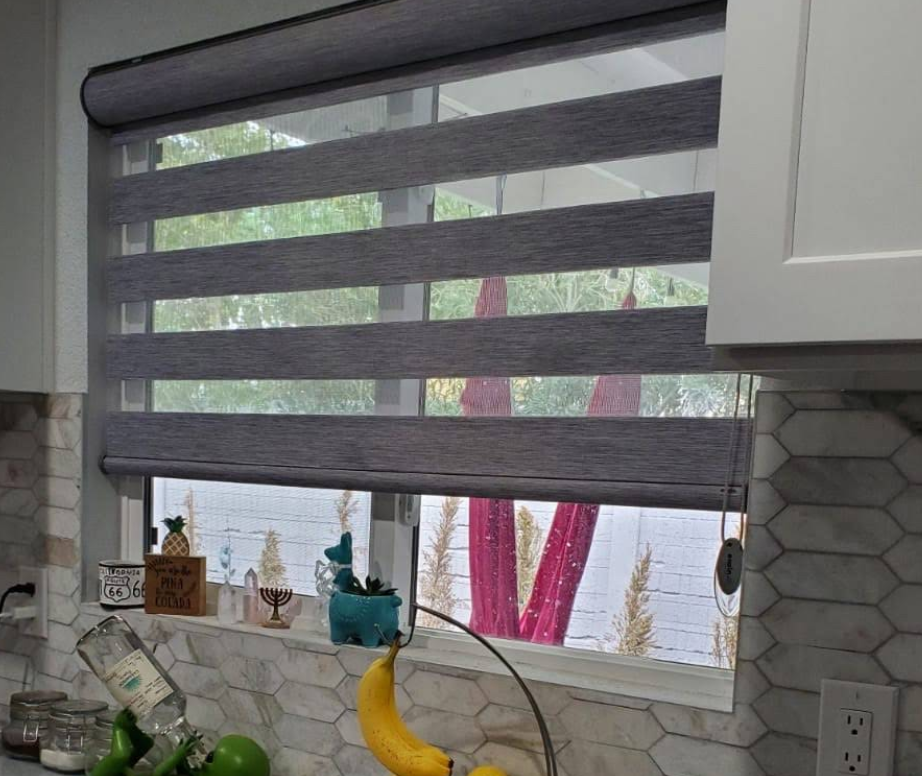
Motorization and Smart Controls for Cleaner Operation
Motorized shades do not clean themselves, but they reduce handling of fabric and bottom rails. In restaurants, offices and homes with high windows, remote or scheduled operation can help keep products aligned and reduce fingerprints.
Remote control
A dedicated remote is simple and avoids touching the shade. Label multi-channel remotes by room or group.
Wall switches
Wall controls are familiar for guests and staff. Place them where users do not reach across counters or furniture.
App and voice control
Compatible systems may use apps, schedules or voice assistants. Exact functions depend on the motor, bridge and smart-home platform.
Power access
Rechargeable motors need reachable charging points. Hardwired systems may be better for high windows. Keep charging ports and power supplies dry during cleaning.
Manual backup
Ask how the shade operates if connectivity fails. A remote or wall switch is useful when an app is unavailable.
Safe Homeowner Checks and Cleaning Limits
Safe checks
- Look for loose brackets before cleaning.
- Lower shades fully and inspect for damage.
- Check whether slats and louvers move normally.
- Confirm cordless shades stay level.
- Replace accessible remote batteries.
- Charge reachable rechargeable motors.
- Remove dust with a clean microfiber cloth.
- Test approved cleaner in a hidden area.
- Keep furniture clear of shade travel.
- Review the manufacturer’s care instructions.
Do not do these things
- Do not stand on unstable furniture.
- Do not remove large shades alone.
- Do not disassemble motors or headrails.
- Do not force jammed shades or stiff louvers.
- Do not pull hard on stuck cords.
- Do not let children play with cords.
- Do not pressure-wash interior products.
- Do not saturate fabric or electrical components.
- Do not use abrasive pads or harsh chemicals.
- Do not drill into unknown wall cavities.
When to Clean, Repair, Upgrade or Replace
Clean when
The product operates normally, dust is the main concern, the finish is intact and the manufacturer provides a safe cleaning method.
Repair when
A bracket is loose, a remote battery failed, a tilt mechanism is replaceable, one slat or louver is damaged, a chain needs service or a shade requires adjustment.
Upgrade when
The owner wants cordless controls, motorization, better privacy, stronger glare control, easier cleaning or a more consistent commercial appearance.
Replace when
Fabric is permanently stained, multiple slats are broken, the headrail is failing, the shade no longer raises evenly, parts are unavailable, cords create a safety concern or the product no longer fits the room.
Cost factors
Pricing depends on measurements, quantity, product, material, control, motorization, mounting, access, custom shapes, electrical requirements and removal of old products. Request an itemized quote rather than relying on one fixed per-window figure.
Easy-Clean Window Coverings for Commercial Properties
Retail stores
Smooth solar roller shades are practical for glare and storefront consistency. Staff can dust broad fabric surfaces without cleaning many slats.
Restaurants
Choose coated, cleanable materials where permitted and keep fabric away from food preparation. Shutters or faux wood may suit dining areas with frequent wiping.
Medical offices
Smooth roller products reduce dust-catching detail. Cleaning procedures must match facility policy, and no covering should be described as disease-proof.
Professional offices
Motorized solar shades reduce screen glare and handling. Grouped controls help keep multiple shades aligned.
Hospitality
Guest rooms need durable, clearly documented cleaning routines. Blackout roller shades may be simpler than elaborate fabric treatments.
Multi-unit properties
Standardized faux-wood blinds or roller shades simplify replacement parts, staff training and tenant handover.
Las Vegas and Clark County Maintenance Considerations
Fine desert dust is the most obvious local factor, but strong sun also affects finishes and fabrics. Products near west-facing windows in Summerlin, Spring Valley, Enterprise and Henderson may age differently from coverings on shaded elevations.
Homes in The Lakes, Desert Shores and Green Valley may have moisture near pools or landscaping, while kitchens and bathrooms add interior humidity. Material selection should match the room rather than assuming every faux-wood, composite or fabric product has identical moisture tolerance.
Large windows in The Ridges, Red Rock Country Club, Southern Highlands and Seven Hills may require motorization and high-access service planning. A product is not truly easy to maintain if routine charging or cleaning requires unsafe ladder use.
Older Las Vegas and Winchester homes may have uneven openings that make custom measurement valuable. HOA communities may regulate exterior solar screens, but interior easy-clean blinds, shutters and shades generally create fewer exterior concerns.
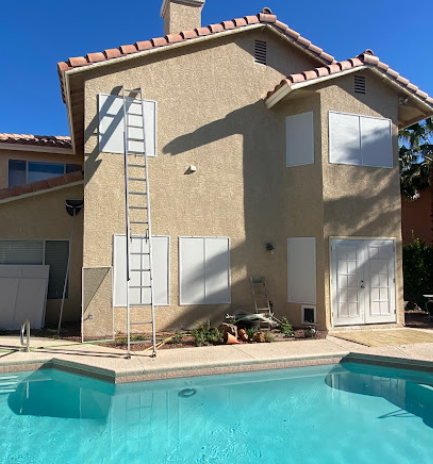
Detailed Maintenance Planning Before You Order
Identify the type of dirt
Ordinary dry dust is different from cooking grease, makeup, hairspray, fingerprints, pet residue or outdoor debris. A product that is easy to dust may not be easy to degrease. Tell the consultant what happens in the room rather than simply asking for a “washable blind.”
Choose a finish that hides normal dust
Very dark slats and shutters can show pale desert dust quickly. Brilliant white products may reveal grease, fingerprints and dark pet hair. Mid-tone grays, beiges and wood-inspired finishes may look cleaner between maintenance sessions, though design and exterior appearance still matter.
Consider the number of horizontal surfaces
Faux-wood blinds and shutters are wipeable, but every slat or louver needs attention. A roller shade has one broad fabric plane and can be faster for routine dusting. Buyers should distinguish “easy to wipe” from “fastest to clean.”
Check control placement
Chains, wands, remotes and wall switches become high-touch points. Choose controls that can be cleaned according to their instructions and placed away from sinks, cooking areas and wet counters.
Plan for pets
Pet hair can cling to textured fabric and collect along bottom rails. Rigid slats and smooth roller materials are often easier to vacuum or wipe. Keep shade travel clear of pet beds and scratching areas.
Plan for children
Cordless and motorized controls reduce dangling cords, but fingerprints may appear on low bottom rails. Smooth wipeable finishes and secure mounting are useful. Keep climbable furniture away from windows.
Think about turnover cleaning
Landlords and property managers need products that can be inspected quickly between tenants. Standardized faux-wood blinds or roller shades simplify parts and cleaning procedures across multiple units.
Review replacement components
Ask whether slats, louvers, remotes, chains, motors and fabric panels are replaceable. A minor stain or broken part should not automatically require replacing an entire room of coordinated coverings.
Document approved products
Keep care instructions with property records. Commercial cleaners and future tenants should know which surfaces allow damp wiping and which require dry methods.
Test the cleaning method
Before cleaning a full visible surface, test a hidden area. Check for color transfer, gloss changes, water marks and fabric distortion. Stop if the finish changes.
Common Cleaning Mistakes That Damage Window Coverings
Using too much water
Water can enter headrails, swell unsupported materials, mark fabric, affect adhesives and reach motors. A damp cloth is different from a wet cloth. Keep moisture controlled and dry surfaces promptly.
Spraying cleaner directly
Direct spray creates drips and overspray on walls, glass and fabric. Apply an approved cleaner to the cloth first unless the product instructions say otherwise.
Scrubbing one spot aggressively
Hard rubbing can polish a matte finish, distort fabric or spread a stain. Blot gently and repeat only as allowed.
Closing dirty slats together
Greasy slats can transfer residue to adjacent surfaces when closed. Remove loose dust first, then clean each affected area carefully.
Pulling on fabric
Users sometimes hold roller fabric while wiping and pull it out of alignment. Support the hem bar and use light pressure so the shade does not telescope or wrinkle.
Ignoring the headrail
Cleaning only the visible slats or fabric leaves dust in the headrail, fascia and upper frame. Dust from above can quickly fall onto the newly cleaned covering.
Using one cloth for the whole room
A cloth loaded with dust and grease spreads residue. Rotate or replace cloths often and keep tools used in kitchens separate from those used on bedroom fabric.
Reinstalling while damp
If a removable component is cleaned, allow it to dry according to product instructions before reinstallation. Trapped moisture can create marks and affect hardware.
How to Choose Among the Three Easy-Clean Options
Choose faux-wood blinds when adjustable light is the priority
Faux-wood blinds are a practical choice when occupants frequently change the angle of the light. They work well in kitchens, rental homes, family rooms and offices where a familiar control system matters. They are usually more forgiving around ordinary moisture than natural wood, but every finish still has its own care limits. The main maintenance tradeoff is the number of slats. Each slat is wipeable, yet a full cleaning takes longer than dusting one roller-shade panel.
Choose plantation shutters when durability and appearance matter most
Plantation shutters are worth considering when the owner wants a long-term architectural product that looks finished from inside and outside. The louvers are broad and easy to reach, and the frame provides a solid surface for routine dusting. They suit living rooms, kitchens, bedrooms and professional offices. Their tradeoff is that hinges, frames, louvers and tilt hardware create more components than a roller shade. Panel clearance must also be planned so furniture does not block opening.
Choose smooth roller shades when speed and simplicity matter most
Smooth roller shades are often the fastest of the three to dust because they have one broad material surface. They fit modern interiors, offices, medical spaces, restaurants and storefronts. Their performance depends heavily on fabric. A smooth coated solar or privacy fabric may be straightforward to maintain, while a delicate decorative textile may require dry cleaning or specialty care. The fabric should be selected for the room rather than chosen by appearance alone.
Use different products in different rooms
A whole home does not need one product everywhere. Faux wood may work in kitchens and rentals, shutters may suit street-facing living rooms, and roller shades may be ideal for bedrooms and offices. Coordinated colors and exterior-facing finishes can create consistency even when the mechanisms differ.
Prioritize access
An easy-clean product becomes difficult when installed above stairs or behind deep furniture. High windows may justify motorization, longer cleaning tools or professional maintenance access. Discuss those conditions before ordering.
Balance cleaning with privacy and glare
The easiest product to clean is not automatically the best product for the room. Faux-wood slats offer adjustable light but not complete blackout. Roller shades offer a clean profile but may provide limited nighttime privacy if solar fabric is chosen. Shutters provide strong privacy but create a more permanent visual feature. The final choice should satisfy maintenance, privacy, glare and design goals together.
Simple Monthly and Seasonal Maintenance Routine
Monthly visual check
Look for visible dust, fingerprints, loose brackets, uneven bottom rails, stiff louvers, frayed controls and motor noise. Addressing a small issue early can prevent a more expensive repair.
Light dusting
Use a clean microfiber cloth or approved soft attachment. Work from the top of the product downward. Finish by cleaning the sill and nearby floor.
Seasonal deeper cleaning
Kitchens, rentals and commercial spaces may need a more detailed cleaning several times a year. Remove surface dust first, then use only the moisture and cleaner allowed for the exact material.
Motor and remote check
Replace accessible remote batteries, recharge compatible motors and confirm that grouped shades stop correctly. Keep water away from motors, ports and power supplies.
Commercial documentation
Businesses should keep a short written cleaning procedure for staff. It should identify the approved cloth, cleaner, method and person responsible for reporting damage.
Review after remodeling or construction
Construction dust can be abrasive. Do not drag a dirty cloth across finished slats or fabric. Remove loose particles gently and inspect brackets after nearby work.
Know when to stop
If fabric changes color, a finish becomes sticky, a motor makes unusual noise or a slat begins to crack, stop cleaning or operating the product and request service guidance.
Questions to Ask Before Hiring a Window-Covering Company
- Which three products are easiest to clean for this room?
- Can the material be damp-wiped or only dusted?
- What cleaner and cloth are approved?
- Does the fabric have a smooth or textured surface?
- Will grease, moisture or fingerprints be a concern?
- Is the product custom measured?
- Does the quote include installation?
- Does it include removal of old coverings?
- Is the control cordless?
- Can the product be motorized?
- What power and controls are included?
- How are high windows cleaned or charged?
- Are replacement slats, louvers or fabric available?
- What parts are included in the quote?
- Will the covering interfere with handles or counters?
- Can I see and touch product samples?
- What warranty documents apply?
- Will I receive a written estimate before ordering?
Red Flags When Buying Easy-Clean Window Coverings
- “Maintenance-free” claims with no care instructions.
- No explanation of whether moisture is allowed.
- Delicate fabric recommended beside cooking or splashing water.
- No samples to evaluate texture and wipeability.
- No discussion of dust-catching folds or slats.
- No access plan for high windows.
- Motorization proposed without charging access.
- No child-safety discussion.
- No explanation of replacement parts.
- Harsh cleaners recommended without manufacturer support.
- No accurate measurement.
- Unclear installation charges.
- No written product specification.
- No clear local business identity or Google Maps presence.
- Pressure to order before maintenance needs are discussed.
Why Consider Las Vegas Blinds, Solar Screens & Shutters Window Coverings Center?
Las Vegas Blinds, Solar Screens & Shutters Window Coverings Center is a local option for homeowners, landlords, renters, property managers, designers and businesses comparing easy-clean window coverings for Southern Nevada.
The team can help compare faux-wood blinds, plantation shutters, roller shades, solar shades, blackout shades, cellular shades, motorized products and commercial window coverings. A useful consultation considers dust, moisture, room use, cleaning access, privacy, glare and the desired design.
Call (702) 237-4401, request help choosing easy-clean window coverings, browse the window-covering product catalog, compare faux-wood blinds, or review plantation shutters.
For a related sunlight-protection topic, read the previous guide to UV-blocking window blinds and shades. View the Las Vegas window-covering location on Google Maps.
Areas Served
The business serves customers in these communities from its Las Vegas location. Service in a neighborhood does not imply a separate physical office there.
Frequently Asked Questions About Easy-Clean Window Coverings
What are the three easiest window coverings to clean?
Faux-wood blinds, plantation shutters and smooth roller shades are among the easiest choices because their surfaces are accessible and they have fewer delicate folds than many fabric treatments.
Are faux-wood blinds easy to clean?
Yes. They can usually be dusted and, when the manufacturer allows it, lightly wiped. Cleaning every slat takes more time than cleaning one roller-shade panel.
Are plantation shutters low maintenance?
Plantation shutters are durable and easy to dust, but their louvers, frames, hinges and tilt rods still need routine attention.
Can roller shades be wiped clean?
Some coated roller fabrics allow gentle spot wiping, while others require dry dusting or vacuuming. Always follow the instructions for the exact fabric.
Which easy-clean covering is best for a kitchen?
Faux-wood blinds or suitable composite shutters are practical because they are wipeable. Smooth coated roller shades may also work away from heavy grease and splashes.
Are easy-clean shades available with motorization?
Yes. Many roller shades can use rechargeable, plug-in or hardwired motors with remote, app or scheduled controls.
What is easiest to maintain in a commercial office?
Smooth commercial roller or solar shades are often practical because they have broad surfaces, minimal exposed hardware and optional grouped controls.
How can I request a Las Vegas consultation?
Call Las Vegas Blinds, Solar Screens & Shutters Window Coverings Center at (702) 237-4401 to ask about current consultation, measurement and installation availability.
Find the Las Vegas Location
Las Vegas Blinds, Solar Screens & Shutters Window Coverings Center is located at 3871 S Valley View Blvd #6, Las Vegas, NV 89103. Call before visiting to confirm current availability.
Choose Easy-Clean Window Coverings for Your Las Vegas Property
Call Las Vegas Blinds, Solar Screens & Shutters Window Coverings Center at (702) 237-4401 to compare faux-wood blinds, plantation shutters and smooth roller shades for your home, rental or business.