UV-Blocking Window Blinds and Shades
Compare solar, blackout, cellular, shutter and motorized window coverings for reducing direct sunlight, glare and fading risk in Las Vegas homes and businesses.
Which Window Blinds and Shades Help Block UV Exposure?
Opaque blackout shades, tightly woven roller shades, closed cellular shades, plantation shutters and properly selected solar shades can all reduce the amount of sunlight reaching floors, furniture, artwork and merchandise. The strongest protection generally comes from products that cover the glass completely and use dense or opaque materials. Solar shades preserve more view but allow more light through, so their performance depends on the exact fabric, openness factor and published product data.
UV exposure is only one cause of fading. Visible light, solar heat, material sensitivity and time also contribute. No responsible window-covering company should promise that blinds or shades will make furnishings fade-proof. A useful product reduces exposure while balancing daylight, view, privacy and room use.
In Las Vegas, west- and south-facing windows deserve the most attention because of intense direct sunlight. Custom measurement matters because uncovered side gaps, partially open louvers and shades left raised during peak sun allow concentrated exposure. Motorized schedules can improve consistency on high or frequently forgotten windows.
Why UV-Blocking Window Coverings Matter in Las Vegas
Las Vegas interiors receive unusually strong sunlight for much of the year. Hardwood floors, luxury vinyl, rugs, leather furniture, upholstery, artwork, photographs, cabinetry, retail displays and restaurant finishes can all change color when repeatedly exposed to sunlight. Homeowners often call this “UV damage,” although fading usually results from ultraviolet radiation, visible light and heat acting together.
Homes in Summerlin, Henderson, Spring Valley, Enterprise and North Las Vegas commonly feature large windows and sliding doors. These openings bring in attractive daylight but can create narrow bands of exposure that move across the room. A sofa may fade unevenly, flooring near the glass may differ from flooring under a rug, and artwork can lose contrast.
Landlords and property managers need durable products tenants will actually use. Interior designers must balance protection with color accuracy and daylight. Commercial operators need consistent storefront presentation without making the space feel closed. UV-blocking blinds and shades should therefore be selected as part of a complete light-management plan.
The right product depends on how much view the owner wants to preserve, whether nighttime privacy is needed, how dark the room may become, whether the windows are high or oversized, and how consistently the covering will be closed during direct sun.
UV, Visible Light and Heat: What Actually Causes Fading?
Ultraviolet radiation
Ultraviolet radiation is invisible energy from sunlight. It can contribute to chemical changes in dyes, finishes, plastics, paper and natural materials. Different materials respond differently, and some colors fade faster than others.
Visible light
Visible daylight also contributes to fading. A product can reduce UV exposure while still admitting enough visible light to affect sensitive furnishings over time. A single UV percentage does not tell the whole protection story.
Solar heat
Heat can accelerate material aging and create thermal stress. A west-facing room may experience both strong light and elevated surface temperatures. Solar screens, solar shades and other heat-control products can improve comfort while reducing direct exposure.
Time and material sensitivity
A brief period of sun may cause no visible change, while repeated daily exposure over months or years can become noticeable. Natural wood, textiles, photographs and artwork vary widely in sensitivity.
Why no room is fade-proof
Light can enter through uncovered windows, edge gaps and doors. Furnishings may also change from age, oxidation, cleaning and indoor lighting. Window coverings reduce exposure; they do not eliminate every cause of color change.
Best UV-Blocking Blinds and Shades for Las Vegas
Blackout roller shades
Opaque fabrics prevent direct sunlight from passing through the material when fully closed. They are a strong interior choice for bedrooms, media rooms, galleries and storage areas. Perimeter gaps remain unless outside mounting, side channels or layered curtains are used.
Room-darkening roller shades
These reduce substantial light but may transmit more than true blackout materials. They suit bedrooms and living rooms where strong coverage is wanted without complete darkness.
Solar roller shades
Open-weave fabric reduces glare and solar exposure while preserving some outward view. Lower openness generally provides stronger screening. Review product-specific data rather than assuming all solar fabrics perform alike.
Cellular or honeycomb shades
Folded fabric and enclosed cells provide light control and insulation. Opaque or room-darkening versions offer stronger sunlight coverage, while light-filtering versions preserve more brightness.
Plantation shutters
Closed louvers create a substantial barrier against direct sun. Louvers can redirect light toward the ceiling while protecting furniture, though small gaps remain.
Roman shades
Roman shades can use light-filtering, lined, room-darkening or blackout fabrics. Lining improves coverage and protects decorative face fabric.
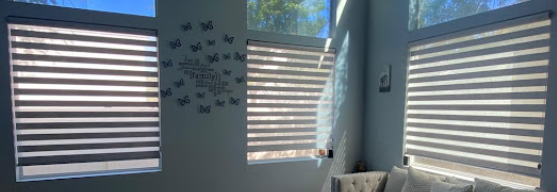
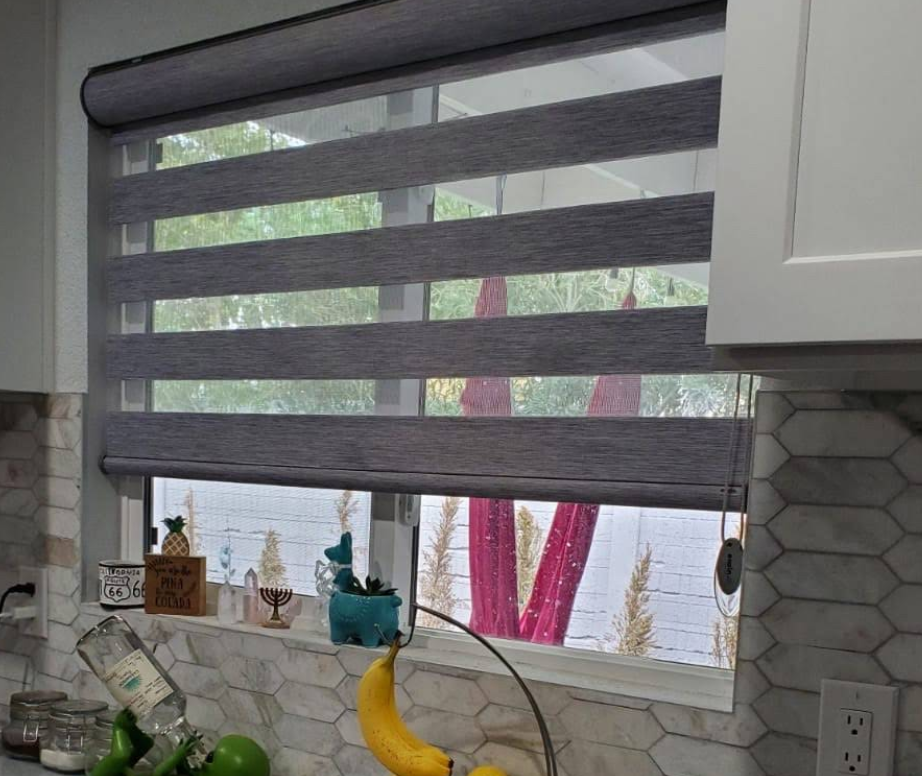
Zebra or layered shades
Alternating sheer and opaque bands provide adjustable light. They are useful for design and flexibility but usually do not equal a blackout shade.
Faux-wood blinds
Closed slats reduce direct sunlight and are easy to adjust. Light can pass through slat gaps, so curtains or exterior screening may improve protection.
Exterior solar screens
Exterior mesh intercepts sunlight before it reaches the glass. Mesh density, color, fit, wind exposure and HOA approval all matter.
UV-Blocking Window-Covering Comparison
| Product | Best For | Sunlight Reduction | View | Privacy | Heat and Glare | Main Tradeoff |
|---|---|---|---|---|---|---|
| Blackout roller shade | Bedrooms, media rooms, sensitive displays | Very strong through fabric | None when closed | Strong | Strong when closed | Perimeter gaps and loss of daylight |
| Room-darkening shade | Bedrooms and living areas | Strong, fabric-dependent | None when closed | Strong | Good | Not complete blackout |
| Solar roller shade | Living rooms, offices, storefronts | Product- and openness-dependent | Partial | Mostly daytime | Strong glare control | Limited nighttime privacy |
| Cellular shade | Bedrooms, offices, whole-home comfort | Moderate to very strong | None when closed | Strong | Good heat and insulation control | Side gaps and fabric-care requirements |
| Plantation shutter | Architectural whole-home treatment | Strong when louvers close | Adjustable | Strong | Good | Small louver gaps and permanent frame |
| Roman shade | Decorative rooms | Strong with suitable lining | None when closed | Strong | Fabric-dependent | Heavier folds and cleaning needs |
| Zebra shade | Modern adjustable-light spaces | Moderate | Adjustable | Moderate | Moderate | Not maximum protection |
| Faux-wood blind | Kitchens, rentals, general rooms | Moderate when closed | Adjustable | Good | Moderate | Light passes through slat gaps |
| Exterior solar screen | Severe west-facing exposure | Strong, mesh-dependent | Mesh-filtered | Daytime screening | Strong exterior position | Exterior appearance and approval |
How Solar Shade Openness Affects Protection
Solar-shade openness describes the visible open area in the weave. A tighter weave generally admits less light and provides more screening. A more open weave preserves a clearer view and more daylight. The correct selection depends on orientation and room use.
Lower openness
Often appropriate for west-facing rooms, television glare, offices and spaces with sensitive furnishings. The view becomes more filtered and daytime privacy is stronger.
Higher openness
Useful when preserving a scenic view is a priority and direct exposure is moderate. It allows more visible light and usually less screening.
Color
Dark solar fabrics often improve outward view and reduce internal glare. Light fabrics can create a brighter appearance. Product-specific optical values are more useful than color assumptions alone.
Nighttime privacy
Solar fabric does not provide dependable nighttime privacy. Pair it with an opaque treatment when privacy after dark is required.
Blackout Fabric vs Complete Window Coverage
Blackout describes the fabric, not the entire installed opening. Light can enter around the top, sides and bottom. Inside-mounted shades need operating clearance, and those gaps may expose narrow strips of flooring or art.
Outside mounting
An outside mount overlaps the frame and can reduce edge exposure. It changes the visible size of the treatment and may cover trim.
Side channels
Specialty channels capture fabric edges and improve darkness. They add hardware, measurement requirements and cost.
Layered curtains
Drapery can overlap a shade and cover side gaps. A cornice or valance can reduce light entering at the top.
Sliding doors
Large doors may need vertical cellular shades, panel tracks, wide roller systems or motorized drapery rather than a standard narrow shade.
Shutters and Blinds for Adjustable Sun Protection
Shutter louvers
Louvers can direct daylight toward the ceiling while reducing direct rays on furniture. Split-tilt designs can control upper and lower sections separately.
Horizontal blind slats
Tilting slats changes the path of light. The ideal angle depends on window height, sun position and the location of sensitive items. Closing slats fully provides stronger coverage.
Materials
Composite and faux-wood products can be practical in Las Vegas heat. Real wood and decorative finishes should be selected with direct-sun exposure in mind.
Cleaning
Shutters and blinds have multiple horizontal surfaces that collect desert dust. They are often wipeable but require more individual surface cleaning than a flat roller shade.
Motorized UV-Blocking Shades and Smart Scheduling
Motorization can improve protection because the best fabric provides little benefit when it remains open during peak sun. Schedules can close west-facing shades before afternoon exposure and reopen them after the sun moves away.
Remote control
A handheld remote offers simple group operation without requiring an app. It is useful for high or multiple windows.
App and smart-home control
Compatible systems may support schedules, scenes, sunrise or sunset routines and voice control. Exact features depend on the motor, bridge and platform.
Sun sensors
Some systems respond to sunlight levels. Sensor placement and programming should be tested so shades do not move unnecessarily or close onto obstacles.
Power choices
Rechargeable motors suit many existing homes. Hardwired power is often worth considering for tall windows, new construction and whole-home projects.
Backup control
Ask how the shade operates if the internet or app is unavailable. Dedicated remotes or wall controls are useful backups.
Room-by-Room UV-Protection Guide
Living rooms
Solar or light-filtering roller shades preserve daytime view while reducing direct exposure. Use opaque layers during unoccupied hours when stronger protection is desired.
Bedrooms
Blackout or room-darkening cellular shades provide privacy, sleep control and strong sunlight coverage.
Home offices
Solar shades reduce monitor glare and protect desks, flooring and books while retaining useful daylight.
Dining rooms
Lined Roman shades or shutters protect tables and upholstery while supporting a finished design.
Kitchens
Faux-wood blinds, shutters and cleanable roller fabrics are practical near cooking and sinks.
Art rooms
Opaque shades provide the strongest control, but sensitive collections may also require conservation framing and controlled lighting.
Retail stores
Solar shades balance display visibility and exposure. Opaque shades can protect merchandise after hours.
Restaurants
Zoned solar shades can protect finishes and improve customer comfort without closing the entire dining room.
Medical offices
Solar shades reduce glare in waiting areas; opaque privacy shades suit consultation rooms.
Protecting Flooring, Furniture, Artwork and Merchandise
Flooring
Direct sun can create uneven color between exposed areas and spaces under rugs or furniture. Cover the glass during peak exposure and rotate rugs when practical.
Upholstery and leather
Fabric, leather and synthetic upholstery can change with light and heat. Solar shades preserve brightness; blackout shades provide stronger protection when a room is unused.
Wood furniture and cabinetry
Natural wood may darken or lighten depending on species and finish. Consistent exposure management reduces sharp contrast.
Artwork and photographs
Highly sensitive pieces should not rely solely on window coverings. Consider placement away from direct sun, conservation framing and controlled lighting.
Retail merchandise
Clothing, packaging, art and furniture displays can fade unevenly. Commercial solar shades, display rotation and other solar-control products may be used together.
Plants
Plants need light, so complete blackout may not fit the room. Choose solar fabric or scheduled shades that reduce peak exposure without eliminating all daylight.
Why Custom Measurement and Installation Matter
Side gaps
Inside-mounted shades need operating clearance. A professional should explain expected gaps and whether an outside mount provides better coverage.
Window orientation
The same fabric is not always necessary throughout the property. West-facing windows usually need stronger control than north-facing glass.
Mounting depth
Cellular, roller and dual shades require different depths. Shallow frames may require outside mounting.
Large windows
Wide shades need stronger roller tubes and motors. Multiple shades may align with mullions for reliability.
Handles and locks
Hardware can interfere with shade travel. Shutters need frame clearance and panel-swing space.
High windows
Motorized or hardwired products may be more practical than manual shades that cannot be reached safely.
Exterior screens
Frame fit, attachment, wind, egress and HOA approval must be considered.
Safe Homeowner Checks
Safe checks
- Identify windows receiving direct afternoon sun.
- Observe which furnishings and floors receive the light.
- Check whether shades cover the complete glass.
- Look for side and bottom gaps.
- Test whether blinds tilt and close evenly.
- Check whether cordless shades remain level.
- Replace accessible remote batteries.
- Charge reachable shade batteries.
- Review manufacturer cleaning instructions.
- Check HOA rules before exterior screens.
Avoid these actions
- Do not stand on unstable furniture.
- Do not remove oversized shades without assistance.
- Do not force jammed motors or lift systems.
- Do not drill into unknown wall cavities.
- Do not use harsh chemicals on fabric.
- Do not pressure-wash interior shades.
- Do not bend shutter louvers.
- Do not alter child-safety devices.
- Do not promise that any product prevents all fading.
- Do not modify exterior screens without required approval.
Cleaning, Repairing, Upgrading or Replacing Existing Coverings
Cleaning may be enough
If the product operates normally and dust is the main issue, use gentle manufacturer-approved cleaning. Dirty solar fabric and louvers may transmit light unevenly.
Minor repair may be practical
Loose brackets, worn handles, remote batteries, end caps, slats and minor alignment problems may be serviceable when compatible parts are available.
Upgrade for better coverage
Add curtains, side channels, outside mounting or motorization when the existing product works but does not cover peak exposure consistently.
Replace when goals have changed
Replacement may be practical when fabric is torn, slats are broken, rails no longer stay level, motors are obsolete, parts are unavailable or large areas remain exposed.
Compare more than repair cost
A repair may restore operation but not improve UV, privacy or heat performance. Compare the repaired product with the room’s current needs.
What Affects the Cost of UV-Blocking Blinds and Shades?
Window dimensions
Wider and taller openings require more material and stronger hardware.
Product category
Roller, cellular, shutter, Roman and exterior-screen systems differ in construction.
Fabric opacity
Solar, light-filtering, room-darkening and blackout materials vary.
Mounting method
Inside, outside, ceiling and exterior mounts have different requirements.
Motorization
Motors, remotes, bridges, power and programming add components.
Accessories
Fascia, cassettes, valances and channels improve finish or coverage.
High access
Stairs, tall ceilings and commercial glass may require equipment.
Removal
Old coverings and surface repair may be separate scope.
Request an itemized quote that identifies the exact product, fabric, control, mounting method and installation. Avoid comparing a ready-made blind with a custom blackout or motorized shade as though they are equivalent.
Commercial UV-Blocking Window Coverings
Retail stores
Solar roller shades reduce exposure while maintaining daytime visibility. Opaque shades may protect displays after hours.
Restaurants
Zoned shades protect upholstery and artwork while improving customer comfort. Controls should remain simple for staff.
Medical offices
Waiting areas may use solar shades; treatment and consultation rooms require opaque privacy products.
Professional offices
Glare reduction and monitor visibility usually determine the fabric. Motorized schedules can protect workstations consistently.
Hospitality
Guest rooms often need blackout products; lobbies may need solar shades that preserve views. Durability and replacement planning matter.
Storefronts
Window coverings affect merchandise visibility and exterior presentation. Solar fabric, film and exterior screens should be compared with lease requirements.
Las Vegas and Clark County Conditions
Las Vegas receives intense direct sun, especially on west- and south-facing glass. Homes in Summerlin, The Lakes, Desert Shores, Spring Valley and Enterprise often experience strong late-afternoon exposure. Henderson, Anthem, Seven Hills and Inspirada homes may have large windows and open desert views that increase sunlight inside.
Dry desert dust settles on screen mesh, shutter louvers and shade fabric. Cleaning requirements should be part of product selection. Dark fabrics may show pale dust, while light materials may show marks.
Large modern windows in The Ridges, Red Rock Country Club, Southern Highlands and MacDonald Highlands may require motorized shades, stronger tubes and planned power. Older Las Vegas and Winchester homes may have uneven openings where outside mounting provides better coverage.
HOA communities may regulate exterior solar screens and visible backing colors. Interior products are usually easier to approve, but street-facing consistency can still matter.
Seasonal operation matters. During cooler winter periods, beneficial sunlight may be welcome. Motorized schedules should be reviewed seasonally instead of closing every shade the same way all year.
Detailed UV-Protection Buying Checklist
Map the sun path
Observe the room at several times of day. Mark where direct sunlight reaches floors, upholstery, artwork and merchandise. Target the exposure instead of darkening every window.
Rank items by sensitivity
Original artwork, photographs, natural textiles and certain finishes may deserve stronger protection than replaceable furnishings. Move highly sensitive pieces away from direct sun when practical.
Choose an acceptable view level
Blackout products provide stronger coverage but remove the view. Solar shades preserve view but admit more light. Decide which tradeoff is acceptable before choosing fabric.
Evaluate privacy
A solar shade that screens daytime views may become transparent at night. Bedrooms and ground-floor rooms often need a second opaque layer.
Test samples during peak exposure
Hold fabric at the actual glass. Look at transmitted color, brightness, glare and outside view. Online images cannot reproduce these qualities accurately.
Review edge coverage
Measure how much glass remains exposed. Outside mounting, side channels and drapery can improve coverage when sensitive surfaces sit near the window.
Plan operation
A manually operated shade must remain easy to reach. High or blocked windows are good candidates for motorization.
Document product data
Keep the fabric name, opacity, openness, color, motor, power source, dimensions and care instructions for future service.
Additional Design and Performance Considerations
Color rendering inside the room
Every fabric changes the color of transmitted daylight. Warm beige materials can make white walls appear warmer, while cool gray fabrics may shift the room toward blue. This matters in art rooms, retail stores, photography spaces and interiors where accurate color is important. Test large samples at the window during peak sun before ordering.
Exterior-facing color
Street-facing windows may need a consistent neutral backing even when the interior face uses a decorative color. HOA communities and commercial landlords may regulate visible backing colors. Ask whether the selected product uses one color on both sides or a separate exterior-facing layer.
Stack and exposed glass
When a shade is fully raised, the fabric forms a roll or stack near the headrail. Large cellular, Roman and blackout products may cover part of the upper glass even when open. This affects view and daylight but does not provide useful protection to the remaining exposed glass.
Partial operation
A shade lowered halfway protects only part of the room. Moving sunlight may pass below or beside it later in the day. Top-down bottom-up shades create flexible privacy but expose glass at the top, so they should be positioned according to the actual sun path.
Multiple-window alignment
When several shades share one wall, consistent hem-bar height and roller alignment create a cleaner appearance. Motorized groups may need calibration so they stop at matching positions. Slight variations can be more visible on large modern glass walls.
Child and pet safety
Cordless and motorized controls remove many dangling lift cords, but secure mounting and furniture placement still matter. Children and pets should not play with chains, exposed support cords or moving shades. Follow the product’s safety instructions and keep cribs and climbable furniture away from windows.
Rental and property-management handover
For rentals, document remotes, charging cables, product labels and care instructions. A sophisticated shade loses value when a tenant does not know how to operate or charge it. Use simple controls in high-turnover properties and retain replacement-part information.
Commercial scheduling
Businesses should create a straightforward shade routine. West-facing shades may close before afternoon exposure, while storefront shades may reopen when direct sun passes. Assign responsibility for remotes and app accounts so staff changes do not disrupt operation.
Evaluating long-term value
Purchase price is only one factor. Consider durability, cleaning, motor access, battery charging, replacement fabric, parts and whether the product remains useful as room needs change. A custom product that fits and operates consistently can offer better value than a cheaper shade that remains open or leaves critical gaps.
Combining exterior and interior products
Severe exposures may justify exterior solar screens plus interior privacy or blackout shades. Each layer should have a defined purpose. Too many layers can make a room unnecessarily dark, complicate cleaning and increase cost without improving the most important goal.
How to Match UV Protection to Window Orientation
West-facing windows
West-facing windows usually create the most aggressive late-afternoon exposure in Las Vegas. The sun is low enough to reach far into living rooms, bedrooms and offices after the building has already warmed. Tighter solar shades, opaque roller shades, exterior solar screens or layered systems deserve priority on these elevations. Motorized schedules can close the treatment before the sun reaches valuable furniture or flooring.
South-facing windows
South-facing glass receives extended sunlight, but roof overhangs and architectural shading may reduce the highest summer sun. Review the actual room before selecting a product. A light-filtering or solar shade may preserve useful daylight, while sensitive artwork near the glass may require opaque coverage during certain hours.
East-facing windows
Morning sun can affect bedrooms, breakfast rooms and home offices. The exposure may be shorter than west-facing sun but still intense. Room-darkening shades are useful for sleep spaces, while solar shades can reduce glare for early computer work.
North-facing windows
North-facing windows generally receive less direct sunlight, but bright sky and reflected light can still contribute to fading. More open fabrics may be suitable when the view and natural light are priorities.
Reflected light
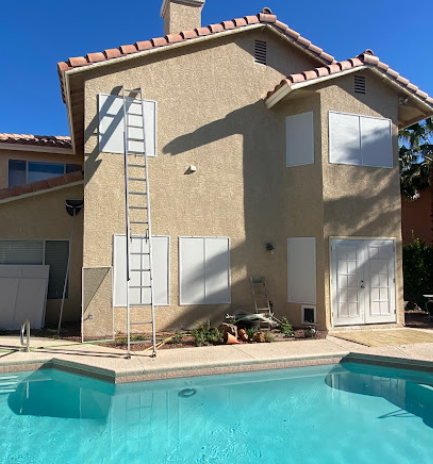
Pools, pale concrete, neighboring glass, desert landscaping and light-colored walls can reflect sunlight into windows that do not face the sun directly. On-site observation is more reliable than orientation alone.
Custom-Fit Products vs Ready-Made Blinds and Shades
Ready-made products
Ready-made blinds and shades can be useful for temporary rooms, rentals and standard-size openings. Their main limitation is fit. A product that is too narrow leaves exposed glass, while one that is too wide may bind or require unsafe modification. Motorized ready-made products may also have limited fabric, power and compatibility choices.
Custom-fit products
Custom products are manufactured for the measured opening and selected performance goal. They allow better control over fabric opacity, openness, color, mounting style, motorization and exterior appearance. Custom does not eliminate all side gaps, but it helps ensure those gaps are intentional and understood.
DIY measurement risk
Window openings may be narrower at the top than the bottom, and decorative trim, locks, sensors or cranks can interfere with operation. Measuring only once can produce a shade that does not fit. Final measurements should account for the product’s exact deductions and mounting hardware.
Installation surface
Drywall, wood, metal, tile, concrete and stucco require different fasteners. Secure mounting matters for large manual and motorized products. A shade that pulls away from the wall can damage the treatment and create a safety risk.
When custom measurement is most valuable
Professional measurement is particularly useful for oversized windows, bay windows, high openings, sliding doors, multiple matching shades, blackout side channels, exterior solar screens and homes with uneven older frames.
Practical Operating Strategies for Better Protection
Close shades before exposure begins
Waiting until furniture is already in direct sun reduces the benefit. Close or schedule shades shortly before peak exposure. Reopen them after the sun moves away to restore daylight and view.
Use stronger protection when rooms are empty
A living room may use solar shades while occupied and opaque shades or curtains when the family is away. Dual roller systems make this easier by combining a view-preserving layer with a privacy or blackout layer.
Rotate movable furnishings
Rugs, cushions, retail displays and lightweight furniture can be rotated periodically to reduce uneven exposure. This does not replace window coverings but can support a broader fading-management plan.
Protect the most valuable objects first
Move original art, photographs, instruments and sensitive textiles away from direct sun whenever possible. Use window coverings as one layer of protection rather than the only measure.
Review schedules seasonally
Sunrise, sunset and sun angle change through the year. A schedule that works in July may close too early in winter. Review motorized routines several times a year and after furniture is rearranged.
Inspect performance after installation
Watch the room through a full sunny day. Confirm that direct rays no longer reach the surfaces you intended to protect, that motors stop correctly and that privacy remains acceptable. Small programming or rail-position adjustments can improve the result.
Questions to Ask Before Hiring a Window-Covering Company
- Which product is recommended for the exact UV and fading concern?
- What product-specific solar or optical data is available?
- Is the shade solar, light-filtering, room-darkening or blackout?
- What openness factor does the solar fabric use?
- How much view and daylight will remain?
- Will the product provide nighttime privacy?
- What side and bottom gaps should I expect?
- Would an outside mount improve coverage?
- Does the quote include measurement and installation?
- Are fascia, side channels or valances included?
- Can the shade be motorized or scheduled?
- What power source is included?
- Are electrical services separate?
- How should the material be cleaned?
- Are replacement parts available?
- Does an exterior product require HOA approval?
- Can I view samples during peak sunlight?
- What warranty documents apply?
- Will I receive a written, itemized estimate?
Red Flags When Buying UV-Blocking Window Coverings
- Claims that one shade prevents all fading.
- Unsupported UV-blocking percentages.
- No discussion of visible light and heat.
- Every window receives the same product without orientation review.
- No physical samples at the actual glass.
- No explanation of openness or opacity.
- Blackout promised without discussing perimeter gaps.
- No nighttime privacy explanation.
- No measurement of mounting depth.
- No child-safety or control discussion.
- No cleaning instructions.
- No written product specification.
- Quote changes without explanation.
- No clear local business identity or Google Maps presence.
- Pressure to order before the protection goal is understood.
Why Consider Las Vegas Blinds, Solar Screens & Shutters Window Coverings Center?
Las Vegas Blinds, Solar Screens & Shutters Window Coverings Center is a local option for homeowners, landlords, property managers, designers and businesses comparing UV-blocking window blinds and shades for Southern Nevada.
The team can help compare solar shades, blackout shades, cellular shades, plantation shutters, faux-wood blinds, motorized shades, commercial window coverings and exterior solar screens. A useful consultation matches the product to the orientation, furnishing sensitivity, privacy goal, desired view and daily operating routine.
Call (702) 237-4401, request help choosing UV-blocking shades, browse the window-covering product catalog, review cellular shades in Las Vegas, compare plantation shutters, or explore motorized shades.
For another solar-control comparison, read solar screens vs window tint in Las Vegas. You can also find the business on Google Maps.
Areas Served
The business serves customers in these communities from its Las Vegas location. Service in a neighborhood does not imply a separate physical office there.
Frequently Asked Questions About UV-Blocking Blinds and Shades
What blinds or shades block the most UV exposure?
Opaque blackout shades, closed shutters and dense room-darkening or cellular shades generally provide the strongest coverage when fully closed. Actual protection depends on fabric, fit and product data.
Do solar shades block UV light?
Solar shades can reduce solar and UV exposure, but performance varies by fabric, openness and color. Review documentation for the exact fabric.
Can UV-blocking shades stop furniture from fading?
They can reduce exposure and fading risk, but cannot guarantee furniture will never fade. Visible light, heat, time and material sensitivity also contribute.
Are blackout shades better than blinds for UV protection?
Blackout shades usually provide more continuous coverage because horizontal blinds have slat gaps. Outside mounting or side channels can improve edge coverage.
Do plantation shutters protect floors from sunlight?
Closed shutters can substantially reduce direct sunlight, and adjustable louvers can redirect daylight. Small gaps remain.
Can UV-blocking shades be motorized?
Yes. Many solar, blackout, cellular and roller shades can use remote, app or scheduled controls. Availability depends on size, fabric, motor and power.
Are UV-blocking shades suitable for commercial properties?
Yes. Solar and opaque roller shades are used in offices, restaurants, medical spaces and storefronts to manage glare, exposure, privacy and comfort.
How can I request a Las Vegas consultation?
Call Las Vegas Blinds, Solar Screens & Shutters Window Coverings Center at (702) 237-4401 to ask about current consultation, measurement and installation availability.
Find the Las Vegas Location
Las Vegas Blinds, Solar Screens & Shutters Window Coverings Center is located at 3871 S Valley View Blvd #6, Las Vegas, NV 89103. Call before visiting to confirm current availability.
Compare UV-Blocking Window Coverings for Your Las Vegas Property
Call Las Vegas Blinds, Solar Screens & Shutters Window Coverings Center at (702) 237-4401 to compare solar, blackout, cellular, shutter and motorized products for fading, glare, heat and privacy.
Related Blog Ideas
Best Shades for Protecting Hardwood Floors
Compare blackout, solar and cellular fabrics for exposed flooring.
Solar Shades vs Blackout Shades for UV Protection
Balance view, glare and maximum coverage.
Best Window Coverings for West-Facing Windows
Target severe afternoon exposure in Las Vegas.
Can Motorized Shades Prevent Furniture Fading?
Learn how schedules improve consistent use.
Exterior Solar Screens for UV and Heat Control
Understand exterior shading and HOA considerations.