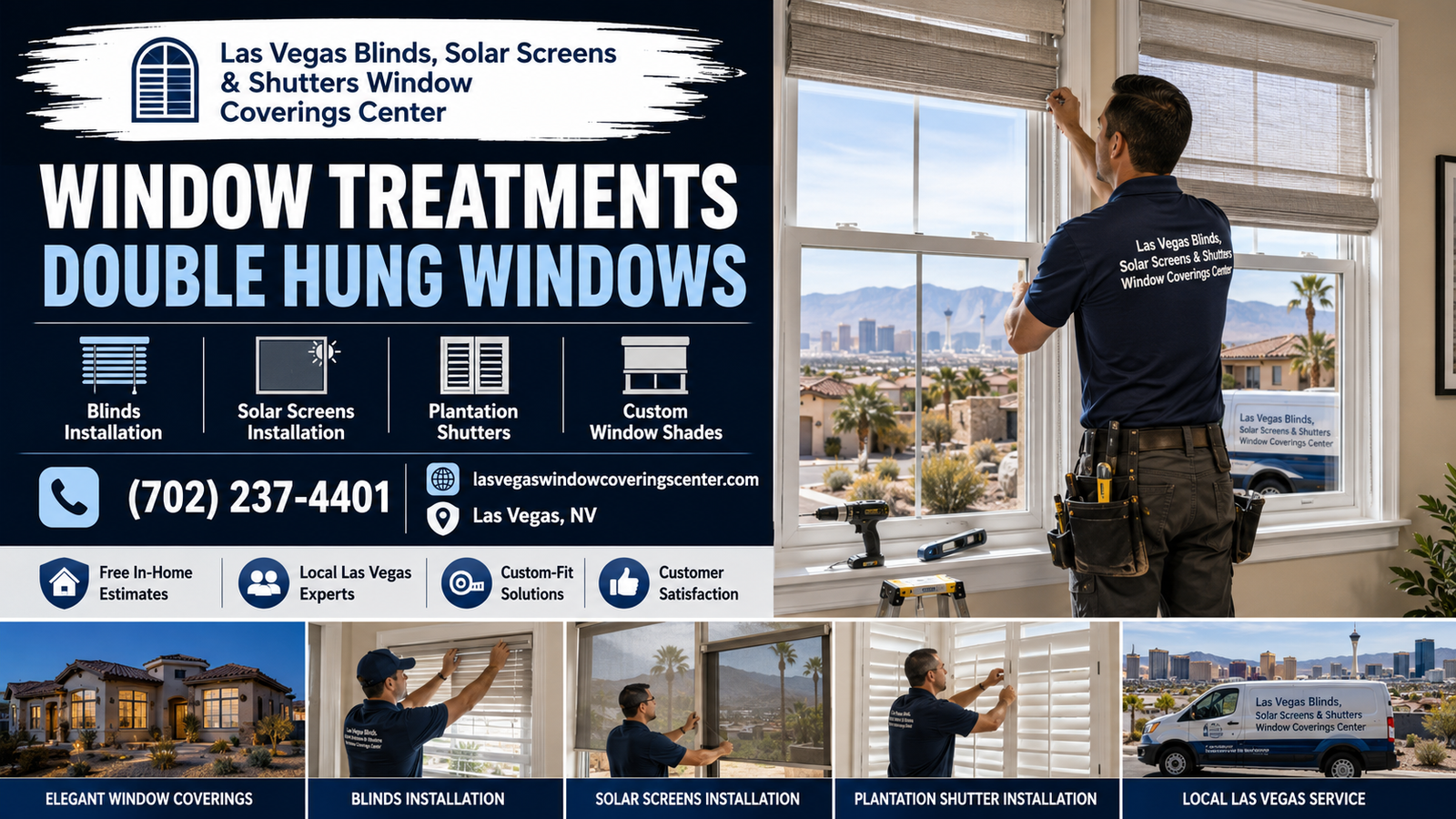
Window Treatments for Double-Hung Windows
Compare cellular shades, blinds, roller shades, shutters, and motorized options that preserve sash movement, privacy, airflow, and cleaning access.
What Are the Best Window Treatments for Double-Hung Windows?
The best window treatments for double-hung windows are usually top-down bottom-up cellular shades, cordless blinds, roller shades, plantation shutters with divided controls, and motorized shades selected to preserve access to both sashes. The right choice depends on whether the homeowner wants ventilation, privacy, insulation, room darkening, tilt-in cleaning, or a clear view when the treatment is open.
Double-hung windows are different from fixed windows because both the upper and lower sash can move. Locks, handles, tilt latches, screens, and deep trim may occupy mounting space. A treatment that is too deep or poorly positioned can interfere with sash movement, block cleaning access, or rub against hardware. Custom measurement is therefore more important than choosing only by style.
For Las Vegas homes, cellular shades and solar roller shades are strong choices for glare and solar-heat management, while shutters and faux-wood blinds provide adjustable light and an architectural appearance. Top-down bottom-up shades are especially useful where homeowners want daylight from above while maintaining privacy at eye level.
Why Double-Hung Windows Need the Right Window Treatment
Double-hung windows remain popular because they offer flexible ventilation, traditional proportions, and easier cleaning than many fixed-window styles. The lower sash can rise, the upper sash can lower, and many modern units tilt inward. Those features make the window useful, but they also create more clearance and mounting questions for blinds, shades, and shutters.
A ready-made blind may fit the visible opening but collide with the sash lock. A deep roller tube may prevent the upper sash from lowering. A shutter frame can interfere with tilt-in cleaning if the panel design is not planned correctly. A shade mounted too close to the glass can rub against handles or condensation. These are not merely cosmetic issues; they affect operation, safety, and long-term durability.
Las Vegas homeowners also need to manage intense sunlight, afternoon glare, privacy, and dry desert dust. Double-hung windows in Summerlin, Henderson, Spring Valley, and older central Las Vegas neighborhoods may face west or south, exposing furniture and flooring to direct sun. Bedrooms may need room-darkening performance, while street-facing living rooms may need privacy without sacrificing daylight.
Landlords and property managers often want durable cordless products that are easy to operate and replace. Interior designers may prioritize proportional headrails and consistent exterior-facing colors. Homeowners in HOA communities may need a treatment that preserves exterior uniformity. The right solution considers all of those goals together.
How a Double-Hung Window Works
Two movable sashes
A double-hung window has two framed glass sections. The lower sash usually rises, and the upper sash can lower. Any treatment mounted inside the opening must leave room for sash travel, locks, and tilt latches.
The meeting rail and lock
The lock is normally located where the upper and lower sashes meet. A shade bottom rail, shutter frame, or blind headrail should not prevent ordinary locking and unlocking. Measure the projection of the lock, not only the depth of the empty recess.
Tilt-in cleaning
Many modern double-hung windows tilt inward for cleaning. A deep inside-mounted product may need to be raised, released from brackets, or designed around that movement. The homeowner should understand how glass cleaning will work after installation.
Window screens
Full or half screens may sit outside the sashes. Exterior solar screens must be coordinated with the existing screen system, drainage paths, removal method, and emergency egress.
Trim, stops, and sill
Traditional windows may include decorative casing, a projecting stool, and narrow interior stops. These details affect outside-mount bracket placement and the final shade drop.
Recess depth
Shallow openings may not accommodate a large roller cassette, dual shade, or full-depth blind headrail. Outside mounting can solve the depth problem but changes the look and the amount of trim covered.
Best Window Treatments for Double-Hung Windows in Las Vegas
Top-down bottom-up cellular shades
A strong choice for privacy plus daylight. The upper rail can lower while the bottom rail stays closed, allowing light from above without exposing the room at eye level.
Cordless cellular shades
Provide a clean profile, insulation, and safer operation where children are present. They work well inside the frame when depth and hardware clearance allow.
Solar roller shades
Reduce glare and direct exposure while preserving some view. The roller tube, fascia, and fabric must clear sash locks and upper-sash movement.
Blackout roller shades
Useful in bedrooms and media rooms. Blackout describes the fabric, not the complete opening, so outside mounting or side channels may improve edge coverage.
Faux-wood blinds
Offer adjustable slats and familiar operation. Slat depth, headrail size, lock clearance, and tilt-in cleaning access should be checked.
Plantation shutters
Create an architectural frame and adjustable louvers. Divided rails or split tilt can visually align with the upper and lower sash.
Roman shades
Add decorative softness and lining choices. Stack depth and projection should be planned so the window remains operable.
Zebra shades
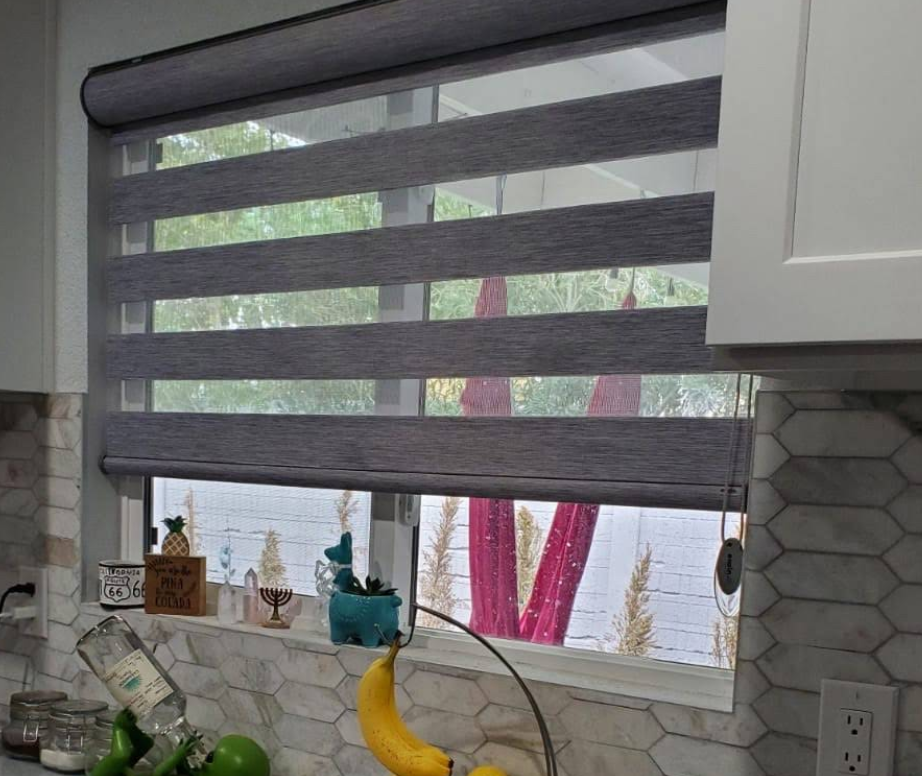
Combine alternating sheer and opaque bands for flexible light. They are stylish but are not equivalent to full blackout.
Motorized shades
Helpful for high windows, grouped rooms, and scheduled solar control. Power access, motor capacity, and sash clearance must be planned.
Double-Hung Window Treatment Comparison
| Product | Best For | Light Control | Privacy | Heat and Glare | Safety and Controls | Installation Considerations | Potential Drawback |
|---|---|---|---|---|---|---|---|
| Top-down bottom-up cellular | Street-facing rooms and bedrooms | Excellent | Strong lower-level privacy | Good | Cordless or motorized options | Inside mount requires depth; both rails must clear locks | More moving rails to align |
| Cordless cellular shade | Bedrooms, offices, whole-home use | Good to strong | Strong | Good | Preferred where children are present | Inside or outside mount | Pleats require gentle cleaning |
| Solar roller shade | Living rooms and west-facing windows | Strong glare control | Mostly daytime | Strong solar management | Motorization widely available | Roller and fascia must clear hardware | Limited nighttime privacy |
| Blackout roller shade | Bedrooms and media rooms | Very strong through fabric | Strong | Strong when closed | Cordless or motorized | Outside mount or channels may reduce gaps | Blocks view and daylight |
| Faux-wood blind | Kitchens, rentals, family rooms | Highly adjustable | Good | Moderate | Cordless options available | Headrail and slats must clear lock | Many slats to clean |
| Plantation shutter | Traditional homes and living rooms | Highly adjustable | Strong | Good | No lift cords | Frame and panel swing must preserve cleaning access | Permanent frame and higher complexity |
| Roman shade | Decorative rooms | Fabric-dependent | Strong with lining | Fabric-dependent | Cordless or motorized options | Stack and projection matter | More fabric folds |
| Zebra shade | Modern rooms | Adjustable | Moderate | Moderate | Motorization common | Roller depth and band alignment | Not true blackout |
| Exterior solar screen | Severe west-facing exposure | Exterior screening | Daytime screening | Strong exterior position | Specialty options vary | Must preserve sash, screen, and egress service | HOA and exterior appearance |
Why Top-Down Bottom-Up Shades Work So Well
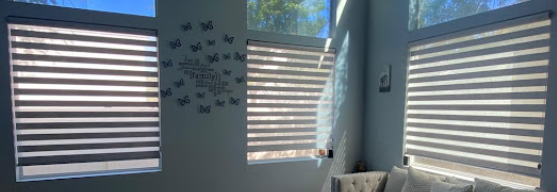
Top-down bottom-up shades are especially useful on double-hung windows because both the shade and the window support flexible upper and lower operation. The homeowner can lower the shade from the top for daylight while keeping the lower portion covered for privacy.
Street-facing privacy
Living rooms, bedrooms, bathrooms, and home offices near sidewalks can maintain lower-level privacy without closing the entire opening.
Daylight from above
Light enters near the ceiling, where it can spread deeper into the room with less direct view into the home. This can reduce the need to keep lights on during the day.
Ventilation
Depending on the window and shade position, the upper sash can lower while the shade remains positioned for privacy. Airflow should be tested because lightweight fabric can move in strong drafts.
Cordless operation
Many top-down bottom-up cellular shades use cordless rails. Both rails should remain level and move without exposing loose inner cords.
Motorized availability
Motorized top-down bottom-up systems exist in selected product lines, but size, fabric, power, and smart-home features vary. Confirm the exact configuration before ordering.
Inside Mount vs Outside Mount
Inside mount advantages
Inside mounting creates a built-in appearance, preserves decorative trim, and keeps the treatment close to the glass. It works best when the recess is deep, square, and free of interfering locks or handles.
Inside mount limitations
Operating clearances create side gaps. The headrail or roller may reduce access to tilt latches or upper-sash movement. Shallow frames may leave part of the product projecting beyond the trim.
Outside mount advantages
Outside mounting can overlap the frame, reduce light gaps, and provide room for larger headrails or cassettes. It is often useful on shallow, uneven, or obstructed openings.
Outside mount limitations
The treatment covers trim or wall area, projects farther into the room, and may interfere with nearby furniture, molding, or curtain rods. Brackets need a solid mounting surface.
Ceiling mount
A ceiling mount can cover a bank of windows, but it creates a larger visual treatment and requires secure overhead structure. It should not block access to locks or cleaning.
Measure more than one point
Older double-hung frames may be narrower at the top than the bottom. Width and height should be measured at several points using the selected manufacturer’s deduction rules.
Privacy, Light Control, and Blackout Expectations
Daytime privacy
Solar shades, tilted blinds, and partially closed shutters can reduce daytime views into the home, but privacy changes as exterior and interior lighting change.
Nighttime privacy
Open solar fabrics are not dependable after dark. Bedrooms and street-facing rooms generally need an opaque shade, closed blind, shutter, or layered curtain.
Light-filtering fabrics
These soften daylight and create a bright interior. Privacy depends on fabric density and nighttime lighting.
Room-darkening fabrics
Room-darkening materials reduce more light than standard light-filtering fabric but do not necessarily eliminate edge gaps.
Blackout fabrics
Blackout material blocks light through the fabric. Side channels, outside mounting, or drapery may be required for stronger whole-window darkness.
Shutter louver control
Louvers can redirect light toward the ceiling. Split tilt or divided rails can control upper and lower portions separately, complementing double-hung proportions.
Las Vegas Heat, Glare, and UV Considerations
Double-hung windows can admit substantial direct sun, especially on west- and south-facing elevations. Window treatments can help manage glare and unwanted solar exposure, but actual performance depends on fabric, color, openness, fit, glass, window orientation, and operating habits.
Solar roller shades
Solar fabrics reduce glare while preserving some outward view. Lower openness generally provides stronger screening, but product-specific data should guide selection.
Cellular shades
Cellular construction adds an insulating air layer and provides strong coverage when closed. Inside-mounted products still leave small side gaps.
Exterior solar screens
Exterior screens act before sunlight reaches the glass and deserve consideration on severe exposures. They must remain compatible with the window screen, drainage, cleaning, egress, and HOA requirements.
Shutters and blinds
Closed louvers or slats reduce direct rays while allowing adjustable daylight. Small gaps remain, and regular use determines the real benefit.
Fading expectations
UV is only one contributor to fading. Visible light, heat, material sensitivity, and time also matter. No treatment should be described as making furnishings fade-proof.
Ventilation and Tilt-In Cleaning Access
Lower-sash ventilation
When the lower sash is raised, a lowered shade may move in the airflow. Bottom rails should not strike the sill, furniture, pets, or occupants. Blinds should not flap repeatedly against the glass.
Upper-sash ventilation
Lowering the upper sash can release warm air near the ceiling. Top-down shades can complement this function, but fabric should not block the opening or catch in the sash.
Tilt-in cleaning
Before ordering, determine whether the sashes tilt inward and how far. Some inside-mounted products may need to be fully raised or released from brackets for cleaning.
Shutter panel access
Shutter panels can swing open for glass cleaning when furniture and trim allow. Panel hinges and frame depth must be planned around the sash.
Condensation and dust
Keep fabric away from persistent condensation. Desert dust collects on sills, headrails, louvers, and pleats, so cleaning access should be part of product selection.
Screen service
Interior treatments should not prevent removal or repair of the window screen when necessary.
Cordless, Motorized, and Smart Options
Cordless lift
Cordless cellular shades and blinds provide a clean control system and are preferred where young children are present. The bottom rail should remain level and hold its position.
Motorized roller and cellular shades
Motors are useful for high windows, grouped rooms, and scheduled solar control. The motor must match the treatment’s width, height, weight, and tube.
Battery and rechargeable power
Rechargeable motors suit many retrofit projects. Charging access should be safe and reachable without unstable furniture or repeated ladder use.
Hardwired power
Hardwired or low-voltage power is worth considering for high windows and new construction. Electrical work should be properly coordinated.
Smart-home control
Compatible systems may support apps, voice assistants, schedules, sensors, and scenes. Exact features vary by motor, bridge, and platform.
Manual backup
Ask whether a remote or wall switch remains available if the internet or app is unavailable.
Best Option by Room
Living rooms
Top-down cellular shades, solar roller shades, or shutters balance privacy, view, and daylight.
Bedrooms
Room-darkening or blackout cellular and roller shades provide privacy and sleep control. Outside mounting may reduce edge gaps.
Kitchens
Faux-wood blinds or suitable shutters provide adjustable light and wipeable surfaces. Controls should remain clear of sinks and cooktops.
Bathrooms
Moisture-suitable cordless shades, faux wood, or composite shutters provide privacy. Ventilation and cleaning access matter.
Home offices
Solar or top-down shades reduce monitor glare while preserving upper daylight.
Nurseries
Cordless cellular shades, shutters, or motorized rollers avoid accessible lift cords. Keep furniture away from the window.
Rental properties
Durable cordless faux-wood blinds or roller shades simplify operation and replacement.
Traditional rooms
Roman shades and plantation shutters complement traditional sash proportions when clearance is measured correctly.
Commercial offices
Solar roller shades provide glare control and a consistent appearance across multiple windows.
Safe Homeowner Checks
Safe checks
- Measure visible width and height for preliminary planning.
- Identify inside- or outside-mount space.
- Locate sash locks, tilt latches, and handles.
- Confirm whether both sashes move.
- Check whether the sashes tilt inward.
- Look for loose brackets or damaged slats.
- Check whether a cordless shade stays level.
- Observe direct sun and glare times.
- Check whether furniture blocks operation.
- Replace accessible remote batteries.
- Charge reachable motor batteries.
- Review HOA rules before exterior changes.
Do not do these things
- Do not stand on unstable furniture.
- Do not remove large shades without assistance.
- Do not work near electrical wiring without proper knowledge.
- Do not disassemble motors.
- Do not force a jammed motorized shade.
- Do not pull hard on a stuck cord.
- Do not allow children to play with cords.
- Do not use harsh chemicals without instructions.
- Do not pressure-wash interior shades.
- Do not bend shutter louvers.
- Do not drill into unknown cavities.
- Do not modify exterior screens without approval.
Detailed Measurement Checklist
Measure width at three points
Measure near the top, center, and bottom of the visible recess. Older frames may not be square. Follow the selected manufacturer’s rule for choosing the final width rather than averaging automatically.
Measure height at three points
Measure left, center, and right. A projecting sill or uneven head jamb can change the finished drop.
Measure recess depth
Record the shallowest usable depth after accounting for the sash lock, tilt latches, stops, and removable screen hardware.
Measure lock projection
The lock may project into the area used by a roller tube or headrail. Record its depth and exact location.
Test both sashes
Raise the lower sash, lower the upper sash, and test tilt-in cleaning from a safe position. Note how much interior room the sash requires.
Check trim and wall space
For an outside mount, measure flat casing or wall area on both sides and above the opening. Confirm that corners, cabinets, and curtain rods do not limit width.
Repeat for every window
Windows that appear identical can differ slightly. Measure each opening rather than copying one set of dimensions.
Custom-Fit vs Ready-Made Products
Ready-made advantages
Ready-made products can suit temporary rooms and standard openings. They are usually available in limited widths, colors, materials, and controls.
Ready-made limitations
Double-hung windows often have locks, uneven recesses, and tilt features that generic sizing does not account for. A product can fit the width but still interfere with operation.
Custom-fit advantages
Custom measurement accounts for recess depth, lock projection, trim, sill, sash tilt, and desired mounting. Fabric, control, color, and motorization can be selected for the room.
DIY measurement risk
Manufacturers use different deductions. Measuring only one point or subtracting a homemade allowance can produce a product that is too narrow or too wide.
Custom manufacturing questions
Ask whether the product is made to final measurements, which deductions are applied, what hardware is included, and whether installation is included.
Common Installation Mistakes
Blocking the sash lock
A headrail mounted too low can make the lock difficult to reach. The final design should preserve ordinary locking and unlocking.
Ignoring tilt-in cleaning
A product may look good until the homeowner tries to tilt the sash. Test the full movement before finalizing depth and bracket placement.
Mounting into weak material
Large shades and shutters require suitable structure and fasteners. Weak drywall or damaged trim can allow brackets to loosen.
Choosing an oversized roller
A large cassette or tube may project into the sash path. Hardware should be selected based on recess depth and shade size.
Failing to divide wide openings
One oversized shade can deflect or track poorly. Multiple shades aligned with mullions may be more reliable.
Using one opacity everywhere
Bedrooms, offices, and living rooms have different privacy and glare needs. Coordinated colors can be used with different fabric densities.
Forgetting service access
Fascia and recessed pockets should not make motors, batteries, or brackets impossible to service later.
When to Clean, Repair, Upgrade, or Replace
Cleaning
Cleaning is appropriate when the product operates normally, dust is the main issue, and the material allows a safe method. Keep moisture away from motors and headrails.
Minor repair
Loose brackets, remote batteries, control chains, replaceable slats, tilt mechanisms, shutter magnets, or programming limits may be serviceable.
Upgrade
Upgrade when the homeowner wants cordless control, top-down operation, motorization, better privacy, less glare, blackout performance, or a more coordinated appearance.
Replacement
Replacement may be practical when multiple slats are broken, fabric is permanently stained, the headrail fails, the shade no longer raises evenly, parts are unavailable, the product creates a cord-safety concern, or it blocks normal sash operation.
Cost factors
Pricing depends on measurements, quantity, product category, material, fabric, control, motorization, smart integration, mounting, access, custom shapes, electrical work, and removal of old products. Request an itemized quote rather than relying on one fixed online price.
Las Vegas and Clark County Conditions
Las Vegas window treatments must deal with strong direct sunlight, afternoon glare, dust, and long cooling seasons. West-facing double-hung windows in Summerlin, Spring Valley, Enterprise, and Henderson may need tighter solar fabric, exterior screening, or scheduled operation.
Older homes in Downtown Las Vegas, Winchester, and established central neighborhoods may have wood trim, shallow recesses, or out-of-square sash openings. Outside mounting or narrow-profile products can be more practical than generic inside mounts.
Homes in The Lakes, Desert Shores, Green Valley, and Anthem may have a mix of traditional double-hung windows and large sliders, so one product does not need to be used everywhere. Modern properties in The Ridges, Red Rock Country Club, and Southern Highlands may combine tall windows with smart-home systems and motorized coverings.
Fine desert dust settles on sills, slats, and pleats. Cleaning access matters. HOA communities may regulate exterior solar screens and exterior-facing colors, while interior blinds and shades generally create fewer architectural concerns.
Detailed Selection Scenarios for Double-Hung Windows
When the main goal is privacy without losing daylight
Choose a top-down bottom-up cellular shade or a shutter with divided controls. The lower portion can remain closed while the upper area admits light. This is especially useful on first-floor bedrooms, bathrooms, home offices, and living rooms facing a sidewalk or neighboring property.
When the main goal is maximum room darkening
Consider blackout roller or cellular fabric with an outside mount, overlapping trim, side channels, or layered drapery. Inside-mounted blackout fabric alone may leave narrow side and top gaps. Review the required darkness before choosing the mounting style.
When the main goal is preserving a view
Solar roller shades or zebra shades can reduce glare while retaining some view. The openness factor, fabric color, and time of day affect visibility. Open solar fabric should not be treated as dependable nighttime privacy.
When the main goal is easy cleaning
Faux-wood blinds and plantation shutters have wipeable rigid surfaces, although each slat or louver must be cleaned. Smooth roller shades have fewer exposed parts but require fabric-specific care. Tilt-in sash access should remain possible.
When the windows are unusually shallow
Outside mounting is often more practical. A narrow-profile cellular headrail may fit where a large roller cassette or blind headrail will not. Measure the shallowest point and the projection of the sash lock.
When the windows are high or difficult to reach
Motorized roller or cellular shades may improve daily use. Plan battery access, remote controls, safe charging, or hardwired power. A treatment that requires frequent ladder use is not a practical long-term solution.
When the home has traditional architecture
Plantation shutters, Roman shades, and faux-wood blinds can complement the proportions of traditional double-hung windows. Shutter divider rails and fabric folds can align with the meeting rail for a balanced appearance.
When the property is a rental
Durable cordless blinds and roller shades simplify tenant operation. Document remotes, chargers, cleaning instructions, and replacement components. Avoid systems that depend on one tenant’s personal smart-home account.
When several windows share one wall
Decide whether each window receives an individual treatment or whether one larger shade spans the group. Individual shades preserve independent sash access and are easier to service. A single wide shade may create a cleaner visual line but needs stronger hardware and may block access to several locks.
When exterior solar screens are being considered
Review the existing screen system, exterior appearance, wind exposure, drainage, emergency egress, and HOA requirements. Exterior screens can support solar control but should not prevent normal window service.
Final Double-Hung Window Planning Checklist
Before approving an order, confirm the exact width, height, recess depth, lock projection, tilt-latch location, sill projection, trim width, sash movement, tilt-in cleaning path, screen access, window orientation, privacy goal, desired darkness, control type, motor power, furniture clearance, cleaning method, and mounting surface.
Compare quotes using the same product category, fabric, opacity, control, mounting style, accessories, installation scope, and removal requirements. A low headline price may exclude measurement, fascia, side channels, motor controls, electrical work, or installation. A useful written estimate identifies the complete system.
The best window treatments for double-hung windows in Las Vegas are the ones that allow the window to keep functioning as designed. The treatment should support privacy, glare control, comfort, safety, and appearance without blocking locks, sash travel, ventilation, or cleaning access.
Double-Hung Window Treatment Buying Decision Guide
Prioritize window function first
Before comparing colors or fabric samples, confirm which sash the household uses, how often the window is opened, whether it tilts inward, and whether the screen needs regular removal. A treatment that looks attractive but blocks the lock or cleaning path is not a successful installation.
Match the control to the user
Frequently used windows should have controls that are easy to reach from the floor. Cordless rails work well on accessible windows, while motorization may be more practical above furniture, counters, stairs, or tall ceilings. Older adults, children, guests, and tenants should be able to understand the control without pulling on fabric or forcing the sash.
Choose privacy by time of day
Daytime screening and nighttime privacy are different. Solar shades may preserve views during daylight but become easier to see through after dark. Bedrooms, bathrooms, and street-facing rooms often need an opaque layer, shutters, or dual shades.
Plan the exterior appearance
When several double-hung windows face the street, consistent exterior-facing colors and aligned bottom rails create a cleaner façade. Different rooms may use different opacity levels while maintaining a coordinated outward appearance.
Consider future maintenance
Ask how the shade, blind, or shutter will be cleaned, removed, adjusted, and repaired. Confirm that replacement parts, remotes, chargers, and product information will remain available. A treatment should be serviceable without damaging the sash or trim.
Review the complete written scope
The final estimate should identify the product, material, fabric, control, mounting style, accessories, measurement, installation, removal, electrical exclusions, and expected edge gaps. Compare complete systems rather than only the initial product price.
Questions to Ask Before Hiring a Window-Covering Company
- Which product works best with both movable sashes?
- Will the treatment interfere with the sash lock or tilt latches?
- Can the window still tilt inward for cleaning?
- Is inside or outside mounting more appropriate?
- Is the product custom measured and manufactured?
- Does the quote include measurement and installation?
- Does it include removal of old coverings?
- Is the control cordless?
- Is top-down bottom-up operation available?
- What fabric opacity is recommended?
- Will solar fabric provide nighttime privacy?
- What side and top gaps should I expect?
- Can the treatment be motorized?
- What motor, power, and controls are included?
- Are electrical services separate?
- Will shutters preserve tilt-in cleaning access?
- How should the product be cleaned?
- Are replacement parts available?
- What warranty documents apply?
- Will I receive a written estimate?
Red Flags When Buying Treatments for Double-Hung Windows
- No measurement of sash locks, handles, or recess depth.
- No confirmation that both sashes still operate.
- No discussion of tilt-in cleaning.
- One generic product recommended for every room.
- No explanation of inside versus outside mounting.
- No explanation of privacy after dark.
- Blackout promised without discussing edge gaps.
- No child-safety or cordless discussion.
- No samples of fabric or finish.
- No motor or power plan for high windows.
- No explanation of replacement parts.
- Vague installation charges.
- Unsupported heat- or UV-blocking claims.
- No clear local business identity or Google Maps presence.
- Pressure to order before window operation is tested.
Why Consider Las Vegas Blinds, Solar Screens & Shutters Window Coverings Center?
Las Vegas Blinds, Solar Screens & Shutters Window Coverings Center is a local option for homeowners, landlords, renters, property managers, investors, designers, and businesses comparing custom window treatments for double-hung windows.
The team can help compare custom blinds, cellular shades, top-down bottom-up shades, roller shades, motorized shades, plantation shutters, blackout shades, solar screens, and other custom-fit products. A useful consultation should review sash movement, lock clearance, mounting depth, tilt-in cleaning, privacy, glare, and the room’s design.
Call (702) 237-4401, request a window-covering consultation, browse the window-covering product catalog, compare cellular shades, review plantation shutters, explore faux-wood blinds, or learn about motorized shades in Las Vegas.
For related guidance, read the previous article about Las Vegas window-covering safety. You can also find Las Vegas Blinds, Solar Screens & Shutters on Google Maps.
Areas Served
The business serves customers in these communities from its Las Vegas location. Service in a community does not imply a separate physical office there.
Frequently Asked Questions About Double-Hung Window Treatments
What are the best window treatments for double-hung windows?
Top-down bottom-up cellular shades, cordless blinds, roller shades, and plantation shutters are strong options. The best choice depends on sash clearance, privacy, ventilation, and cleaning access.
Can inside-mounted blinds interfere with a double-hung window?
Yes. A deep headrail or roller can block sash locks, tilt latches, or upper-sash movement. Measure recess depth and hardware projection before ordering.
Are top-down bottom-up shades good for double-hung windows?
Yes. They provide lower-level privacy and upper daylight, which complements the flexible upper and lower operation of double-hung windows.
Can plantation shutters be installed on double-hung windows?
Yes, when the frame and panel design preserve access to locks, sash movement, and tilt-in cleaning. Custom measurement is important.
Are blackout shades suitable for double-hung windows?
Yes. Blackout fabric blocks light through the material, but inside-mounted shades may leave perimeter gaps. Outside mounting or channels can improve coverage.
Can double-hung window shades be motorized?
Yes. Roller and cellular shades can often be motorized. Motor size, power, mounting depth, and access to the sash must be considered.
Should I choose inside or outside mounting?
Choose inside mounting for a built-in look when depth and clearance are sufficient. Outside mounting is useful for shallow, uneven, or obstructed frames and stronger overlap.
How can I request current measurement and installation availability?
Call Las Vegas Blinds, Solar Screens & Shutters Window Coverings Center at (702) 237-4401 to ask about current consultation, measurement, and installation availability.
Find the Las Vegas Location
Las Vegas Blinds, Solar Screens & Shutters Window Coverings Center is located at 3871 S Valley View Blvd #6, Las Vegas, NV 89103. Call before visiting to confirm current availability.
Choose the Right Treatment for Your Double-Hung Windows
Call Las Vegas Blinds, Solar Screens & Shutters Window Coverings Center at (702) 237-4401 to compare custom blinds, cellular shades, roller shades, shutters, and motorized options for double-hung windows in Las Vegas and nearby Clark County communities.
Confirm sash movement, lock clearance, mounting depth, privacy, and cleaning access before approving the final product.
Related Blog Ideas
Top-Down Bottom-Up Shades for Las Vegas Homes
Compare privacy, daylight, and cordless controls.
Inside Mount vs Outside Mount Window Shades
Understand depth, gaps, trim, and hardware clearance.
Best Cordless Blinds for Traditional Windows
Review child-safe controls and durable materials.
Plantation Shutters for Tilt-In Windows
Plan frames, panel swing, and cleaning access.
Motorized Shades for High Double-Hung Windows
Compare power, controls, and safe access.