Do Solar Shades Save Energy?
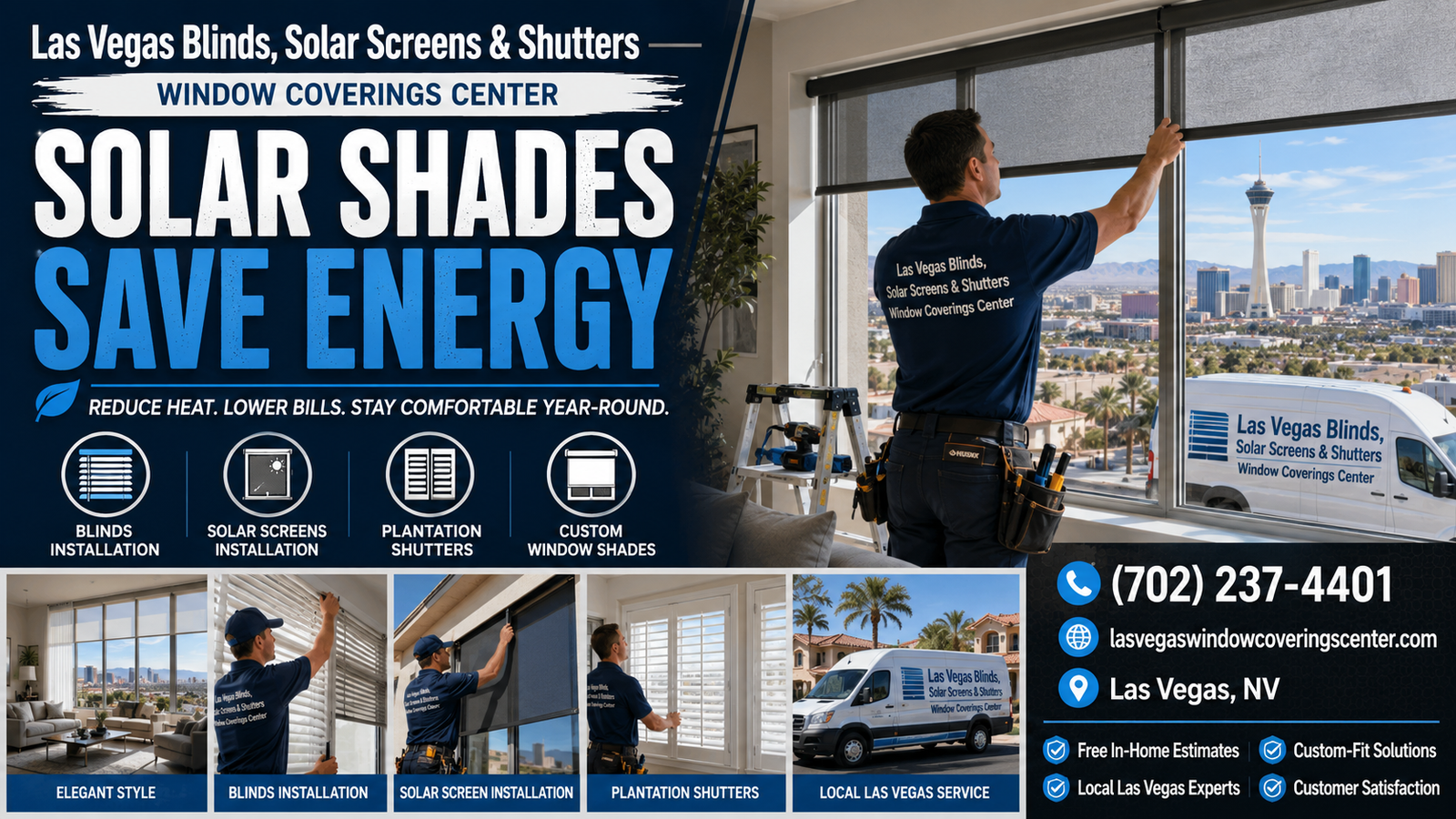
Learn how interior solar shades and exterior solar screens may reduce unwanted heat, glare and cooling demand in Las Vegas homes and businesses.
Do Solar Shades Save Energy?
Solar shades can help reduce cooling demand by limiting unwanted sunlight and solar heat entering through windows, especially on west- and south-facing glass in Las Vegas. They also reduce glare, improve visual comfort and may help a room feel more usable without lowering the thermostat as aggressively. The amount of energy saved depends on the fabric, openness factor, color, fit, window type, orientation, shading schedule and the condition of the home.
Interior solar shades work after sunlight passes through the glass, so they are generally more effective for glare and comfort than for stopping all heat before it enters. Exterior solar screens and exterior shades intercept sunlight before it reaches the glass and can offer stronger solar-heat control when correctly specified and approved for the property.
Solar shades do not guarantee a particular utility-bill reduction. They complement—but do not replace—efficient windows, intact seals, insulation, HVAC maintenance, air sealing and sensible thermostat settings. For many Las Vegas properties, the best strategy is to target the windows with the greatest afternoon exposure and use the shades consistently during peak sun.
Why Solar Shades Matter in Las Vegas
Las Vegas buildings face long periods of intense sunlight, bright skies and high cooling demand. Large windows make interiors feel open and attractive, but they can also create hot perimeter zones, harsh television or monitor glare, faded furnishings and uncomfortable rooms during afternoon hours. Solar shades are designed to address this problem while preserving more outward view than a conventional opaque shade.
Homeowners in Summerlin, Spring Valley, Enterprise, Henderson and North Las Vegas commonly notice that one side of the home becomes significantly warmer than the rest. West-facing glass is often the most difficult because late-day sun arrives at a low angle and reaches deep into the room. South-facing glass receives extended exposure, while reflective pavement, neighboring glass and light-colored walls can create secondary glare.
Landlords, property managers and commercial operators have similar concerns. An office may struggle with screen glare. A restaurant may have hot booths along the glass. A retail store may need to protect displays without making the storefront look closed. A medical office may need both solar control and privacy. Solar shades can be part of each solution, but the fabric and control strategy should match the actual use.
The phrase “solar shades save energy” is accurate only with context. They can reduce unwanted solar heat gain and may lower the cooling load, but actual results vary. A shade left open during peak sun provides little benefit. A very open fabric preserves the view but may control less glare. A poorly fitted shade leaves exposed glass at the sides. This guide explains the variables that matter.
How Solar Shades Manage Heat and Glare
Solar fabric filters sunlight
Solar roller fabric is woven with small openings. The material absorbs and reflects part of the incoming solar radiation while allowing some daylight and outward visibility. Unlike a solid blackout shade, it does not usually make the window completely opaque.
Interior shades reduce direct exposure inside the room
When an interior solar shade is closed, less direct sunlight reaches floors, furniture, merchandise and occupants. This can reduce radiant discomfort and hot spots near the window. Some absorbed energy remains between the shade and glass and may eventually move into the room, which is why interior shades should not be described as blocking all heat.
Exterior products stop sunlight earlier
Exterior solar screens, exterior roller shades and awnings intercept solar radiation before it passes through the glazing. This generally provides a stronger position for heat control. Exterior products must be designed for wind, access, appearance and maintenance, and may require HOA, landlord or property-management approval.
Glare reduction supports comfort and productivity
Energy use is only one part of the value. A room with severe glare may cause occupants to lower the thermostat because the sun feels intense even when the air temperature is acceptable. Reducing glare and radiant exposure can make the space feel more comfortable at a reasonable thermostat setting.
Shade position changes performance
A fully lowered shade covers more glass than a partially lowered shade. However, occupants may want an upper or lower view. Motorization and scheduling can improve consistency by closing shades before the sun becomes disruptive and reopening them afterward.
Solar Shade Openness Factor Explained
The openness factor describes the approximate proportion of open space in a solar fabric’s weave. It is one of the most important specifications because it influences view, glare, privacy and solar control. Lower openness means a tighter weave; higher openness means larger or more numerous openings.
Lower-openness fabrics
Tighter fabrics generally provide stronger glare control and greater daytime screening. They reduce more visible light and obscure the exterior view more than open fabrics. They are often considered for west-facing rooms, media spaces, offices with monitors and properties where stronger daytime privacy is desired.
Higher-openness fabrics
More open fabrics preserve a clearer view and admit more daylight. They may be appropriate for north-facing glass, scenic views or rooms where glare is moderate. They provide less visual privacy and may allow more solar exposure than a tighter fabric.
There is no universal best percentage
A single openness factor should not automatically be used throughout an entire property. A west-facing living room may need tighter fabric than an east-facing breakfast area. A restaurant may use different specifications by elevation while maintaining the same exterior-facing color.
Nighttime privacy remains limited
Open solar fabric generally does not provide dependable nighttime privacy. When interior lights are brighter than the exterior, people outside can often see into the room. An opaque privacy shade, dual roller system, curtain or shutter may be needed after dark.
Samples should be viewed at the actual glass
Fabric looks different under showroom lighting than against a bright Las Vegas sky. Hold samples at the window during the difficult time of day. View them from inside and outside. Evaluate glare, color, view, privacy and the appearance of the weave.
Does Solar Shade Color Affect Energy Performance?
Light exterior surfaces
Lighter colors generally reflect more visible and solar energy than dark colors, which can be useful for heat control. They also create a brighter interior appearance. However, a light fabric may reflect more light toward the eye and can make the exterior view appear hazier.
Dark fabrics
Dark fabrics often provide a clearer outward view through the weave and excellent glare control because they reduce internal reflections. They absorb more energy, so product design, glass conditions and mounting should be considered. The absorbed heat does not automatically mean the shade is ineffective; the complete optical and thermal properties matter.
Dual-color fabrics
Some fabrics use a lighter exterior-facing side and a darker interior-facing side. The intention is to combine exterior reflectance with a clearer interior view and lower glare. Availability and performance vary by product.
Exterior appearance and HOA requirements
Planned communities and commercial properties may require neutral exterior-facing colors. In The Ridges, Red Rock Country Club, Anthem, Seven Hills, MacDonald Highlands and other HOA communities, exterior screens or visible backing colors should be reviewed against current rules.
Do not choose color from a screen alone
Digital images cannot accurately reproduce texture, translucency and transmitted light. Samples should be examined against the actual window, surrounding wall color and room furnishings.
Interior Solar Shades vs Exterior Solar Screens
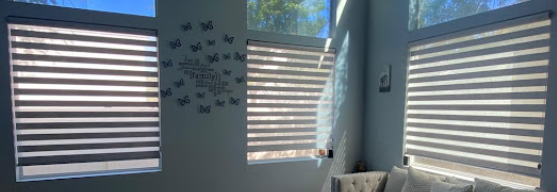
Interior solar shades
Installed inside the room, they are protected from weather and easy to operate. They provide glare control, view-through options and a clean roller-shade appearance. Because sunlight has already passed through the glass, some heat remains inside the building envelope.
Exterior solar screens
Installed outside the glass, they intercept sunlight earlier. They may offer stronger heat control but require exterior access, wind-resistant design, cleaning and approval. They also change the building’s exterior appearance.
Interior advantages
Broader fabric choices, easier motorization, simpler service, no exterior weather exposure and fewer HOA concerns in many properties.
Exterior advantages
Better position for reducing solar energy before it reaches the glass, particularly on severe west-facing and south-facing exposures.
Interior limitations
Absorbed heat can remain near the glass, side gaps expose portions of the window and open fabric does not provide nighttime privacy.
Exterior limitations
Wind, dust, maintenance, access, façade design, screen color and property rules must be considered.
Some properties benefit from both: exterior solar screens for peak summer exposure and interior shades for privacy, glare and design. This layered approach should be planned so the products do not create unnecessary darkness or complicate window operation.
Energy-Focused Window-Covering Comparison
| Product | Primary Strength | Summer Solar Control | Winter Insulation | View | Privacy | Main Tradeoff |
|---|---|---|---|---|---|---|
| Interior solar shade | Glare control with outward view | Moderate to strong, fabric-dependent | Limited compared with cellular shades | Partial | Mostly daytime | Sunlight has already passed through glass |
| Exterior solar screen | Intercepting sunlight before glass | Strong when correctly specified | Limited | Mesh-dependent | Varies | Exterior approval and maintenance |
| Cellular shade | Insulating air pockets | Strong when closed | Strong among interior treatments | None when closed | Strong | Removes exterior view |
| Blackout roller shade | Light blocking and privacy | Strong through fabric | Moderate depending on fit | None | Strong | Perimeter gaps and no view |
| Plantation shutter | Durable adjustable control | Good | Moderate | Adjustable through louvers | Strong when closed | Permanent visual weight |
| Faux-wood blind | Adjustable light and privacy | Moderate | Limited | Adjustable | Good | Slat gaps and dust |
| Window tint or film | Continuous solar filtering | Product-dependent | Limited | Always altered | Limited at night | Not adjustable and glass compatibility matters |
| Dual roller shade | Daytime solar plus privacy layer | Strong flexibility | Moderate depending on second fabric | Available with solar layer | Strong with opaque layer | More hardware and mounting depth |
Choose Solar Shades by Window Orientation
West-facing windows
West-facing glass often creates the most severe afternoon heat and glare. Low-angle sunlight reaches deep into rooms after the building has already warmed. Tighter solar fabric, exterior solar screens, motorized scheduling or layered treatments may be appropriate.
South-facing windows
South-facing windows receive extended sun exposure. Seasonal sun angles matter. Fixed exterior overhangs can shade high summer sun while allowing lower winter sun, but interior solar shades provide adjustable control.
East-facing windows
Morning sun can create glare in bedrooms, kitchens and home offices. A moderate solar fabric may be sufficient, though early schedules or shift workers may prefer room-darkening products.
North-facing windows
North-facing windows usually receive less direct sun but may still experience bright-sky glare. More open solar fabric may preserve the view while softening brightness.
Reflected exposure
Orientation alone is not enough. Pools, pale pavement, neighboring glass and light-colored walls can reflect sunlight into a window. Observe the actual room during the problem period before selecting fabric.
Can Motorized Solar Shades Save More Energy?
Motorization does not change the basic fabric performance, but it can improve consistency. A high-performance shade only helps when it is positioned correctly. Automated schedules can lower west-facing shades before afternoon heat arrives and reopen them after the exposure passes.
Battery and rechargeable motors
These options reduce wiring requirements and can be practical for existing homes. Battery life depends on shade size, frequency of use, motor and product design. Charging access should be considered for tall windows.
Plug-in motors
Plug-in systems need nearby outlets and cable management. They can avoid battery replacement but may create visible cords.
Hardwired motors
Hardwired systems can provide a clean appearance and centralized control. They require electrical planning and may involve qualified electrical work separate from the shade installation.
Schedules, sun sensors and smart controls
Some systems support schedules, groups, sun sensors, apps or compatible voice platforms. Compatibility should be confirmed for the exact motor and control gateway. Homeowners should retain manual override capability and understand account ownership and network requirements.
When automation is most valuable
Motorization is especially useful for tall windows, multiple matching shades, second-story glass, vacation properties, offices and rooms where occupants routinely forget to close shades during peak sun.
Residential and Commercial Applications
Living rooms
Solar shades preserve daytime view while reducing glare on televisions and seating areas. Choose fabric according to afternoon exposure and nighttime privacy needs.
Bedrooms
Solar shades are useful for daytime heat control but may not provide darkness or nighttime privacy. Dual shades or curtains may be better.
Home offices
Monitor glare and webcam lighting are common problems. Solar shades can diffuse brightness without turning the room into a dark workspace.
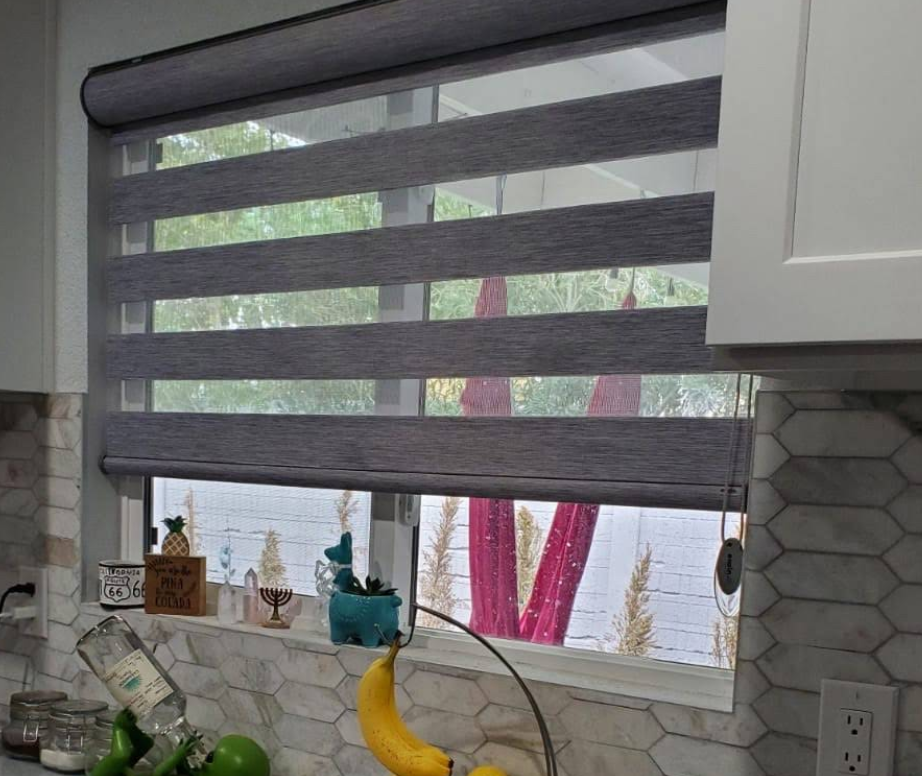
Kitchens and dining areas
Choose cleanable fabrics and controls that remain accessible around counters and tables.
Retail stores
Commercial solar shades can protect comfort and display visibility. Daytime view-through helps maintain a connection with pedestrian traffic.
Restaurants
Zoned shades can reduce hot tables and glare without closing the entire dining room. Staff need simple controls and clear operating guidance.
Medical offices
Solar shades may suit waiting areas, while consultation rooms may require opaque privacy fabrics.
Professional offices
Motorized zones can respond to different elevations and meeting schedules. Conference rooms may need a second blackout layer.
Hospitality properties
Lobby, lounge and event spaces often require coordinated design, durable operation and integration with broader control systems.
Safe Checks Before Ordering Solar Shades
Safe checks
- Identify which windows receive direct sun and at what times.
- Observe glare from seating, screens and workstations.
- Check daytime and nighttime privacy from outside.
- Measure visible width and height for preliminary planning.
- Note mounting depth, handles, locks and sensors.
- Check whether furniture blocks shade operation.
- Review HOA or landlord rules for exterior screens.
- Locate accessible power for motor planning.
- Test fabric samples against the actual glass.
- Document fading or heat-sensitive furnishings near windows.
Avoid these actions
- Do not stand on unstable furniture or counters.
- Do not install exterior products without approval.
- Do not drill into unknown wiring, plumbing or structural framing.
- Do not force a jammed shade or motor.
- Do not cut chains, cords or safety devices.
- Do not use harsh cleaners without fabric instructions.
- Do not assume solar fabric provides nighttime privacy.
- Do not rely on unsupported heat-blocking percentages.
- Do not place fabric against hot appliances or heaters.
- Do not promise a specific utility-bill reduction.
What Affects the Cost of Solar Shades?
Pricing depends on window size, fabric, controls, mounting and installation. A small manual interior shade is a different project from a motorized bank of commercial shades or custom exterior screens. A responsible quote should identify the exact product and scope.
Window dimensions
Wide and tall shades need more fabric, stronger roller tubes and larger brackets.
Openness and fabric series
Solar fabrics differ in weave, composition, color, fire documentation and optical performance.
Interior or exterior installation
Exterior systems require weather-resistant frames, access and stronger mounting.
Manual or motorized control
Motors, remotes, power supplies, switches and gateways add components.
Inside or outside mount
Mounting affects coverage, fascia and installation surfaces.
Number of windows and zones
Grouped controls and coordinated elevations require planning.
High or difficult access
Stairs, tall ceilings and exterior heights can require additional equipment.
Removal and electrical work
Existing treatments and hardwired power may involve separate scope.
Cleaning, Repairing, Upgrading or Replacing Solar Shades
Cleaning may be enough
If the shade rolls evenly and the fabric is intact, gentle dusting or manufacturer-approved wiping may restore its appearance. Exterior screens require periodic removal of dust and debris according to the frame and mesh instructions.
Minor repair may make sense
Loose brackets, worn chains, tension devices, remote batteries and programming problems may be repairable. Oversized shades with tube deflection or fabric telescoping need proper diagnosis.
Upgrade when operation is inconsistent
Motorization, grouped controls or schedules may be worthwhile if occupants forget to close shades during peak sun. A privacy layer may be added when nighttime visibility becomes a concern.
Replacement may be more practical
Replace shades when fabric is torn, permanently stained, badly faded, poorly fitted or no longer suited to the room’s glare and privacy needs. Obsolete motors or unavailable parts can also justify replacement.
Las Vegas Local Conditions
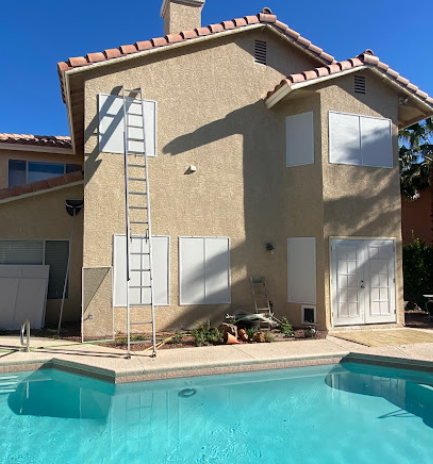
Las Vegas has a long cooling season and intense solar exposure. West-facing rooms in Summerlin, The Lakes, Desert Shores, Peccole Ranch, Spring Valley and Enterprise can become uncomfortable late in the day. South-facing glass in Henderson, Anthem, Seven Hills and Inspirada may receive extended exposure.
Large windows in The Ridges, Red Rock Country Club, MacDonald Highlands and Southern Highlands often benefit from motorization because manual controls may be difficult to reach. Tube strength and motor capacity must be matched to the size and fabric.
Desert dust affects interior and exterior products. Dark fabrics may show pale dust, while light fabrics may show marks. Easy-clean materials are important for rentals, restaurants and commercial spaces.
HOA communities may regulate exterior screen colors and visible changes. Interior solar shades generally create fewer exterior-approval concerns, but backing color may still affect street appearance.
Solar shades should be selected for year-round use. In winter, opening sunny windows can provide beneficial warmth. Automated schedules should be adjusted seasonally rather than using the same pattern all year.
Detailed Solar-Shade Buying Decision Guide
Start with the problem window
Do not begin by choosing a fabric from a catalog. Identify the room, time of day and activity affected by sunlight. A television glare problem, a hot bedroom and a fading retail display may require different openness factors and controls.
Observe the room in peak conditions
Visit the window when the problem is strongest. Record the sun angle, glare pattern, thermostat setting and occupied areas. Seasonal changes matter, so a summer afternoon may not represent winter operation.
Separate heat, glare and privacy goals
These goals overlap but are not identical. A tight fabric may reduce glare but remove too much view. An open fabric may look attractive but provide limited privacy. A second opaque layer may be a better solution than forcing one solar fabric to do everything.
Consider glass type
Single-pane, double-pane, low-emissivity and tinted windows respond differently. Some glass manufacturers limit which films or attachments should be used. Shade selection should not assume all glazing is identical.
Plan the mounting position
Inside mounting creates a built-in look but leaves side gaps. Outside mounting overlaps the frame and can cover more glass. Exterior screens provide a different level of solar interception but require approval and weather-resistant construction.
Think about the compressed roll
Large shades need sufficient space for the rolled fabric and fascia. Window handles, doors, ceiling pockets and signage can interfere. Measure the finished condition rather than an empty opening.
Choose controls based on daily use
A manual chain may be practical for one reachable shade. Tall windows and multiple elevations may justify motorization. Staff in commercial spaces need clearly labeled zones and a simple operating routine.
Use schedules thoughtfully
Close shades before direct sun reaches the glass, not after the room is already hot. Reopen them when the exposure passes. Seasonal schedule changes prevent useful winter sun from being blocked unnecessarily.
Coordinate with HVAC and ceiling fans
Solar shades reduce one source of heat but do not replace airflow and HVAC maintenance. Keep supply and return vents clear. Clean filters and properly operating equipment remain important.
Protect the view strategically
If a scenic view is important, use tighter fabric only on the severe elevations. More open fabric may work elsewhere. Zoning preserves view where it does not conflict with comfort.
Evaluate exterior appearance
Stand outside and review color, backing and shade alignment. HOA and commercial design standards may require uniform exterior-facing materials.
Plan for cleaning
Desert dust collects on fabric, rollers and fascia. Ask whether the material can be vacuumed, dusted or wiped. Restaurants and medical spaces need care methods compatible with their routines.
Document product specifications
Keep the fabric name, openness, color, shade dimensions, motor, control system and warranty documents. This makes future service and replacement easier.
Compare expected value, not only purchase price
A lower-cost shade that stays open because it is difficult to use may provide little solar-control value. A well-zoned manual or automated system can be more useful when it fits the occupants’ routine.
Set realistic expectations
Solar shades may improve comfort and reduce cooling demand, but they cannot guarantee a specific utility bill. Building orientation, glass, insulation, air sealing, HVAC efficiency, occupancy and weather all influence the outcome.
How Solar Shades Fit Into a Whole-Home Energy Strategy
Target the highest-impact windows first
Not every opening contributes equally to cooling demand. Large west-facing windows, uncovered sliding doors and rooms with prolonged afternoon sun usually deserve priority. Treating the most difficult windows first can provide more noticeable comfort improvement than installing the same product on every opening without regard to orientation.
Combine solar control with air sealing
Solar shades address sunlight, but they do not repair gaps around window frames, doors or penetrations. Air sealing can reduce unwanted outdoor air infiltration, while shades reduce radiant and solar exposure. The two measures solve different problems and can work together.
Maintain the HVAC system
Dirty filters, blocked return grilles, poorly balanced ducts and neglected equipment can raise cooling demand. Window coverings should be part of the comfort strategy, not a substitute for equipment maintenance. A room that remains hot after solar control may need airflow or HVAC evaluation.
Use ceiling fans for occupied comfort
Fans do not lower room temperature, but moving air can improve comfort for occupants. In a room with effective solar shades, a ceiling fan may help people feel comfortable at a less aggressive thermostat setting. Turn fans off in unoccupied rooms.
Coordinate exterior landscaping carefully
Shade trees, pergolas and exterior architectural shading can reduce direct sun before it reaches the window. Planting and structural changes require space, maintenance and approval, but they may complement interior shades. Avoid vegetation that interferes with exterior screens, windows or building drainage.
Review thermostat schedules
Automated shades and programmable thermostats can support each other. Shades may close before peak sunlight, while the thermostat follows an occupancy schedule. The controls should be simple enough that occupants understand them and can override them when needed.
Use natural light without accepting excessive heat
Energy strategy is not only about blocking sunlight. Daylight can reduce the need for electric lighting in some spaces. Solar shades help balance daylight and glare, especially when paired with dimmable lighting or task lighting. A fabric that is too opaque may reduce cooling demand but increase lighting use, so the complete room should be considered.
Monitor comfort before and after installation
Homeowners can track room temperature, thermostat settings and hours of direct sun before and after installation. This does not create a laboratory-grade energy study, but it helps determine whether operating habits are producing the intended result. Utility bills should be compared carefully because weather, occupancy and rates vary.
Seasonally adjust shade behavior
Las Vegas needs aggressive solar control during much of the year, but winter days can provide useful warmth. A fixed summer schedule may block beneficial sun during colder periods. Review schedules seasonally and adjust them by elevation rather than applying one rule to every window.
Consider AERC-rated attachments where available
Some window attachments are evaluated through the Attachments Energy Rating Council. When available for the exact product, an independent rating can help compare energy performance more meaningfully than broad marketing language. Ratings should still be interpreted in the context of the home, climate and operating pattern.
Questions to Ask Before Hiring a Window-Covering Company
- Which windows contribute most to heat and glare?
- What openness factor is being recommended and why?
- How will the fabric affect view and daytime privacy?
- What happens at night when interior lights are on?
- Would an exterior screen perform better on this elevation?
- Is the exterior-facing color HOA compliant?
- Can I view samples during the problem time of day?
- Is the product custom measured?
- What side gaps should I expect?
- Does the quote include measurement and installation?
- Is fascia included?
- Is the control manual, cordless or motorized?
- What power source is required?
- Are electrical services included or separate?
- Can shades be grouped by orientation?
- Are schedules, sensors or app controls available?
- How should the fabric be cleaned?
- Are replacement parts available?
- What manufacturer performance documents are available?
- Will I receive a written estimate before ordering?
Red Flags When Buying Energy-Saving Solar Shades
- Guaranteed utility-bill savings without an assessment.
- One openness factor recommended for every window.
- No discussion of orientation or time-of-day glare.
- Nighttime privacy promised from open solar fabric.
- No physical samples shown at the actual glass.
- Unsupported heat-blocking or UV percentages.
- No explanation of interior versus exterior performance.
- No measurement of side gaps or mounting depth.
- Motorization proposed without a power plan.
- No cleaning instructions.
- No discussion of HOA or landlord approval.
- Quote lacks fabric name, color and control type.
- Pressure to order before the problem is observed.
- No clear local business identity or Google Maps presence.
- Claims that solar shades replace efficient windows or HVAC maintenance.
Why Consider Las Vegas Blinds, Solar Screens & Shutters Window Coverings Center?
Las Vegas Blinds, Solar Screens & Shutters Window Coverings Center is a local option for homeowners, landlords, property managers, investors and businesses that want to compare solar roller shades, exterior solar screens, motorized shades, cellular shades, shutters and other custom-fit products for Southern Nevada conditions.
A useful consultation should identify the windows causing the greatest heat and glare, compare fabric samples at the actual glass and explain the tradeoff among view, privacy, brightness and solar control. The team can also evaluate motorization, large windows, commercial storefronts and HOA-sensitive exterior products.
Call (702) 237-4401 to ask about current consultation and measurement availability. You can also request help choosing solar shades, review the window-covering product catalog, explore motorized shades in Las Vegas, or find the business on Google Maps.
For the opposite seasonal problem, read the previous guide to window treatments that help keep cold out.
Areas Served
The business serves homes and commercial properties across Las Vegas and nearby Clark County communities from its Valley View Boulevard location. Service in a neighborhood does not imply a separate office there.
Frequently Asked Questions About Solar Shades and Energy Savings
Do solar shades really save energy?
They can reduce unwanted solar heat and glare, which may lower cooling demand. Actual savings depend on the fabric, fit, glass, orientation, climate, thermostat settings and how consistently the shades are used.
What openness factor is best for Las Vegas solar shades?
There is no universal best factor. Tighter fabrics generally provide stronger glare control and screening, while more open fabrics preserve more view. West-facing windows often need tighter control than north-facing windows.
Are exterior solar screens more energy efficient than interior solar shades?
Exterior screens intercept sunlight before it reaches the glass, so they are often better positioned for heat control. Interior shades are easier to access and provide more design and control options.
Do solar shades provide privacy at night?
Usually not reliably. When the interior is brighter than outside, people may see through the open weave. Use a privacy layer, blackout shade, curtain or shutter when nighttime privacy is required.
Are dark or light solar shades better for heat?
Light exterior surfaces generally reflect more solar energy, while dark fabrics often provide a clearer outward view and reduced glare. Product-specific optical data and the complete fabric design matter.
Can solar shades be motorized?
Yes. Many roller solar shades can use battery, rechargeable, plug-in or hardwired motors. Exact availability depends on shade size, fabric, power and control system.
Are solar shades good for west-facing windows?
Yes, they are often useful for west-facing glare and heat. Tighter fabric, exterior screening or scheduled motorization may be needed for severe late-afternoon exposure.
How can I request a solar-shade consultation in Las Vegas?
Call Las Vegas Blinds, Solar Screens & Shutters Window Coverings Center at (702) 237-4401 to ask about current consultation, measurement and installation availability.
Find the Las Vegas Location
Las Vegas Blinds, Solar Screens & Shutters Window Coverings Center is located at 3871 S Valley View Blvd #6, Las Vegas, NV 89103. Call before visiting to confirm current availability.
Final Solar-Shade Selection Reminder
Before ordering, compare at least two fabric samples at the actual window during peak sunlight. Confirm the openness factor, exterior-facing color, control type, mounting method, expected side gaps and nighttime privacy. Ask whether the quoted product has independent energy-performance information and whether the installer has accounted for the window’s size, orientation and glass. For motorized systems, document the power source, control platform and manual-override method. The best energy-saving solar shade is not simply the darkest or most expensive option; it is the product that balances solar control, view, privacy, usability and year-round operation for the specific Las Vegas room.
Compare Solar Shades for Your Las Vegas Property
Call Las Vegas Blinds, Solar Screens & Shutters Window Coverings Center at (702) 237-4401 to compare solar fabrics, openness factors, interior shades, exterior screens and motorized options.
Editorial Sources
This article uses conservative, non-guaranteed language. General energy-efficiency guidance is based on the U.S. Department of Energy’s Energy Saver information about energy-efficient window coverings and solar heat gain. Product-specific performance should be confirmed using documentation for the exact fabric, screen or shade system.