
Can Solar Screens Help Lower Indoor Glare While Still Keeping Natural Light in Las Vegas?
Yes, solar screens can help lower indoor glare while still allowing natural light into the room. For Las Vegas homes, they are often considered when bright sunlight, west-facing windows, heat, UV exposure, and daytime comfort are major concerns.
Las Vegas Blinds, Solar Screens & Shutters Window Coverings Center helps homeowners, contractors, remodelers, landlords, property managers, investors, and business owners compare solar screens, blinds, shutters, shades, roller shades, blackout shades, patio screens, and custom window coverings in one local showroom.
Table of Contents
Direct Answer: Can Solar Screens Reduce Glare and Keep Natural Light?
Yes. Solar screens can help reduce indoor glare while still allowing natural light through the window. They work by filtering sunlight before it fully reaches the glass, which can soften harsh brightness without making the room feel completely dark.
The amount of glare reduction and natural light depends on the screen material, screen color, openness factor, window direction, and how much direct sunlight hits the window. A lower openness factor usually blocks more sun and glare, while a higher openness factor usually allows more light and outward visibility.
For Las Vegas homes, solar screens are especially worth considering for east-facing and west-facing windows, rooms with TV or computer glare, bright living areas, patio-facing glass, upstairs rooms, and windows exposed to strong desert sunlight.
Introduction: Why Indoor Glare Is Such a Common Las Vegas Problem
Las Vegas homes get strong sunlight for much of the year. That sunlight can make rooms feel bright and open, but it can also create glare on TVs, computer screens, countertops, tile floors, glass tables, home office monitors, and living room furniture. Many homeowners want to reduce that harsh glare without losing the natural light that makes the home feel comfortable.
That is why many local homeowners search for solar screens Las Vegas options. Solar screens are designed to filter sunlight from the outside of the window. They can help with glare control, heat comfort, UV exposure, daytime privacy, and overall interior comfort while still allowing soft daylight into the space.
At Las Vegas Blinds, Solar Screens & Shutters Window Coverings Center, customers can compare solar screens with blinds, shutters, roller shades, zebra roller shades, blackout shades, solar shades, motorized shades, patio screens, Templar screens, and other custom window coverings. This helps homeowners, contractors, remodelers, property managers, landlords, investors, and business owners choose the right product for each room and window direction.
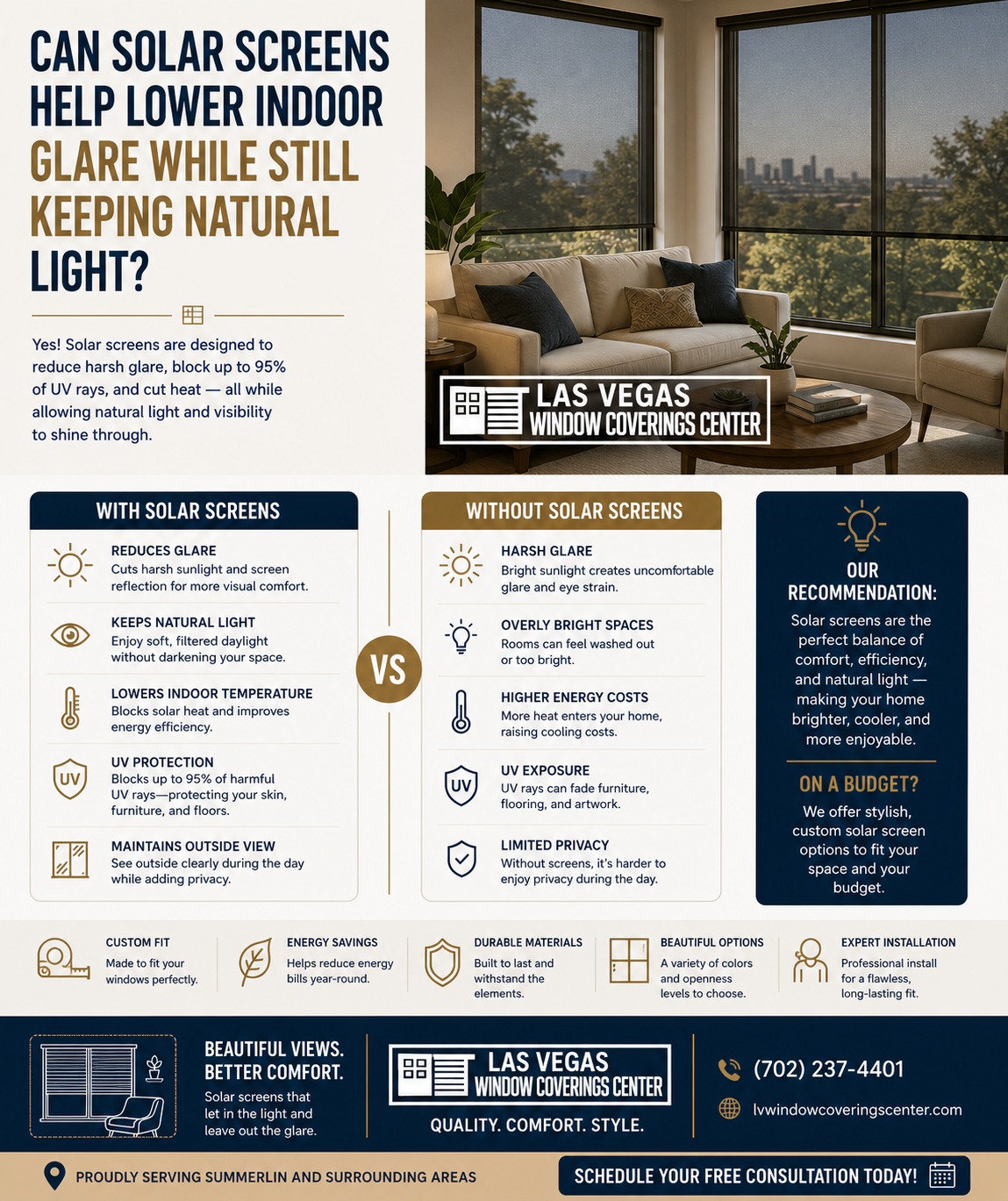
How Solar Screens Reduce Glare Without Blocking All Natural Light
Solar screens are installed on the exterior side of windows. Instead of waiting for sunlight to pass through the glass and heat up the room, the screen fabric filters a portion of the sunlight outside first. This can make the light entering the home feel softer and less harsh.
They Filter Direct Sunlight
Solar screens reduce the intensity of direct sunlight before it reaches the glass. This can help lower harsh brightness in rooms that feel too sunny during certain parts of the day.
They Help Control Glare
Glare often comes from direct sun reflecting off screens, floors, counters, and furniture. Solar screens help soften that light so the room can still feel naturally bright without being uncomfortable.
They Preserve Daylight
Unlike blackout shades, solar screens are not meant to make the room dark. They are often chosen by homeowners who still want daylight, filtered views, and a more comfortable indoor feel.
Are Solar Screens Worth It in Las Vegas?
Solar screens can be worth considering in Las Vegas because many homes deal with intense sun exposure, especially on east-facing and west-facing windows. They can be helpful for glare control, UV protection, daytime privacy, and heat comfort. The right choice depends on the window direction, openness factor, screen color, material, and whether you also need interior shades, blackout shades, shutters, or blinds.
Natural Light, Daytime Visibility, Privacy, and UV Protection
Solar screens are popular because they do not force homeowners to choose between harsh sunlight and a dark room. The right screen can reduce glare while keeping a softer level of daylight inside.
Daytime Visibility
Many solar screen fabrics allow some outward visibility during the day. The exact view depends on the openness factor, color, fabric density, distance from the window, and outdoor brightness.
Daytime Privacy
Solar screens can support daytime privacy by making it harder to see into the home from outside during bright daylight. Privacy can change at night when interior lights are on.
UV Protection
Solar screens can help reduce UV exposure through windows, which may help protect furniture, flooring, artwork, and interior finishes from direct sunlight over time.
Nighttime Privacy
Solar screens should not be treated as full nighttime privacy products. If nighttime privacy is important, compare them with interior shades, blackout shades, shutters, or layered window covering options.
Openness Factor, Screen Color, and Material Choices
The openness factor is one of the most important details when choosing solar screens. It describes how open or tightly woven the screen fabric is. A tighter weave usually blocks more sunlight and glare, while a more open weave usually allows more light and visibility.
Lower Openness Factor
A lower openness factor can be a helpful choice for strong sun exposure, west-facing windows, rooms with heavy glare, and areas where privacy matters more. The tradeoff is that the room may feel darker and the outward view may be more limited.
Higher Openness Factor
A higher openness factor can allow more natural light and a clearer outward view. The tradeoff is that it may offer less glare control and less privacy than a tighter screen fabric.
Screen Color Matters
Screen color affects appearance, visibility, light filtering, and curb appeal. Darker screen colors may provide better outward visibility in some situations, while lighter colors can create a different exterior look. Because Las Vegas sunlight is bright, comparing samples in person is helpful before choosing.
Material and Hardware Details
Ask about frame colors, mesh options, durability, cleaning, fit, mounting method, and replacement availability. For homeowners in HOA communities, condos, townhomes, and master-planned neighborhoods, exterior appearance may also need to be considered before installation.
Why Window Direction Matters in Las Vegas
Not every window needs the same solar screen. In Las Vegas, window direction can make a major difference in glare, heat, and interior comfort.
East-Facing Windows
East-facing windows often get strong morning sun. Solar screens may help reduce early-day glare in kitchens, breakfast areas, bedrooms, offices, and front-facing rooms.
West-Facing Windows
West-facing windows can be some of the most challenging in Las Vegas because afternoon sun can feel intense. These windows often need careful screen selection for glare and heat comfort.
South-Facing Windows
South-facing windows may receive steady sunlight depending on the home layout, roofline, patio cover, and surrounding shade. Screen choice should match the room’s comfort needs.
Energy Comfort Expectations
Solar screens can help improve comfort by reducing sun intensity at the window, but results can vary. Window size, glass type, screen fabric, installation fit, room insulation, HVAC performance, and window direction all play a role. For the best decision, compare solar screens with solar shades, blackout shades, shutters, window tint, patio screens, and other heat-reducing window treatments.
Solar Screens Las Vegas Comparison Table
Solar screens can be a smart option for glare and heat, but they are not the only window covering choice. Use this comparison to understand when each option may fit better.
| Window Covering | Best Use Case | Pros | Possible Drawbacks | When to Choose It |
|---|---|---|---|---|
| Exterior Solar Screens | Sun-facing windows, glare, heat comfort, daytime privacy | Filters sunlight before it reaches glass, keeps natural light, supports daytime privacy | Exterior appearance matters; nighttime privacy is limited | Choose for bright Las Vegas windows where glare and heat are concerns |
| Solar Shades | Interior glare control with a clean shade look | Softens sunlight, can preserve views, many fabric options | Nighttime privacy can be limited depending on fabric | Choose when you want interior shade control and filtered light |
| Blackout Shades | Bedrooms, media rooms, nurseries, privacy-focused rooms | Strong room darkening and privacy | Less natural light when closed | Choose when darkness and privacy matter more than daylight |
| Plantation Shutters | Durable interior light and privacy control | Classic look, adjustable louvers, strong privacy control | Different cost and style profile than screens or shades | Choose for a structured interior window treatment |
| Faux Wood Blinds | Practical light control for many rooms | Adjustable slats, familiar operation, room-by-room flexibility | More dusting and visual lines than screen or shade products | Choose for practical privacy and light adjustment |
| Zebra Roller Shades | Modern rooms needing flexible light filtering | Layered look, adjustable light control, stylish fabric design | Not always the strongest option for heat or blackout needs | Choose for modern interiors where style and filtered light matter |
| Window Tint | Permanent glass treatment for glare and sun control | Can reduce brightness without adding a visible interior shade | Less adjustable; HOA, glass warranty, or appearance concerns may apply | Choose only after comparing flexibility, appearance, and glass requirements |
| Patio or Templar Screens | Outdoor living spaces, patios, shade, dust, wind, and privacy | Can make patios more comfortable and usable | Requires outdoor layout planning and possible community review | Choose for patio comfort and outdoor living spaces |
Local Las Vegas Factors Before Choosing Solar Screens
Solar screens should be chosen around the home, window direction, community, and room use. A product that works for one window may not be ideal for another.
Las Vegas Dry Heat and Bright Sunlight
Strong desert sunlight can make glare feel intense. Solar screens are often considered for rooms where homeowners want natural light without harsh brightness.
West-Facing Windows
West-facing windows can receive strong afternoon sun. These windows may need tighter screen fabric, darker screen options, or layered window covering planning.
Privacy Near Streets and Neighbors
Solar screens can support daytime privacy for street-facing rooms, patios, condos, and homes close to neighbors. For nighttime privacy, compare interior coverings too.
Rental and Investment Properties
Property managers, landlords, and investors may consider solar screens for comfort, glare reduction, curb appearance, and tenant-friendly window upgrades.
HOA and Community Style Expectations
Some communities may have rules for exterior window screen color or appearance. Ask about HOA expectations in Summerlin, Henderson, Green Valley, Anthem, Inspirada, and similar communities.
Seeing Samples in Person
The showroom helps customers compare screen, fabric, shade, shutter, and blind samples under real light instead of relying only on online photos.
Customers in Las Vegas, Summerlin, Henderson, North Las Vegas, Paradise, Spring Valley, Enterprise, Whitney, Winchester, The Lakes, Centennial Hills, the Las Vegas Strip, Southern Highlands, Green Valley, Anthem, Inspirada, Mountains Edge, and Lake Las Vegas can bring measurements, photos, inspiration, or project details to visit the Las Vegas window coverings showroom.
Questions to Ask Before Buying Solar Screens
Before buying solar screens, ask practical questions so you understand glare control, privacy, material, visibility, and installation details.
- Are solar screens the right option for this room, or do I need blinds, shades, shutters, or patio screens?
- How much indoor glare reduction should I realistically expect?
- Will the room still have natural light after the screens are installed?
- What openness factor is best for my window direction?
- How will the screen color affect visibility and exterior appearance?
- How much daytime privacy will the screen provide?
- Will I need an interior covering for nighttime privacy?
- Can I compare screen, fabric, color, or shutter samples in person?
- Can you help with measuring and installation?
- What should I bring to the showroom?
- How long does ordering or installation usually take?
- What is included in the quote?
- Are there current showroom promotions?
- What happens if a fabric, color, or size is unavailable?
- Will my HOA or community have window covering requirements?
- How do I clean and maintain solar screens?
Red Flags When Shopping for Solar Screens
Solar screens are practical products, but the wrong screen can lead to poor fit, too much darkness, not enough privacy, or a look that does not match the property. Watch for these warning signs.
- A vague quote without measurements
- No written estimate or clear scope
- No explanation of openness factor, screen material, color, or hardware
- No samples to compare
- No clear explanation of daytime privacy versus nighttime privacy
- No discussion of room direction or Las Vegas sun exposure
- No installation details or unclear mounting approach
- Unclear lead times or availability
- Pushy upsell without explaining tradeoffs
- Limited product knowledge
- No local reviews, showroom information, or project examples
- No clear process for homeowners, contractors, landlords, property managers, or business owners
Why Choose Las Vegas Blinds, Solar Screens & Shutters Window Coverings Center?
Las Vegas Blinds, Solar Screens & Shutters Window Coverings Center is a strong local option for homeowners and professionals comparing solar screens and other window coverings in the Las Vegas Valley. The Valley View showroom gives customers a place to compare screen materials, colors, openness levels, privacy options, shade fabrics, shutter finishes, blinds, and installation details before deciding.
The showroom is worth considering if you are comparing blinds, solar screens, exterior solar screens, shutters, roller shades, zebra roller shades, blackout shades, motorized shades, solar shades, patio screens, Templar screens, Roman shades, cellular shades, honeycomb shades, vertical blinds, wood blinds, faux wood blinds, and custom window coverings.
The company is open to homeowners, contractors, remodelers, investors, landlords, property managers, and business owners. Whether you are updating one room, planning a remodel, improving comfort in a rental, reducing glare in an office, or comparing exterior solar screens for a bright home, the showroom can help you compare practical window covering options in one place.
Areas Served Near Las Vegas
Local showroom support is helpful when comparing solar screens, solar shades, blackout shades, blinds, shutters, patio screens, and custom window coverings for Las Vegas Valley homes and properties.
- Las Vegas
- Summerlin
- Henderson
- North Las Vegas
- Paradise
- Spring Valley
- Enterprise
- Whitney
- Winchester
- The Lakes
- Centennial Hills
- Las Vegas Strip
- Southern Highlands
- Green Valley
- Anthem
- Inspirada
- Mountains Edge
- Lake Las Vegas
Visit the Las Vegas Window Coverings Showroom
Customers can bring measurements, photos, inspiration images, room details, window direction notes, or project plans to compare solar screens, blinds, shutters, roller shades, blackout shades, motorized shades, patio screens, and other window covering options.
FAQs About Solar Screens in Las Vegas
Can solar screens help lower indoor glare while keeping natural light?
Yes. Solar screens can reduce harsh indoor glare while still allowing filtered natural light into the room. The result depends on screen color, material, openness factor, and window direction.
Are solar screens worth it in Las Vegas?
Solar screens are worth considering for Las Vegas homes with strong sun exposure, glare, daytime privacy needs, UV concerns, or east-facing and west-facing windows.
Do solar screens really reduce heat?
Solar screens can help reduce sun intensity before it reaches the glass, which may improve room comfort. Results vary based on screen fabric, window direction, glass type, installation, and home conditions.
Do solar screens make a room too dark?
Not always. A tighter screen may make a room darker, while a more open screen usually allows more daylight. Ask to compare openness factors before choosing.
What is the difference between solar shades and solar screens?
Solar screens are usually exterior window screens that filter sunlight before it reaches the glass. Solar shades are interior fabric shades that filter light from inside the room.
Do solar screens provide privacy at night?
Solar screens can help with daytime privacy, but they should not be relied on for full nighttime privacy when interior lights are on. Interior shades, shutters, or blackout options may be needed.
What windows benefit most from solar screens?
East-facing and west-facing windows, large sunny windows, patio-facing glass, upstairs rooms, living rooms, offices, and rooms with TV or computer glare often benefit from solar screen consideration.
Where can I compare solar screens in Las Vegas?
Las Vegas Blinds, Solar Screens & Shutters Window Coverings Center is a local showroom where customers can compare solar screens, blinds, shutters, shades, patio screens, and custom window coverings.
Related Blog Ideas
- Are Solar Screens Worth It for Las Vegas Heat?
- Solar Shades vs Solar Screens: What Is the Difference?
- What Window Coverings Are Best for West-Facing Windows in Las Vegas?
- Do Solar Screens Help With Daytime Privacy?
- Blackout Shades vs Solar Screens for Bright Las Vegas Rooms
Compare Solar Screens and Custom Window Coverings in Las Vegas
Call Las Vegas Blinds, Solar Screens & Shutters Window Coverings Center at (702) 237-4401 for window covering options in Las Vegas and nearby areas.