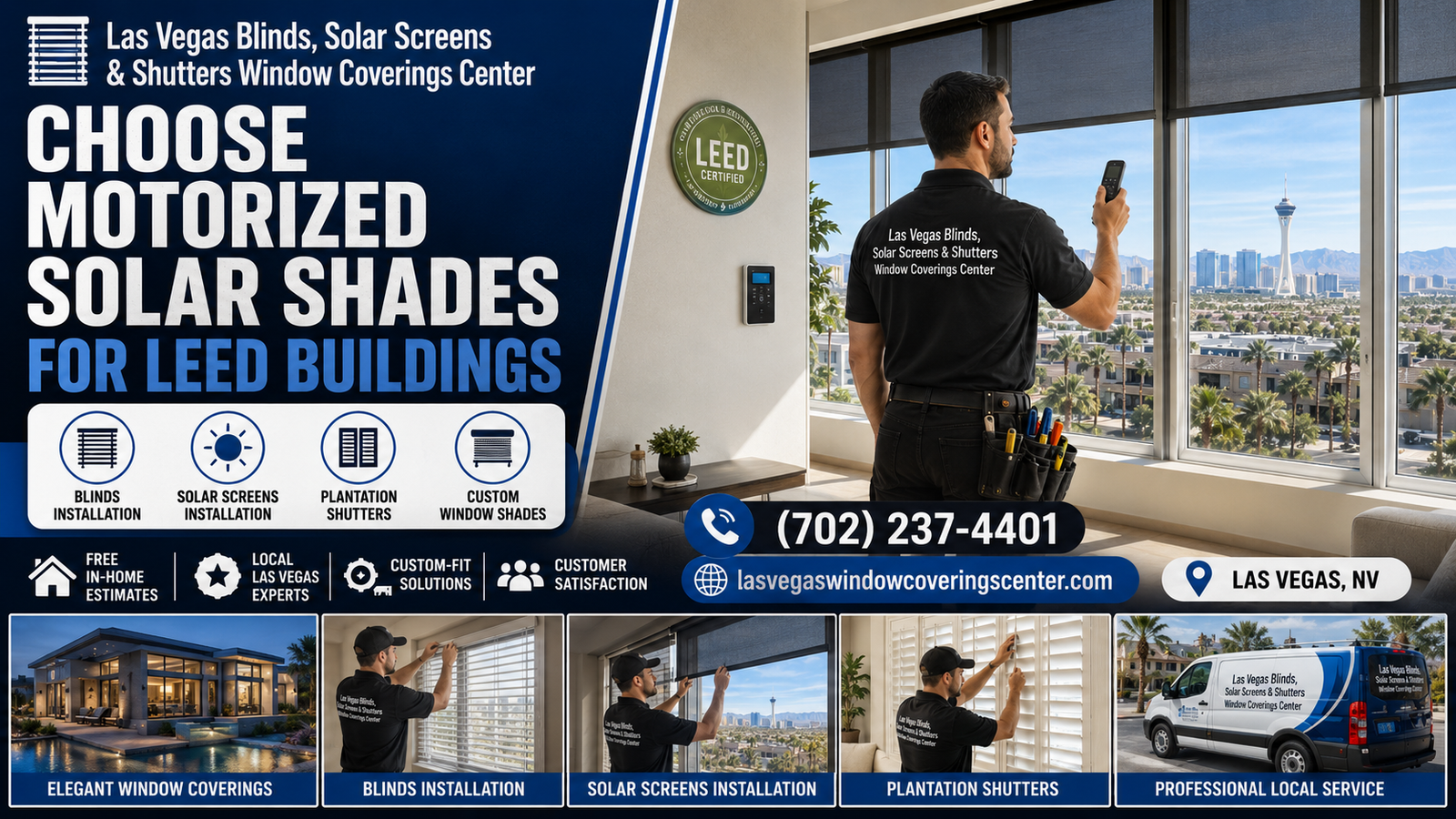
Optimize energy performance, enhance occupant comfort, and earn valuable green building credits. Discover how automated motorized solar shades play an essential role in LEED-certified commercial and high-end residential developments across Las Vegas.
Commercial developers and property managers choose to choose motorized solar shades for leed buildings because they directly impact multiple core LEED certification categories, including Energy & Atmosphere (EA) and Indoor Environmental Quality (EQ).
Motorized solar shades optimize building performance by dynamically responding to the sun's position. Automated sun-tracking sensors lower the shades during peak solar radiation to drastically cut solar heat gain, reducing the load on commercial HVAC systems. Simultaneously, they optimize natural daylight harvesting, minimizing artificial lighting energy consumption while eliminating harsh workstation glare and maintaining outdoor views for occupants.
Unlike static window treatments, automated motorized shading systems ensure building-wide compliance without relying on manual tenant operation, making them an indispensable asset for sustainable architecture in high-sun climates like Las Vegas.
As Las Vegas, Summerlin, and Henderson continue to expand with modern office complexes, retail centers, high-rise hospitality venues, and multi-unit residential towers, the demand for sustainable, energy-efficient building design has never been higher. Architectural standards like LEED (Leadership in Energy and Environmental Design) have shifted from optional eco-friendly benchmarks to essential requirements for developers seeking long-term operational savings, tax incentives, and tenant retention.
However, designing a sustainable building in the Mojave Desert presents extreme environmental hurdles. Expansive glass facades—while visually stunning and necessary for modern commercial aesthetics—allow massive amounts of solar radiation to penetrate the interior. Without intelligent management, these glass walls turn buildings into solar ovens, forcing cooling systems to run at maximum capacity and causing severe occupant discomfort due to computer screen glare.
To achieve LEED certification, architects and commercial property operators must implement dynamic, automated solutions that actively manage solar energy. This is where commercial window shades, specifically automated motorized solar shades, become a critical component of the building envelope.
Achieving LEED certification requires accumulating points across various performance categories. Motorized solar shading systems directly and indirectly support several key credit categories under current LEED rating systems:
The EA category focuses on reducing energy consumption and optimizing building performance. Motorized solar shades reduce thermal transfer through windows. By automatically lowering when solar heat gain is highest, they prevent interior temperatures from spiking, directly reducing cooling loads on commercial HVAC chillers and lowering overall electrical consumption.
The EQ category rewards strategies that enhance the indoor environment for occupants. Motorized solar shades contribute by:
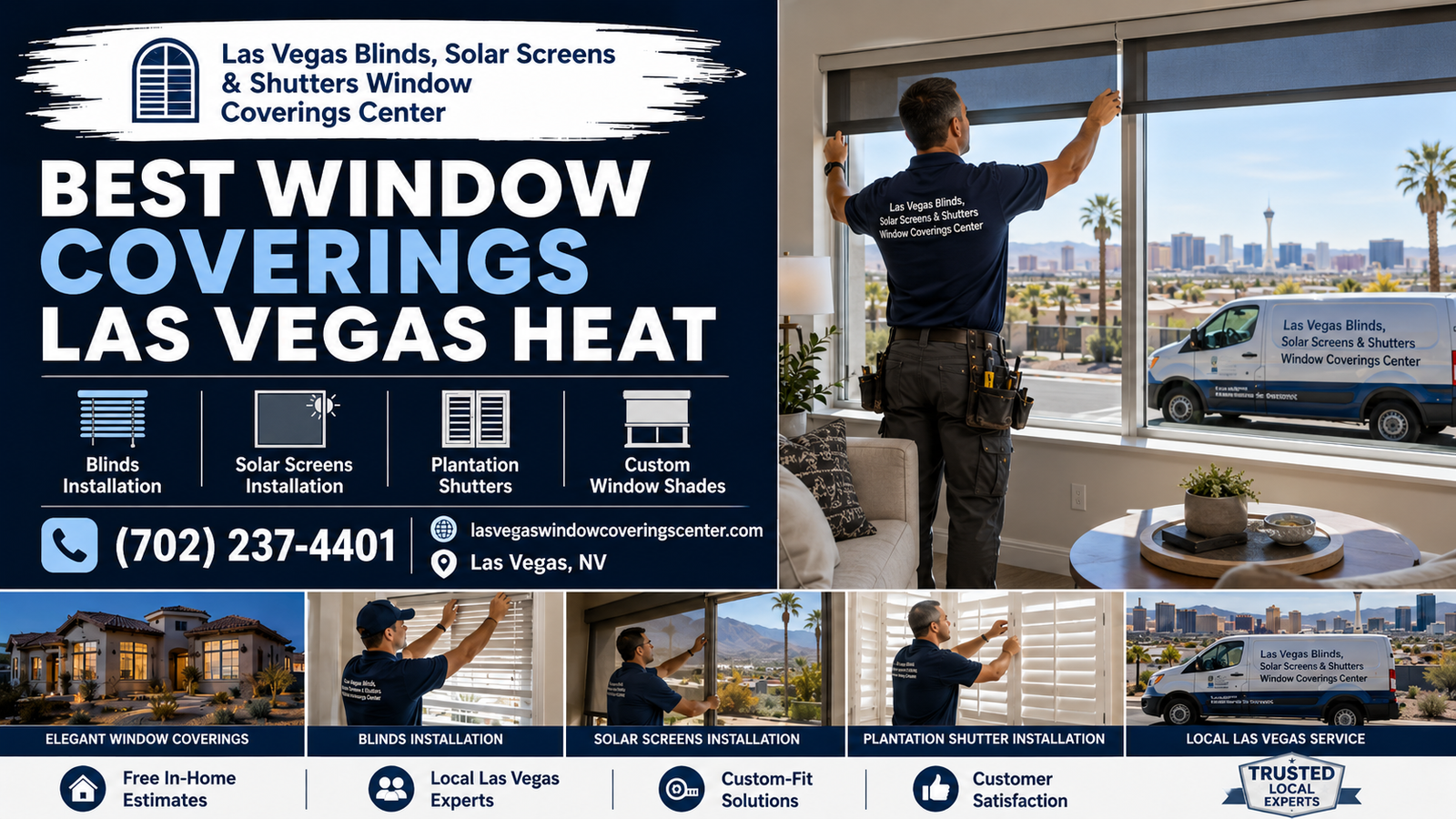
In a commercial building, windows are typically the weakest link in the thermal envelope. Glass allows radiant energy to pass straight through, converting light into trapped interior heat. In Las Vegas, where summer ambient temperatures routinely exceed 110 degrees, managing this solar heat gain is paramount.
Static window treatments—such as manual blinds or fixed window tint—rely on human behavior or provide a static barrier that cannot adapt to changing weather conditions. If tenants forget to pull manual blinds, interior solar loads spike instantly. Motorized solar shades eliminate human error. Tied to automated astronomical clocks and solar tracking software, they anticipate the sun's path, lowering precisely when heat rejection is required and retracting on overcast days or during winter mornings when solar warmth is desirable.
Daylight harvesting is a core strategy in green building design. By utilizing natural sunlight instead of artificial electric lighting, commercial properties can drastically cut their baseline energy consumption. However, uncontrolled daylight introduces intolerable glare.
Motorized solar shades resolve this paradox. Using specialized openness factor fabrics (such as 1% to 5% mesh weaves), the shades diffuse direct sunlight into soft, usable ambient light. When integrated with photosensors (light meters) placed on the building exterior or window sill, the motorized shades adjust their height dynamically throughout the day. If cloud cover rolls in, the shades retract to pull in more natural light; when the sun beats down directly against the glass, they descend to block glare, protecting workers while maintaining a clear view of the outside world.
The true power of choosing motorized solar shades for LEED buildings lies in their ability to integrate seamlessly into a Building Management System (BMS). Modern commercial shading architecture utilizes a robust network of controls:
For high-end residential smart homes and multi-unit hospitality properties, similar automation protocols ensure luxury and energy efficiency operate in absolute harmony.
Property managers, facility directors, and commercial developers can safely perform several preliminary evaluations before consulting a window-covering specialist:
Safety Warning: Do not attempt to access exterior high-rise window tracks without proper commercial fall protection and scaffolding equipment. Do not modify high-voltage building electrical wiring without a licensed commercial contractor. Always rely on certified professionals for large-scale commercial installations.
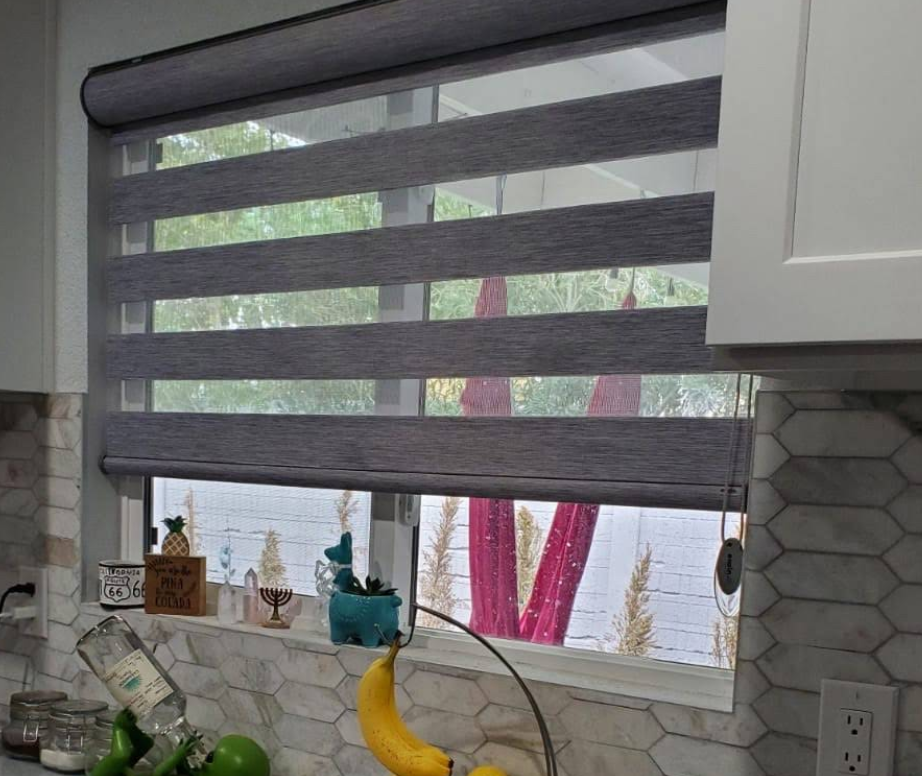
Compare how traditional manual treatments stack up against automated motorized solar shades in achieving LEED certification and operational efficiency.
| Performance Metric | Manual Blinds / Static Shades | Automated Motorized Solar Shades |
|---|---|---|
| LEED Contribution | Minimal; relies entirely on tenant compliance to earn energy credits. | High; actively manages energy consumption, HVAC load, and daylight harvesting. |
| Heat Rejection Reliability | Inconsistent; occupants often forget to lower shades during peak heat. | 100% Automated; responds instantly to sun sensors and astronomical clocks. |
| Occupant Comfort & Glare | Poor; uneven shade heights across a facade create an unkempt exterior and interior glare. | Flawless; synchronized movement maintains uniform aesthetic and eliminates glare. |
| Maintenance & Durability | High wear-and-tear; manual pull cords and chains break frequently from heavy commercial use. | Low wear; motorized operation prevents physical abuse and extends product lifespan. |
| Property Valuation | Viewed as basic, standard utility. | Seen as a high-tech, sustainable upgrade that attracts premium commercial tenants. |
Commercial properties undergo significant wear, and legacy manual blinds often fail to meet modern energy standards or tenant expectations.
If a commercial property already utilizes motorized shades, minor service calls—such as reprogramming a limit switch, replacing a wall switch, or swapping out a rechargeable battery pack—are cost-effective ways to maintain system integrity without a full overhaul.
For older office buildings, retail storefronts, or multi-unit properties striving for LEED certification, upgrading to commercial-grade motorized solar shades is a strategic investment. Replacement is necessary when:
Pricing for commercial motorized shading depends heavily on total square footage, window dimensions, fabric openness, power distribution requirements, and BMS integration complexity. Generic online pricing models do not apply to commercial-grade engineering.
Designing for sustainability in Las Vegas requires respecting the unique severity of the Mojave Desert. Commercial properties in Paradise, Spring Valley, Henderson, and downtown Las Vegas face extreme thermal stress that quickly exposes inferior building materials.
Standard retail window treatments or residential-grade motors will fail rapidly under continuous high temperatures and intense UV bombardment. Commercial solar shades must utilize heavy-duty aluminum hardware, high-tensile fiberglass or polyester mesh fabrics, and commercial-grade tubular motors designed for thousands of continuous operational cycles.
Furthermore, local dust and fine debris demand easy-clean surfaces. High-performance solar fabrics resist dust accumulation and can be easily wiped down during routine commercial maintenance, ensuring the building exterior maintains a pristine, uniform appearance that satisfies local HOA and commercial district architectural guidelines.
Architects, general contractors, and property developers should verify specific technical details before purchasing commercial shading systems:
Avoid vendors or suppliers who exhibit these warning signs on commercial and LEED-focused projects:
Las Vegas Blinds, Solar Screens & Shutters Window Coverings Center is a strong local option for commercial developers, property managers, architects, and business operators seeking reliable motorized solar shades in Clark County. We understand the rigorous performance demands of sustainable architecture and LEED-certified properties in the Mojave Desert.
We provide comprehensive commercial support—from product selection and fabric opacity analysis to precise custom measurement and expert installation. Whether you are outfitting a multi-story corporate office, a retail storefront, a medical facility, or a hospitality property, our team delivers custom-fit shading solutions designed specifically to withstand Las Vegas conditions.
Avoid the pitfalls of unverified national suppliers and generic call centers. Partner with a local window-covering company serving Las Vegas that prioritizes commercial precision, technical expertise, and energy efficiency.
Discuss Your Commercial Project Today:
Phone: (702) 237-4401
Website: lasvegaswindowcoveringscenter.com
Find Us: View our Google Maps location
We provide professional commercial consultation, precise custom measurement, and expert installation services from our Las Vegas location to properties throughout these Clark County communities:
Call Las Vegas Blinds, Solar Screens & Shutters Window Coverings Center at (702) 237-4401 to discuss custom blinds, solar screens, motorized shades, or best window coverings for Las Vegas homes and commercial properties in Clark County.