★ ★ ★ ★ ★
Proudly backed by over 500+ 5-Star Reviews
Trusted by Las Vegas homeowners.
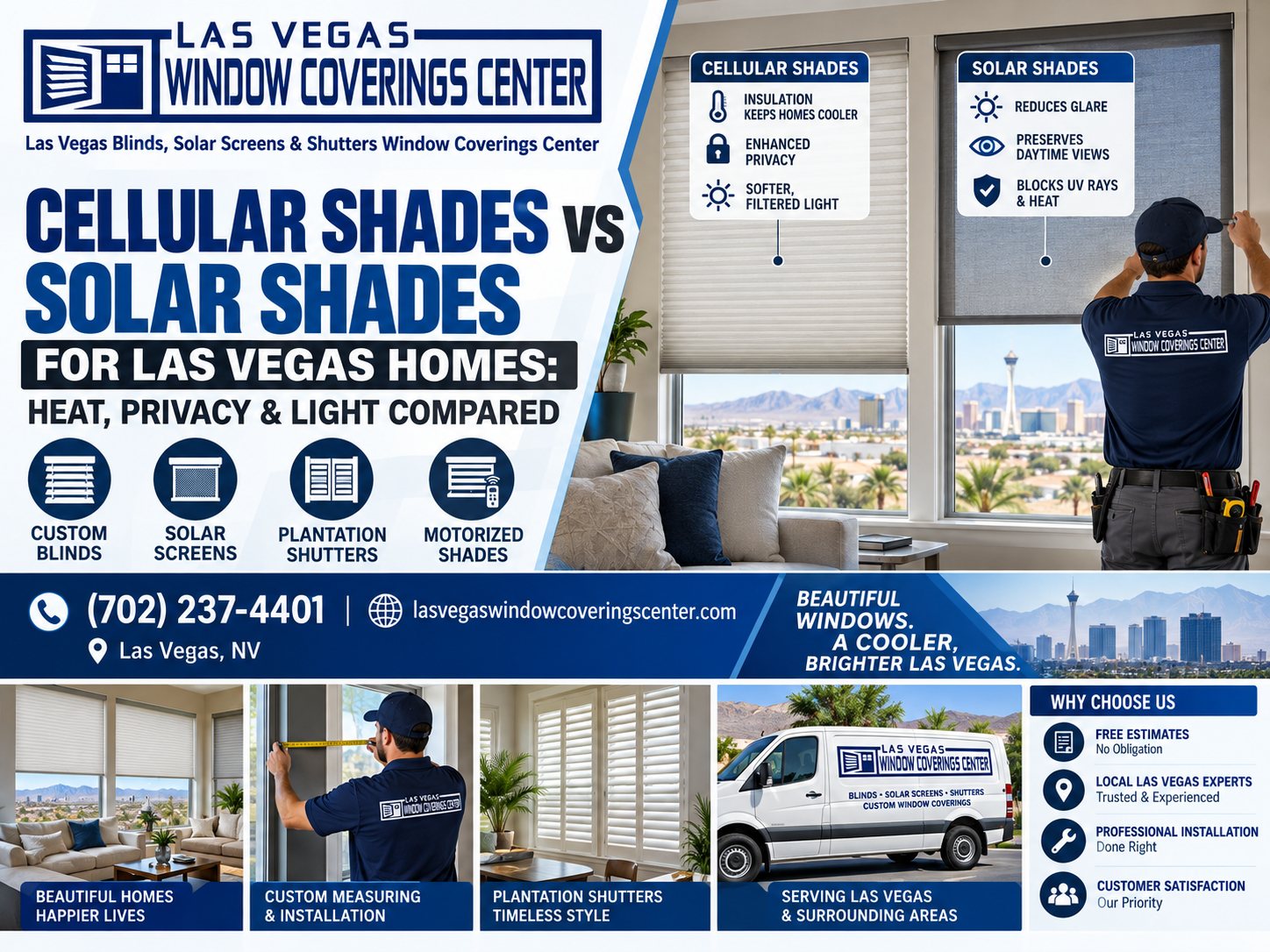
Cellular shades vs solar shades comparison for heat, privacy and light in Las Vegas homes
Cellular vs Solar Shades • Las Vegas Home Guide

Cellular Shades vs Solar Shades for Las Vegas Homes: Heat, Privacy & Light Compared

Cellular and solar shades can both make a bright Las Vegas window more comfortable, but they solve different problems. Cellular shades emphasize insulation, privacy and flexible fabric opacity. Solar shades emphasize glare reduction, filtered daylight and maintaining an outdoor view. This guide explains which one makes more sense by room, window orientation and homeowner priority.

Las Vegas Blinds, Solar Screens & Shutters Window Coverings Center 3871 S Valley View Blvd #6, Las Vegas, NV 89103
Cellular Shades Solar Shades Professional Measurement Residential Window Coverings

Cellular Shades or Solar Shades: Which Is Better for a Las Vegas Home?

Short answer: choose cellular shades when insulation, privacy, room darkening and reducing heat transfer at the window are your main priorities. Choose solar shades when glare control, filtered daylight and preserving the outdoor view are more important.

For a bedroom or street-facing window where privacy matters, cellular shades are usually easier to configure for the job because fabrics range from light-filtering to opaque and blackout options. For a living room, home office or large west-facing window where you still want to see outside, solar shades often make more sense.

Neither product is automatically best for every hot Las Vegas window. Cellular shades create insulating air pockets, while solar shades use open woven fabric to filter sunlight. The right choice depends on window orientation, glass area, desired privacy, glare, view, room use and the specific fabric selected.

Why Cellular Shades vs Solar Shades Is an Important Las Vegas Comparison

Las Vegas homeowners often begin a window-covering search with one broad goal: make the room more comfortable in the desert sun. But “heat control” can describe several different problems.

One homeowner may feel heat radiating from a large window and want an insulating layer between the room and glass. Another may be comfortable with the indoor temperature but unable to see a television or computer screen because of afternoon glare. A third homeowner may want daytime sun control without losing a view of Red Rock, the mountains, a backyard or the Las Vegas skyline.

Those situations do not necessarily call for the same shade. Cellular shades and solar shades are both useful, but they work in fundamentally different ways.

The U.S. Department of Energy's cellular shade guidance explains that honeycomb shades trap air within their cells and between the shade and the window, creating an insulating effect and helping reduce unwanted solar heat gain.

Solar shades take another approach. Their woven screen-style fabric filters sunlight while maintaining varying degrees of outward visibility. Official Hunter Douglas solar shade guidance explains that openness—the tightness of the fabric weave—changes the balance between light filtering and view-through.

The first question should not be “Which shade is better?” It should be: “Am I trying to insulate the window and increase privacy, or am I trying to filter strong sunlight while preserving the view?”

Homeowners researching honeycomb products can also review the company's cellular shades in Las Vegas and visit Las Vegas Blinds, Solar Screens & Shutters Window Coverings Center to compare materials in person.

What Is the Main Difference Between Cellular Shades and Solar Shades?

Cellular shades are insulating fabric shades. Their pleated honeycomb construction creates pockets of air between the room and the window. They are available in different fabrics, cell sizes, opacities and control styles.

Solar shades are view-preserving sun-control shades. They use woven screen fabric with small openings. The percentage of open space in that weave is called the openness factor.

Cellular Shade

Insulation + Privacy

Best compared when the homeowner wants an insulating layer, stronger privacy, light-filtering or room-darkening fabrics and minimal interest in seeing through the lowered shade.

Solar Shade

Glare + View Control

Best compared when the homeowner wants to reduce strong sunlight and glare while retaining some daylight and an outward view.

The biggest conceptual difference

When a typical cellular shade is fully lowered, you generally look at the shade fabric rather than through it. The opacity selected determines how much light passes through the material.

When a solar shade is lowered, the open weave is intentionally designed to permit some view-through. That is one reason solar shades are popular on large windows where covering the view with an opaque treatment would defeat the purpose of having the glass.
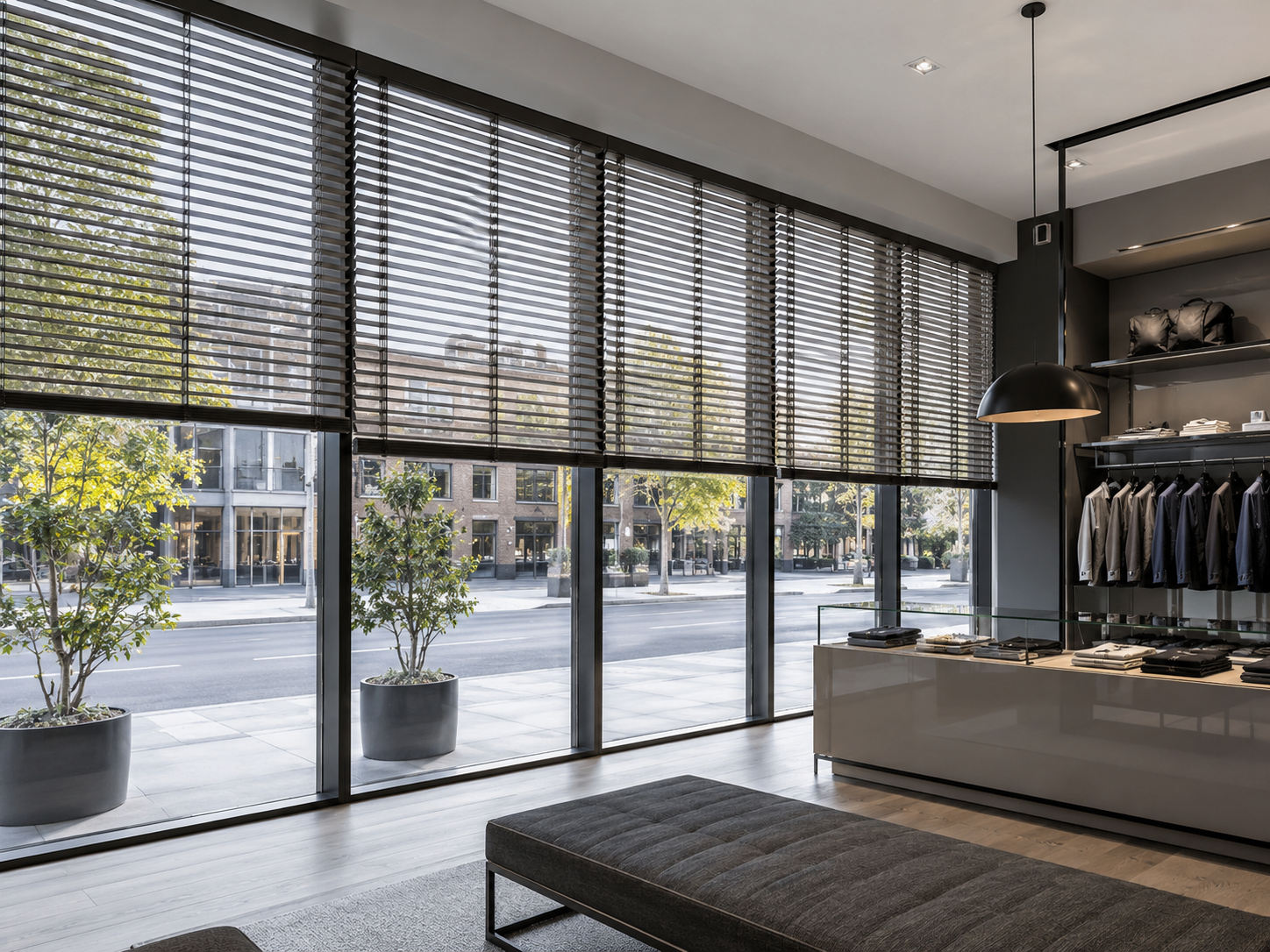
Cellular Shades vs Solar Shades for Las Vegas Homes

The table below compares the products by the decisions that matter most in Southern Nevada. Exact performance depends on the specific fabric, color, installation, glazing and product construction.

Decision Factor Cellular Shades Solar Shades Typical Better Fit
Insulation Honeycomb cells trap air and provide an insulating layer at the window. Primarily designed to manage sunlight rather than create a cellular insulating pocket. Cellular shades
Daytime Glare Light-filtering and opaque fabrics can reduce brightness but generally eliminate the view when lowered. Designed specifically to filter strong light and glare while retaining varying degrees of view. Solar shades
Outdoor View Usually blocked when the shade is lowered. A primary advantage; higher openness generally preserves more view. Solar shades
Daytime Privacy Strong privacy with suitable light-filtering, semi-opaque or blackout fabric. Varies by openness, fabric color and lighting conditions. Cellular shades
Nighttime Privacy Opaque cellular fabrics can provide strong privacy. Open solar fabric may become easier to see through when interior lights are on. Cellular shades
Room Darkening Available with room-darkening and blackout fabrics, subject to installation gaps. Standard solar fabric is not blackout because the weave is intentionally open. Cellular shades
Natural Daylight Light-filtering cellular fabrics diffuse daylight. Designed to maintain filtered daylight and view-through. Depends on desired effect
West-Facing Living Room Useful when insulation and privacy are primary. Useful when glare control and maintaining the view are primary. Depends on priority
Bedroom Strong choice because of privacy and opaque fabric options. Usually requires another layer when nighttime privacy or darkness is essential. Cellular shades
Home Office Useful when privacy is more important than seeing outside. Particularly useful when reducing screen glare while maintaining daylight and view. Solar shades
Large View Window Covers the view when lowered. Can preserve the view while filtering sunlight. Solar shades

Which Is Better for Las Vegas Heat: Cellular or Solar Shades?

If insulation is the priority, cellular shades generally have the advantage. The honeycomb construction creates air pockets that add an insulating layer between the room and window.

DOE research and guidance identifies well-fitted cellular shades as a high-performing interior window attachment because the cellular structure traps air and can reduce unwanted solar heat gain while also reducing heat loss when conditions are cooler.

Solar shades control heat differently. They reduce the intensity of incoming sunlight through specialized woven fabric. They can be very useful on sunny Las Vegas windows, but their defining advantage is solar filtering combined with view preservation rather than creating the same insulating air-pocket structure as a honeycomb shade.

Heat transfer vs solar glare

This distinction matters. A room can have a glare problem without having a severe insulation problem, and it can have a heat-transfer problem even when glare is not the homeowner's biggest complaint.

If a large west-facing window feels like a hot surface and the owner does not need to see through the lowered shade, an insulating cellular product deserves serious consideration.

If the homeowner wants to continue seeing the pool, landscape, mountains or city while reducing harsh afternoon brightness, a solar shade may provide the more satisfying everyday result.

Do not choose from the word “heat” alone. Determine whether the real problem is heat transfer, direct solar brightness, screen glare, privacy—or several of these at once.

Which Gives More Privacy: Cellular Shades or Solar Shades?

Cellular shades generally provide the stronger privacy solution. Light-filtering, semi-opaque, room-darkening and blackout cellular fabrics can prevent direct view through the material when the shade is lowered.

Solar shades are different because some visibility through the woven material is part of their purpose. A tight solar fabric provides more privacy than a very open one, but privacy also changes according to interior and exterior lighting.

Why solar-shade privacy changes after dark

During a bright Las Vegas afternoon, the exterior is often much brighter than the home's interior. That lighting difference can make it difficult for someone outside to see through a solar shade while allowing the person inside to retain a view.

At night, the relationship reverses. Interior lights can make the inside brighter than the exterior, making the open fabric more transparent from outside.

Official Graber guidance comparing solar and roller shades specifically notes that the open weave of a solar shade does not provide complete privacy, particularly at night.

For bedrooms and street-facing rooms: if reliable evening privacy is essential, an opaque cellular shade or a layered treatment is usually more appropriate than relying on an open solar shade alone.

Which Shade Is Better for Daylight and Glare?

Solar shades have a clear advantage when a homeowner wants to reduce glare without completely removing the visual connection to the outdoors. That is exactly what the woven material is designed to accomplish.

Solar-shade fabric is available in different openness factors. Lower openness means a tighter weave, generally producing stronger filtering and less outward visibility. Higher openness means a more open weave, which generally increases daylight and view-through.

Cellular shades manage daylight through opacity rather than openness. A light-filtering honeycomb shade can diffuse bright sunlight into a softer glow, but you generally do not see through the lowered fabric.

Choose cellular shades when:

  • You want soft diffused light rather than an outdoor view.
  • Privacy is more important than view-through.
  • You want room-darkening or blackout fabric options.
  • You want an insulating honeycomb construction.

Choose solar shades when:

  • You want to preserve a backyard, mountain or city view.
  • You are trying to reduce computer or television glare.
  • You want daylight without leaving the glass completely uncovered.
  • You prefer the clean appearance of a screen-style roller shade.

If the Outdoor View Matters, Solar Shades Usually Win

Many Las Vegas homes use large expanses of glass because the view is part of the room. This is especially relevant in hillside properties, high-rise condos and homes overlooking golf courses, pools, desert landscapes or the Las Vegas skyline.

Closing an opaque shade on those windows can solve glare and privacy but eliminate the view. Solar shades offer another option by filtering sunlight through an open weave.

The tradeoff is important: the more view-through a solar fabric provides, the less closed the weave becomes. A homeowner should therefore select openness based on both solar exposure and how important the view is.

Cellular shades take a different approach. When lowered, they become a visual surface in front of the glass. That can be exactly what a privacy-focused bedroom needs but may not suit a living room where the window itself is an architectural feature.

Solar shades on large Las Vegas windows for glare control and filtered daylight

Large windows illustrate why solar-style fabrics can be useful when glare needs to be reduced without completely sacrificing daylight or the outdoor view.

Cellular vs Solar Shades for West-Facing Las Vegas Windows

West-facing windows deserve special attention because they can receive strong low-angle sun during the hottest and brightest portion of the afternoon.

But even on a west-facing window, the right product depends on what the homeowner wants to preserve.

Choose Cellular

When Insulation & Privacy Lead

Cellular shades make sense when the homeowner wants an insulating interior layer, stronger privacy and little need to see outside while the shade is lowered.

Choose Solar

When Glare & View Lead

Solar shades make sense when the homeowner wants to reduce bright afternoon sun but still see through the window during the day.

What if the west-facing room has both problems?

Some rooms need both strong solar management during the day and privacy after dark. In that situation, one product may require compromises. A layered or dual-treatment approach may be worth comparing.

For example, a solar shade can address daytime glare and maintain the view, while a second opaque treatment can provide evening privacy. Alternatively, a cellular shade can emphasize insulation and privacy at the expense of view-through.

Which Is Better for Las Vegas Bedrooms?

For most bedrooms, cellular shades are the stronger first product to compare because privacy and light control usually matter more than maintaining an outdoor view while the shade is closed.

Cellular products are available in different opacity levels. A light-filtering fabric can create daytime privacy while maintaining a softer room. A more opaque or blackout fabric can provide stronger light control for sleeping.

Blackout fabric does not automatically mean a completely black room

This is an important installation detail. Even when the cellular fabric itself is opaque, light may enter around the perimeter of the shade. Inside-mounted shades can have edge gaps because operating hardware requires clearance.

An outside mount can provide more overlap in some installations, and certain systems may offer additional light-control features. The correct choice depends on window depth, trim, sill, desired appearance and how dark the room needs to become.

Solar shades are usually less appropriate as a bedroom's only treatment when nighttime privacy is essential because the open weave can allow visibility from outside after dark.

Which Is Better for Las Vegas Living Rooms?

Living rooms are where the answer becomes more balanced. Homeowners often want three things at once: a comfortable room, manageable sunlight and an attractive view.

Solar shades often work well when the room contains large glass or looks toward a backyard, pool, golf course, mountains or city lights. The shade can remain lowered during bright hours without turning the window into an opaque wall.

Cellular shades are more appropriate when the room's primary concern is insulation, privacy or creating a softly diffused appearance.

Ask one question

When the shade is down at 4:00 p.m., do you still want to see outside? If the answer is yes, start by comparing solar shades. If the answer is no and the priorities are insulation and privacy, compare cellular shades first.

Which Is Better for a Las Vegas Home Office?

Solar shades are often particularly useful in home offices because screen glare is a different problem from simply having too much daylight.

A correctly selected solar fabric can reduce the visual intensity of a bright window while allowing the room to retain daylight and an exterior view. Lower openness fabrics generally provide stronger glare filtering, while higher openness fabrics preserve more view.

Cellular shades can also work well in an office, especially where privacy or insulation is more important than seeing through the window. A light-filtering cellular shade can create a calm, diffused background for video calls without leaving the glass exposed.

For computer glare: test the actual direction of the sun relative to the monitor. A shade that performs well on one wall may not solve reflected glare from another window.

What Cellular Shade Options Matter Most?

Not all honeycomb shades perform or look the same. When comparing cellular shades for a Las Vegas home, focus on the fabric, cell construction, opacity, control method and fit rather than simply asking for “a cellular shade.”

Light-filtering cellular shades

These allow softened daylight through the fabric while preventing direct view through the shade. They can be useful in living rooms, dining areas and street-facing rooms that need daytime privacy.

Room-darkening cellular shades

Room-darkening fabrics admit less light and can make bedrooms and television rooms more comfortable, but the term does not necessarily mean total darkness.

Blackout cellular shades

Blackout fabric is opaque, but installation gaps still matter. Homeowners who are highly sensitive to light should discuss perimeter gaps and mounting options before ordering.

Single-cell vs multi-cell designs

Cellular products can use different cell constructions. More complex designs may create additional insulating layers, but performance should be evaluated using documentation for the exact shade rather than assuming all double-cell or multi-cell products perform identically.

Top-down / bottom-up operation

This configuration can be useful when a homeowner wants daylight from the upper portion of a window while keeping the lower portion covered for privacy. It can be particularly helpful for ground-floor windows facing sidewalks, neighboring homes or streets.

Official Graber cellular-shade information demonstrates how cellular products can vary by cell size and opacity, including sheer, light-filtering and blackout options.

What Solar Shade Openness Is Best for Las Vegas?

Openness describes the amount of open space in solar shade fabric. Lower openness means a tighter weave. Higher openness means a more open weave.

This affects glare, daylight, view-through and privacy.

Lower Openness

More Filtering

Better starting point when glare and daytime privacy are stronger priorities than maintaining the clearest possible view.

Middle Range

Balanced Approach

Useful when the homeowner wants meaningful solar filtering while retaining a noticeable connection to the outdoors.

Higher Openness

More View

Preserves more daylight and view-through but generally provides less filtering and privacy than a tighter fabric.

Manufacturer guidance from Graber Solar Shades shows 1%, 3%, 5% and 10% openness options, illustrating how the product category can be adjusted according to the desired balance between filtering and view.

Do not treat openness as a universal heat-blocking percentage. Fabric color, weave, glazing, orientation and product specifications all influence performance.

Can You Combine Solar Shades With a Privacy Treatment?

Yes. Layering can make sense when no single window treatment satisfies both the daytime and nighttime goals.

A solar shade can remain down during sunny hours to reduce glare while retaining the outdoor view. An opaque second treatment can then be closed at night for privacy.

The second layer could be another shade or a decorative treatment, depending on the window and interior design.

Layering does add hardware, visual depth and cost, so it should solve a real problem rather than be added automatically.

Layered window treatments for nighttime privacy and daylight control in a Las Vegas home

Layered treatments can separate daytime solar control from nighttime privacy when one fabric cannot accomplish both goals.

Inside Mount vs Outside Mount: Why Installation Changes Performance

The shade fabric receives most of the attention, but mounting can change the finished result significantly.

Inside mount

An inside-mounted shade fits within the window opening and can produce a clean architectural appearance. It requires sufficient mounting depth and usually leaves some clearance between the fabric or shade and the sides of the opening.

Outside mount

An outside-mounted shade attaches beyond the window opening. In some situations, the added overlap can help reduce edge light and provide additional coverage.

Why gaps matter differently for each product

On a blackout cellular shade, perimeter gaps can be noticeable because the fabric itself is very dark. On a solar shade, some light through the fabric is expected, so the edge gap may be less visually dramatic, although fit still matters.

Solar roller shades also require space for the roller system and fabric travel. Cellular shades fold into a stack as they rise. These physical differences should be considered before deciding how the shade will fit against handles, trim, window cranks or other hardware.

Which Is Better for Large Las Vegas Windows?

Solar shades are frequently attractive for large glass because their roller-style design is visually simple and the fabric can preserve a significant amount of the exterior view.

Cellular shades can also be made for many large windows, but the exact product's maximum dimensions, fabric weight, headrail, lift system and stack size should be confirmed.

Very wide openings may require multiple shades rather than one enormous treatment. The best arrangement can depend on window mullions, glass divisions, symmetry and how the homeowner wants each section to operate.

Measure more than width and height

Large-window measurement should also account for mounting depth, structural mounting surfaces, handles, trim, window operation and whether the shade will interfere with doors or adjacent glass.

Should Cellular or Solar Shades Be Motorized?

Motorization can be useful with either product, especially on tall, wide or hard-to-reach windows.

On a large west-facing window, convenient operation can also make it more practical to adjust the shade as the sun changes position during the day.

Solar shades may be lowered during bright afternoon hours and raised when direct glare disappears. Cellular shades may be closed when insulation or privacy is desired and opened when the homeowner wants maximum daylight.

Available control methods depend on the exact manufacturer and shade system. Battery, rechargeable and hardwired products exist in the market, but smart-home compatibility should be verified for the actual motor rather than assumed.

Hardwired motorized products should be installed according to applicable manufacturer and electrical requirements.

Which Is Easier to Maintain in Las Vegas Dust?

Both products benefit from routine dust removal, but the cleaning process is different.

Cellular shades contain pleats and internal cells. Dust should generally be removed using methods approved by the manufacturer, such as gentle dusting or vacuuming with an appropriate attachment.

Solar shades use flatter woven fabric, which can make surface dust easier to see and access. Some solar fabrics can be wiped according to manufacturer instructions, but the cleaning method should match the specific material.

Avoid assuming every cellular or solar fabric is washable. Coatings, backing, fabric content and construction can vary considerably.

Do Cellular Shades or Solar Shades Cost More?

There is no useful universal answer because both product categories range from relatively simple manual shades to larger custom motorized systems.

Final project pricing can depend on window dimensions, fabric, opacity or openness, control type, motorization, specialty features, number of windows, mounting requirements and installation difficulty.

Cellular-shade cost factors can include:

  • Cell construction and fabric collection
  • Light-filtering, room-darkening or blackout fabric
  • Top-down / bottom-up configurations
  • Specialty window shapes
  • Motorized operation
  • Large or unusually tall windows

Solar-shade cost factors can include:

  • Solar fabric collection
  • Openness factor
  • Fabric color and finish
  • Roller and cassette options
  • Large-width hardware
  • Motorized operation

A useful estimate should identify the exact product, fabric, measurements, controls and installation scope rather than presenting only one lump-sum number.

Quick Decision Guide: Which Shade Should You Choose?

Privacy First

Choose Cellular

Better starting point for bedrooms, street-facing windows and spaces where nighttime privacy matters.

View First

Choose Solar

Better starting point for large living-room windows, scenic views and glass where you want daytime solar control without closing off the outside.

Insulation First

Choose Cellular

Honeycomb construction is specifically designed to create an insulating air layer at the window.

Screen Glare First

Choose Solar

Solar fabric is especially useful for reducing harsh brightness while retaining daylight in home offices and media spaces.

Bedroom Darkness

Choose Cellular

Compare opaque or blackout cellular fabric, while also discussing perimeter light gaps and mounting.

Day + Night Needs

Consider Layering

A solar layer can manage daytime glare while an opaque second treatment supplies privacy after dark.

What If You Are Also Considering Blinds?

Some homeowners begin with shades but also consider horizontal blinds because adjustable slats offer another style of privacy and daylight control.

If material durability in desert conditions is part of that decision, see the comparison of faux wood vs real wood blinds for Las Vegas heat .

Blinds, cellular shades and solar shades should not be treated as interchangeable products. Each solves the window differently, so the best choice starts with identifying the room's actual problem.

When Neither Cellular Nor Solar Shades Is the Right Answer

Some homeowners discover during comparison that they want adjustable louvers rather than fabric shades. Plantation shutters provide another approach to privacy and directional light control.

Shutters do not provide solar-shade view-through and they do not use cellular air pockets, but their adjustable louvers and framed appearance can work well for front-facing windows and rooms where architectural style is a priority.

The point of a useful consultation is not to force every Las Vegas window into the same product category. Different rooms may benefit from different treatments.

Plantation shutters as an alternative privacy and light-control window treatment in Las Vegas

Plantation shutters provide a third approach when adjustable louvers and an architectural appearance are more important than fabric insulation or solar-screen view-through.

Questions to Ask Before Ordering Cellular or Solar Shades

What is the main problem I am trying to solve: heat transfer, glare, privacy, daylight or view?
Which direction does this window face?
How many hours of direct sunlight reach the glass?
Do I need to see through the shade while it is lowered?
Do I need reliable privacy after dark?
If choosing cellular shades, what opacity is this exact fabric?
If choosing solar shades, what is the exact openness factor?
How does the fabric color affect solar performance, glare and view?
Will this be an inside mount or outside mount?
What side or perimeter gaps should I expect?
Will the shade interfere with window handles, cranks or trim?
Is one shade appropriate for this width or should the window use multiple shades?
Is top-down / bottom-up operation useful for this room?
Is motorization practical for the size and location of this window?
What manufacturer performance documentation is available for this exact product?
Does the written estimate include professional measurement and installation?
Are there alternate products I should compare before ordering?

Red Flags When Comparing Cellular and Solar Shades

Be cautious when a recommendation sounds precise but is not tied to the actual window, fabric and manufacturer documentation.

  • A seller claims one shade type is automatically best for every Las Vegas window.
  • Exact energy-savings percentages are promised without product-specific documentation.
  • Solar-shade openness is described as an exact universal heat-blocking percentage.
  • A solar shade is presented as providing guaranteed nighttime privacy.
  • A low-openness solar shade is incorrectly called a blackout shade.
  • Blackout cellular fabric is promised to create zero perimeter light without discussing installation gaps.
  • Window orientation is never discussed.
  • No one asks whether preserving the outdoor view is important.
  • The recommendation is made without measuring the opening.
  • Inside mount versus outside mount is never explained.
  • Large-window size limits are not checked.
  • Smart-home compatibility is promised without confirming the exact motor system.
  • Manufacturer documentation cannot be provided.
  • The written estimate does not identify the product, fabric and control method.

Why Las Vegas Conditions Change the Cellular vs Solar Shade Decision

Southern Nevada combines intense sunlight, a long cooling season, bright reflective surfaces and many homes with large modern windows. That means product selection should consider both the building envelope and the way residents actually use the view.

Summerlin and west-side properties

Homes around Summerlin, The Ridges, Red Rock Country Club, Queensridge and other west-valley communities may experience strong afternoon exposure. A west-facing living room with a view can favor a solar shade, while a west-facing bedroom where privacy is more important may favor cellular shades.

Henderson and hillside views

Properties in Henderson, Seven Hills, Anthem and MacDonald Highlands may include windows designed to capture valley or city views. Solar shades can be attractive when the goal is to keep that view available during daylight hours.

Street-facing windows

Ground-floor windows in Spring Valley, Enterprise, Green Valley, Centennial Hills and other residential areas may place privacy above view-through. Cellular shades, especially with top-down operation where available, can be worth comparing for this type of window.

High-rise and large glass

Condos and residences with broad expanses of glass can create a different priority set. The owner may specifically want a shade that manages glare without losing the skyline. In those cases, solar-shade openness becomes a major design decision.

The correct product is therefore often room-specific rather than house-wide. A Las Vegas property may reasonably use solar shades in view-oriented living spaces and cellular shades in bedrooms or privacy-sensitive rooms.

Compare Cellular and Solar Shades in Las Vegas

Las Vegas Blinds, Solar Screens & Shutters Window Coverings Center is a local Las Vegas window covering company where homeowners can compare different approaches to heat, glare, privacy and daylight instead of deciding from an online photo alone.

A useful cellular-versus-solar consultation can consider window orientation, room use, glass area, desired outdoor view, privacy, light control, mounting depth, window hardware, cellular opacity, solar openness and control preferences.

Customers can also compare other window covering categories when neither cellular nor solar shades fully solves the problem.

Las Vegas Blinds, Solar Screens & Shutters Window Coverings Center
3871 S Valley View Blvd #6
Las Vegas, NV 89103

Phone: (702) 237-4401
Website: lasvegaswindowcoveringscenter.com
Google: Las Vegas Blinds, Solar Screens & Shutters Window Coverings Center on Google Maps

Window Shade Service Areas Across the Las Vegas Valley

Window covering consultations are available throughout the Las Vegas Valley. The communities below describe service coverage and do not imply a separate business location or showroom in each area.

Las Vegas
Summerlin
Henderson
North Las Vegas
Spring Valley
Enterprise
Southern Highlands
Mountain's Edge
Green Valley
Anthem
Seven Hills
Paradise
Centennial Hills
Skye Canyon
Spanish Trail
Green Valley Ranch
Inspirada
The Ridges
MacDonald Highlands
Queensridge

Visit Our Las Vegas Window Covering Showroom

Visit Las Vegas Blinds, Solar Screens & Shutters Window Coverings Center at 3871 S Valley View Blvd #6, Las Vegas, NV 89103 to compare cellular shades, solar fabrics and other custom window covering options.

Cellular Shades vs Solar Shades FAQs

Are cellular shades or solar shades better for Las Vegas heat?

Cellular shades generally have the advantage when insulation and reducing heat transfer at the window are the primary goals because their honeycomb cells trap air. Solar shades are especially useful when the problem is intense sunlight and glare but the homeowner still wants daylight and an outdoor view. Window orientation, fabric, glass and mounting also influence the result.

Which provides more privacy, cellular shades or solar shades?

Cellular shades generally provide more reliable privacy because light-filtering, semi-opaque and blackout fabrics can prevent direct view through the shade. Solar shades use an open weave, so privacy varies according to openness and lighting conditions. A solar shade that feels private during daylight may become easier to see through from outside after interior lights are turned on.

Are solar shades better for west-facing Las Vegas windows?

Solar shades can be an excellent choice for west-facing windows when afternoon glare is severe and preserving the view is important. If the homeowner instead prioritizes insulation, nighttime privacy or room darkening, cellular shades may be the better starting point. The best product depends on what problem the west-facing window actually creates.

Can you see through cellular shades?

Standard cellular shade fabrics are not designed for view-through in the way solar fabrics are. Sheer or light-filtering cellular materials may admit substantial daylight, but the lowered shade generally becomes a visual surface in front of the window. Homeowners who want to maintain an outdoor view while filtering sunlight should compare solar shades.

Can people see through solar shades at night?

They may be able to. Solar shades rely on an open woven fabric, and privacy changes with lighting conditions. During the day, the brighter exterior can make the home harder to see into. At night, bright interior lighting can reverse that relationship. Bedrooms and other privacy-sensitive rooms may require an opaque secondary treatment.

Are cellular shades blackout?

Some cellular shades are available with blackout fabric, but cellular shades are not automatically blackout. Light-filtering and other opacity levels are also available. Even an opaque blackout fabric does not automatically eliminate light around the sides of the shade, so mounting and perimeter gaps should be discussed when room darkness is important.

Which is better for a home office, cellular or solar shades?

Solar shades are often useful for Las Vegas home offices because they can reduce screen glare while maintaining filtered daylight and an outdoor view. Cellular shades may be better where privacy or insulation matters more than view-through. Monitor placement, window orientation and direct-sun timing should be considered before selecting the fabric.

Where can I compare cellular shades vs solar shades in Las Vegas?

Las Vegas homeowners can contact Las Vegas Blinds, Solar Screens & Shutters Window Coverings Center at (702) 237-4401 or visit 3871 S Valley View Blvd #6, Las Vegas, NV 89103 to compare cellular and solar shade options based on heat, privacy, light, view, window orientation and room use.

Technical & Authority References

Cellular Shade, Solar Shade & Window Performance Authority Sources

Product performance varies by the actual fabric, construction, installation and window. The following authority and manufacturer resources provide supporting information for the technical concepts discussed in this guide.

U.S. Department of Energy — Interior Cellular Shades

DOE explains the insulating concept behind cellular shades, including how honeycomb cells trap air and how well-fitted cellular window attachments can help reduce unwanted solar heat gain and heat loss.

Read the U.S. Department of Energy cellular shade fact sheet →

Hunter Douglas — Cellular Shades

Hunter Douglas explains honeycomb construction, fabric options, light control and cellular-shade operating configurations.

Review Hunter Douglas cellular shade information →

Hunter Douglas — Solar Shade Openness

Hunter Douglas explains how solar-shade openness changes the balance between solar filtering, outdoor view, glare and privacy and also discusses the effect of fabric color.

Read the Hunter Douglas solar shades guide →

Graber — Cellular Shades

Graber documents different cellular shade cell sizes and fabric opacities, including light-filtering and blackout choices.

Review Graber cellular shade options →

Graber — Solar Shades

Graber provides product information on solar-shade openness, glare, view-through and different control options.

Review Graber solar shade information →

Important: Performance statements should be confirmed against the exact cellular or solar shade being quoted. Do not assume one manufacturer's fabric, energy rating, openness performance, privacy level or control system applies to every product in the category.

Related Las Vegas Shade Topics

Compare Cellular and Solar Shades for Your Actual Window

Cellular and solar shades can both work well in Las Vegas, but they should not be selected for the same reasons. Cellular shades are usually the stronger comparison when insulation, privacy and room darkening matter most. Solar shades are usually the stronger comparison when glare reduction, daylight and outdoor view are the priorities.

The best next step is to compare the products against the actual window orientation, room use, desired privacy and amount of direct sunlight rather than choosing by appearance alone.

Call Las Vegas Blinds, Solar Screens & Shutters Window Coverings Center at (702) 237-4401 to compare cellular shades and solar shades in Las Vegas and nearby areas.