Antimicrobial Window Coverings in Las Vegas
Learn what antimicrobial claims really mean, which blinds and shades are easiest to maintain, and how to choose custom-fit products for homes, medical offices, restaurants, rentals and commercial properties.
What Are Antimicrobial Window Coverings?
Antimicrobial window coverings are blinds, shades, curtains or shutters made with materials or treatments intended to inhibit specified microorganisms on the treated product. Depending on the manufacturer, the claim may concern bacteria, mold, mildew or fungi. The exact treated component, test method and durability should be confirmed in technical documentation.
These products may be useful where cleanability, moisture resistance and routine surface care matter, including medical offices, restaurants, rentals, hospitality properties and homes. They do not make a room sterile, do not replace cleaning or disinfection, and should not be described as disease-proof.
For many Las Vegas properties, the best practical choice is a custom-fit covering with a smooth surface, simple profile, safe controls and cleaning instructions that match the room’s real maintenance routine.
Why This Topic Matters in Las Vegas
Window coverings are touched, adjusted, dusted and exposed to sunlight every day. In a home, that may mean fingerprints from children, pet hair, cooking residue or ordinary desert dust. In an office, restaurant, medical suite or rental property, it can mean repeated contact by staff, tenants, customers and maintenance crews. That is why searches for antimicrobial window coverings have grown beyond a narrow healthcare niche. Property owners increasingly want blinds, shades and shutters that look good, provide privacy and light control, and are also practical to clean.
The phrase antimicrobial window coverings can be confusing because it describes several different ideas. One product may contain an additive intended to inhibit certain microbes on the treated material. Another may simply use a smooth, nonporous surface that is easier to wipe. A third may use a moisture-resistant fabric that is less likely to stay damp. Those products can all support a cleaner environment, but they do not make identical claims and should not be presented as if they do.
For Las Vegas properties, selection must also account for intense sunlight, high temperatures near the glass, fine dust, large windows, sliding doors and frequent air-conditioning use. A shade that is easy to clean but fades quickly in a west-facing room is not a successful choice. Likewise, a technically treated fabric that cannot tolerate the facility’s approved cleaning process may be less practical than a simpler, durable roller shade.
This guide explains the differences in plain language. It is written for homeowners, landlords, renters, property managers, interior designers, medical offices, restaurants, hospitality properties, professional offices and other commercial operators. The goal is not to sell a miracle product. The goal is to help readers identify the right material, ask better questions, avoid unsupported claims and select a custom-fit product that works in the room where it will actually be used.
Quick Product Overview
Roller Shades
Flat profile, commercial fabric options and straightforward operation. Verify cleanability and the exact antimicrobial claim.
Faux-Wood Blinds
Smooth adjustable slats that can be wiped, although horizontal surfaces collect desert dust.
Composite Shutters
Wide louvers and durable architectural frames; more joints and edges require methodical cleaning.
Motorized Shades
Reduce direct handling of fabrics and chains while adding remotes, power and compatibility considerations.
Vertical Blinds
Useful on sliding doors and wide openings. Individual vanes can be serviced or replaced.
Cellular Shades
Helpful for comfort but pleats and cells are usually less suitable for frequent wet wiping.
What “Antimicrobial” Really Means
Antimicrobial is an umbrella term for something intended to kill microorganisms or slow their growth. In the context of a consumer furnishing, the word may describe a registered antimicrobial product, a treated article, a coating, an additive incorporated into a polymer or a textile finish. The exact meaning depends on the manufacturer’s documentation, the claim being made and the part of the product that is treated.
A complete blind or shade contains many components. There may be fabric, slats, a headrail, roller tube, clutch, chain, cordless lift mechanism, bottom rail, brackets, motor, battery, remote and decorative fascia. A manufacturer may describe the fabric as antimicrobial while the operating controls and hardware are not treated. That distinction matters because controls are often the parts people touch most frequently.
An antimicrobial claim should identify what the treatment is intended to protect. EPA guidance distinguishes claims that protect the treated article itself from broader public-health claims. A product promoted as resisting odor-causing bacteria or protecting the fabric from deterioration is not automatically proven to protect people from disease. Buyers should be cautious whenever advertising jumps from product preservation to promises about human health.
The term also should not be confused with disinfected. A treated shade is not continuously disinfected. Dust, oils, food residue and airborne particles can still settle on it. Cleaning removes soil and impurities; sanitizing or disinfecting involves separate processes and products. CDC guidance continues to emphasize that surfaces should be cleaned with products appropriate for the material, and that cleaning is necessary even when other controls are present.
For a Las Vegas homeowner, the practical question is often not whether a shade carries an antimicrobial label. It is whether the covering has a smooth surface, can be reached safely, tolerates the intended cleaning method, resists moisture where necessary and remains stable under local heat and sunlight. For a medical or commercial facility, the product must additionally fit the organization’s written cleaning and infection-control procedures.
Antimicrobial, antibacterial, antifungal, mold-resistant, mildew-resistant, stain-resistant and easy-clean are not interchangeable terms. Antibacterial refers specifically to bacteria. Antifungal relates to fungi. Mold and mildew resistance generally concerns fungal growth or material protection. Stain resistance concerns visible soiling. Easy-clean describes maintenance. A product may offer one attribute without offering the others.
Another important question is durability. Some treatments are incorporated during manufacturing, while others are applied to a surface. Repeated wiping, abrasion, sunlight and cleaning chemicals may affect a surface treatment differently from an additive embedded in the material. The manufacturer should explain how the treatment is tested and whether ordinary maintenance changes its performance.
A responsible window-covering specialist should be willing to say when documentation is unavailable. It is better to recommend a proven easy-clean material honestly than to attach an antimicrobial label to a product without evidence. Balanced guidance protects the customer and helps the business avoid claims that the product was never designed to support.
Potential Benefits and Important Limitations
The strongest practical benefit of hygiene-focused window coverings is often improved cleanability. Flat roller fabrics, broad shutter louvers and smooth faux-wood slats can be easier to inspect and maintain than deeply textured textiles. A simple profile reduces the number of folds, tassels and decorative layers where dust can settle. This can shorten routine maintenance for homes, offices and rentals.
Moisture tolerance may be useful in kitchens, bathrooms, salons and some healthcare or wellness spaces. A nonporous composite slat or properly specified coated fabric may tolerate gentle wiping better than untreated natural fibers. Moisture tolerance is still product-specific. A water-resistant face fabric does not mean the motor, headrail or internal components should be soaked.
A specialty antimicrobial treatment may help protect the treated material from specified bacteria, mold, mildew or fungi, depending on the product’s claim and testing. That can be valuable when the main goal is preserving appearance, reducing odor or limiting deterioration of the product itself. The exact benefit should be stated narrowly and accurately.
Motorization can reduce repeated handling of fabric, chains and slats. A wall switch, remote, schedule or compatible smart-home system may operate several shades without staff touching each one. This is especially helpful on tall windows, in conference rooms or in shared commercial environments. Remotes and wall controls remain high-touch objects and must be included in the cleaning plan.
The limitations are equally important. Antimicrobial window coverings do not sterilize a room, clean surrounding surfaces, filter all airborne contaminants or replace ventilation. They do not correct water intrusion, high indoor humidity or condensation. If mold is growing because a wall or window assembly is wet, the moisture source must be addressed rather than hidden behind a new shade.
No window treatment should be advertised as preventing illness unless the exact public-health claim is legally permitted and supported by reliable evidence. Phrases such as germ-free, hospital-proof, virus-proof or disease-preventing are inappropriate for ordinary blinds and shades. A safer description is that the material may inhibit specified microbial growth on the treated surface and may support an easier maintenance routine.
The treatment also does not make poor product design acceptable. A shade that telescopes, jams or hangs unevenly will be touched and adjusted more often. A blind with fragile slats will accumulate damage that complicates cleaning. Accurate measurement, correct hardware and professional installation remain central to long-term performance.
Finally, buyers should consider whether the specialty feature justifies the price. In many residential spaces, a durable cordless faux-wood blind or smooth composite shutter may meet the real need better than an expensive specialty textile. In a medical office, by contrast, documented material compatibility and facility approval may justify a more specialized product.
Materials and Product Types to Compare
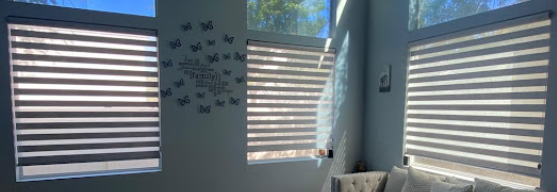
Commercial roller shades are often the first product considered for hygiene-focused spaces because they use a relatively flat sheet of material. When raised, the fabric rolls around a tube. When lowered, there are few folds. Performance fabrics may be offered with coatings, stain resistance, moisture resistance or antimicrobial additives. The buyer must verify the exact fabric number and care instructions rather than assuming every color in a collection has the same properties.
Solar roller shades are designed primarily for glare and solar control. Their openness factor affects view, privacy and the amount of visible light passing through. Some commercial solar fabrics are easy to dust or wipe, but openness means the material contains small openings. That structure can hold fine debris and may not provide nighttime privacy. A medical room or street-facing office may need a privacy fabric or a dual-shade system instead.
Privacy roller shades use more opaque material and may be easier to specify for consultation rooms, bathrooms, bedrooms and ground-floor offices. Room-darkening and blackout fabrics provide progressively stronger light control, but the term blackout usually describes the material rather than the complete installation. Side gaps can remain unless channels, overlaps or outside mounting are used.
Faux-wood blinds use smooth slats that are generally easier to wipe than untreated real wood. They provide adjustable light and privacy. Wide slats are more accessible than many narrow slats, but all horizontal blinds collect dust. The headrail, ladder cords and tilt mechanism still require care. Moisture resistance and heat stability vary by formulation.
Composite plantation shutters provide broad louvers and a fixed frame. Their architectural appearance works well in homes, reception areas and professional offices. Smooth louvers can be wiped individually, although hinges, tilt rods, frames and joints increase the number of surfaces. Cleaning products must be compatible with the paint or finish.
Vinyl vertical blinds remain practical for sliding doors and wide commercial windows. Their vertical vanes may collect less settled dust on horizontal surfaces, and individual vanes can often be wiped or replaced. Tracks, carriers and control chains require maintenance. Brittle vanes or damaged carriers should not be forced.
Cellular shades create insulating air pockets through a honeycomb structure. They are valuable for comfort and energy management but may be less convenient for frequent wet wiping. Dust can settle in pleats, and the internal cells are not as accessible as a flat roller surface. Gentle vacuuming or dusting may be recommended, depending on the fabric.
Roman shades and decorative textiles provide softness and design depth. Their folds, linings and stitching can hold dust. Some fabrics may be removable or professionally cleanable, but they are not automatically suitable for high-frequency maintenance. A residential dining room may accept that tradeoff; a medical or food-service space may prefer a flatter product.
Natural woven shades made from bamboo, grass, reeds or jute create texture and warmth. That same texture can make thorough cleaning more difficult. Natural fibers may respond poorly to moisture and harsh chemicals. They are usually selected for appearance rather than hygiene-focused maintenance.
Exterior solar screens are installed outside the glass and are designed to intercept solar exposure before it reaches the window. They can help with heat and glare, but they collect outdoor dust and debris. They are not a direct substitute for an interior easy-clean shade. HOA approval, access and exterior cleaning requirements should be considered.
Motorized shades can use battery, rechargeable or hardwired power. Touchless schedules may reduce contact, but motor housings and electrical parts must remain dry. A facility should document how remotes are assigned, cleaned and stored. Smart-home bridges and apps add convenience, yet compatibility and network security should be reviewed.
Cubicle curtains and specialized healthcare textiles are different from standard residential window treatments. Facilities with regulated clinical requirements should consult infection-control, facilities and procurement professionals. A local window-covering company can assist with measurement and product options, but it should not substitute general marketing language for facility-specific approval.
Residential and Commercial Applications
Medical and dental offices may use easy-clean roller shades in waiting rooms, administrative areas and consultation rooms. The selection should match the facility’s cleaning process and privacy requirements. Clinical treatment areas may have additional rules. Product documentation should be reviewed by the responsible facility professional before ordering.
Restaurants and food-service spaces often need glare control without complicated maintenance. Roller shades with suitable performance fabrics can provide a clean visual line. Window coverings near cooking equipment or food preparation areas face grease and residue, so placement and material compatibility require care.
Hotels and hospitality properties need privacy, durability, room darkening and efficient turnover. A simple roller system can be easier for housekeeping staff than layered decorative treatments, but guest rooms may also need acoustic and aesthetic softness. Dual systems can combine solar and blackout layers.
Rental homes and multi-unit properties benefit from neutral colors, replaceable components and straightforward cleaning. Landlords should prioritize safe cordless controls and durable materials. A product that can be cleaned between occupants without special equipment often has better life-cycle value than a delicate fabric.
Homes with children or pets should place cord safety above antimicrobial marketing. Cordless blinds, motorized shades and secured continuous-loop controls reduce access to dangling cords. Smooth surfaces may simplify cleaning, but secure mounting and furniture placement are essential.
Salons, spas and wellness studios often need privacy and a polished appearance. Products may be exposed to humidity, sprays, oils and frequent contact. Flat roller shades, composite shutters or suitable blinds can work, provided cleaning instructions match the products used in the space.
Offices and conference rooms commonly use solar roller shades to reduce screen glare. Motorized operation allows several shades to move together and supports preset positions. For hygiene-focused planning, the facilities team should decide who controls the shades and how shared remotes or wall switches are cleaned.
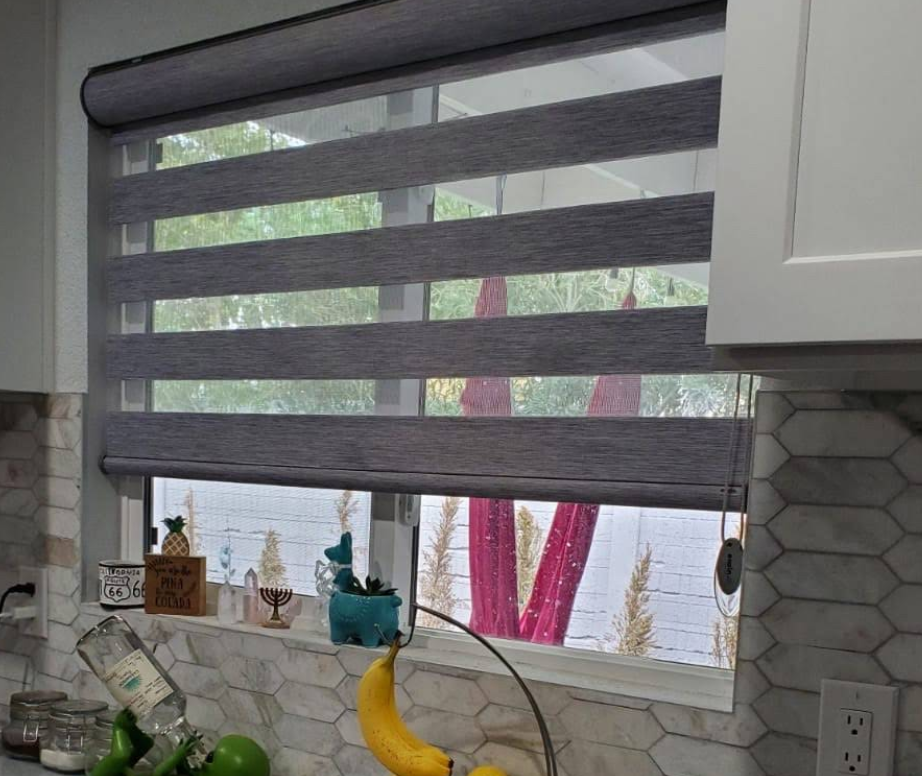
Residential kitchens and bathrooms require careful material choice. Steam, splashes and cooking residue can damage absorbent textiles. Smooth composite blinds or properly specified roller materials may be easier to maintain. Window coverings should not contact burners, sinks or wet surfaces.
Short-term rentals face high turnover and inconsistent guest handling. Durable cordless products with simple instructions reduce misuse. Owners should document cleaning methods for housekeeping teams and keep replacement information for slats, vanes or controls.
Retail storefronts need consistent appearance, glare control and reliable daily operation. Commercial roller shades can support brand colors and reduce visual clutter. The installer should account for door swings, display fixtures, alarm sensors and public access to controls.
Senior living and assisted-living environments may benefit from controls that are easy to understand and operate. Motorization or large accessible controls can reduce strain. Product selection should also consider staff cleaning procedures, resident safety and the facility’s standards.
Schools, childcare centers and community rooms need secure mounting and safe controls. Cordless or inaccessible controls are important. Materials should tolerate the approved cleaning method, and any antimicrobial claim should be reviewed without assuming it replaces ordinary cleaning.
How to Select the Right Product
Begin by defining the actual problem. Is the concern dust, mold, mildew, odor, fingerprints, food residue, moisture, tenant turnover or a regulated cleaning routine? The answer changes the product recommendation. A dust-sensitive homeowner may prefer smooth shutters or roller shades. A clinic may need technical documentation and chemical compatibility. A restaurant may need glare control and wipeability.
Identify who will clean the product and how often. A shade that requires delicate professional cleaning is a poor fit where staff must wipe surfaces weekly. A product that can tolerate only dry dusting may not work in a room where splashes are likely. The maintenance process should be realistic for the people responsible.
Request the exact product name, fabric number, material composition, care guide and technical data sheet. Ask which organism or category the antimicrobial claim covers, what test method was used and which component is treated. If the salesperson cannot identify the document, treat the claim cautiously.
Match the material to sunlight and heat. Las Vegas west-facing windows can expose a shade to long periods of intense afternoon sun. Dark fabrics may improve outward view in solar materials but can absorb heat. Light colors may reflect more visible light. Coatings, backing, tube size and mounting position all affect performance.
Evaluate privacy during daytime and nighttime. Open solar fabrics may provide daytime view-through but limited privacy after dark. Ground-floor bedrooms, consultation rooms and street-facing offices often need privacy or blackout material. Sample testing under realistic lighting is better than judging a small swatch in a showroom.
Choose the control method deliberately. Cordless lift is practical for many residential windows. Continuous-loop chains can operate larger shades but must be secured. Motorization is helpful for tall or shared windows. Smart controls add schedules and integration, but power, hubs and compatibility must be specified.
Consider inside versus outside mounting. Inside mounts create a built-in appearance but require adequate depth and square openings. Outside mounts can reduce light gaps and cover uneven trim, yet they occupy wall space. Hygiene-focused facilities may prefer a configuration that leaves fewer difficult-to-reach recesses.
Plan for replacement parts. Ask whether fabric, motors, remotes, vanes, carriers and brackets can be ordered later. Record the product series, color, size and control type after installation. Commercial operators should keep this information in a facilities file.
Review child and pet safety. Antimicrobial treatment does not address cord hazards. Cordless, motorized or properly secured controls should be considered. Cribs, beds, chairs and climbable furniture should be kept away from accessible cords and chains.
Check the cleaning chemistry. Bleach, alcohol, quaternary disinfectants, solvents and abrasive pads can affect different materials in different ways. The facility should not assume that a product tolerates its preferred cleaner. Written compatibility guidance is essential.
Evaluate total function, not one feature. A product must still deliver suitable light control, privacy, appearance, heat management and operation. A specialty finish does not compensate for a poor fit or the wrong fabric opacity.
Use accurate measurement. Oversized shades need stronger tubes, brackets and motors. Sliding doors need control clearance. Corner windows require overlap planning. Custom measurement reduces gaps, interference and uneven operation that can shorten product life.
Safe Checks Property Owners Can Perform
Safe preliminary checks
- Identify inside or outside mounting.
- Look for dust, stains, moisture marks and fabric damage.
- Check whether the shade operates evenly without force.
- Review the manufacturer’s care instructions.
- Test accessible remotes after replacing or charging batteries.
- Note direct sun exposure and window orientation.
- Confirm furniture does not block operation.
- Review HOA rules before exterior changes.
Do not do these things
- Do not stand on unstable furniture.
- Do not force a jammed shade or chain.
- Do not disassemble motors or hardwired controls.
- Do not soak fabrics unless expressly permitted.
- Do not use bleach, solvents or abrasives without approval.
- Do not allow children to play with cords.
- Do not remove oversized shades without help.
- Do not drill near unknown wiring or plumbing.
Comparison of Hygiene-Focused Window-Covering Options
| Product | Best Fit | Cleanability | Dust Profile | Antimicrobial Availability | Main Tradeoff |
|---|---|---|---|---|---|
| Commercial roller shade | Offices, clinics, restaurants | Often practical with approved fabric | Low to moderate | Available in some lines | Verify fabric-specific claim |
| Faux-wood blind | Homes, rentals, offices | Slats usually wipeable | Horizontal slats collect dust | Possible in selected materials | Many slats to clean |
| Composite shutter | Homes and professional spaces | Wide louvers accessible | Moderate | Possible in selected finishes | Frames and joints add surfaces |
| Vinyl vertical blind | Sliding doors and wide windows | Vanes can often be wiped | Moderate | Possible in selected products | Track and carriers need service |
| Cellular shade | Bedrooms and comfort-focused rooms | Usually gentle dusting | Pleats can hold dust | Specialty options may exist | Not ideal for frequent wet wiping |
| Motorized roller shade | High or shared windows | Depends on fabric | Low to moderate | Depends on fabric | Power and controls add complexity |
How to Read Product Documentation
A product data sheet should identify the manufacturer, collection, material composition and intended application. It may list flame classifications, environmental certifications, cleaning instructions, light-fastness, openness factor, width limitations and antimicrobial test information. Buyers should compare the document to the exact quoted fabric number.
Look for a distinction between test performance and real-world outcome. Laboratory testing occurs under controlled conditions. It does not automatically predict how a shade will perform after years of sunlight, dust and cleaning. The documentation should be treated as evidence for a limited claim, not as a guarantee about every installation.
Ask whether the antimicrobial treatment protects the material itself or supports a broader registered public-health claim. Many treated articles are limited to product-protection language. A salesperson should not expand the claim beyond the manufacturer’s approved wording.
Care instructions deserve equal attention. A fabric may pass an antimicrobial test yet be damaged by the facility’s cleaning product. Record permitted cleaners, prohibited chemicals, recommended tools and whether rinsing or drying is required.
Cleaning Guidance by Product Type
For roller shades, lower the shade fully and remove loose dust with a soft cloth or low-suction vacuum attachment. Spot clean only if the manufacturer permits it. Avoid saturating the fabric, pulling sideways or allowing liquid to enter the roller mechanism.
For faux-wood blinds, close the slats in one direction, wipe gently, then reverse them. Support the slat to avoid bending. Clean the headrail and accessible control surfaces separately. Do not soak the headrail or use a product that leaves a sticky residue.
For shutters, work from the top downward. Wipe louvers, frame edges, hinges and tilt components with a method approved for the finish. Avoid forcing louvers or allowing moisture to sit in joints.
For vertical blinds, stabilize each vane while wiping. Check the carrier hooks and track for damage. Do not twist brittle vanes or pull on the bottom chain. Fabric vanes may require different care from vinyl vanes.
For cellular shades, use gentle dusting or a low-suction vacuum if allowed. Avoid crushing pleats. Wet cleaning can leave water marks or affect adhesives, so follow the care guide closely.
For motorized shades, disconnect power if the instructions require it before service. Keep liquids away from motors, batteries, chargers and controls. Clean remotes and wall switches with methods suitable for electronic devices.
Residential Versus Commercial Selection
Residential buyers often prioritize appearance, privacy, child safety and simple care. A household may accept a decorative material that needs occasional professional cleaning. Commercial properties usually require repeatable maintenance, durable controls and replacement-part planning.
A medical office may need privacy, smooth surfaces and facility-approved materials. A restaurant may care more about grease resistance and glare. A hotel may need blackout and rapid room turnover. A retail store may need brand consistency and public-safe controls.
Commercial shades are often larger and operated more frequently than residential shades. Hardware, tube diameter and clutch capacity should match the use. Motorization may be justified where staff would otherwise handle many shades every day.
The written quote should state whether the product is residential or commercial grade, what is included in installation, and who is responsible for electrical work, access equipment or after-hours coordination.
Custom Fit Versus Ready-Made Products
Ready-made blinds can be economical for standard windows, but width, drop and mounting depth may be approximate. Gaps, interference and uneven operation can lead to repeated handling and damage. Custom products are measured for the opening and can be configured for the required control and material.
Custom fit does not automatically mean the most expensive product. It means the dimensions and options are selected for the specific window. A simple custom roller shade may provide better life-cycle value than a premium ready-made product that fits poorly.
Online ordering places measurement responsibility on the buyer. Small errors can cause a shade not to fit. Professional measurement can identify out-of-square openings, handle interference, shallow depth and oversized spans before manufacturing.
For antimicrobial or cleanability-focused projects, custom specification also ensures the exact documented material is ordered rather than a visually similar substitute.
Questions for Medical and Healthcare Buyers
Which rooms are clinical, administrative or public? The acceptable product may differ by area. Confirm whether the facility has a material standard, cleaning protocol or infection-prevention review process.
Which chemicals does environmental services use? Provide that list to the product representative and request written compatibility. Do not rely on a verbal statement that the fabric can handle anything.
Are controls accessible to patients or visitors? Cordless or motorized systems may reduce misuse. Shared remotes should have an assigned storage and cleaning procedure.
Does the installation create ledges or inaccessible gaps? The mount and fascia should be reviewed for cleaning access. Any requirement for fire performance or other code documentation should be handled through the facility’s approval process.
Questions for Landlords and Property Managers
How quickly can damaged components be replaced? Standardizing a product across units can simplify maintenance, but only if parts remain available. Keep records of sizes and colors.
Can housekeeping clean the product with existing tools? A treatment that requires special chemistry may increase turnover complexity. Durable, straightforward products are often preferable.
Are controls safe and intuitive? Tenants may not follow detailed instructions. Cordless lift, wands or simple motor controls can reduce misuse.
Does the product provide enough privacy for ground-floor units? Solar fabrics may not. The correct opacity should be selected for each room.
Environmental and Design Considerations
A hygiene-focused product can still support good design. Smooth roller fabrics are available in many colors and textures. Shutters provide an architectural appearance. Faux-wood blinds can coordinate with trim. The best result integrates maintenance requirements with the room’s visual goals.
Very dark colors can show dust differently from light colors. Highly textured fabrics may hide marks but retain debris. Glossy surfaces can be easy to wipe but reveal fingerprints. Samples should be evaluated in the actual room.
Sustainability claims should be verified separately from antimicrobial claims. Ask about recycled content, material disclosures, low-emitting certifications and end-of-life options if those factors matter to the project.
Motorization reduces manual handling but adds batteries, electronics and future replacement needs. The environmental tradeoff should be considered together with accessibility and operational benefits.
Maintenance Schedule
A simple maintenance schedule helps the product last. Inspect controls monthly in high-use commercial spaces and periodically in homes. Remove loose dust before it accumulates. Address stains promptly using the approved method.
Check brackets, chains, cords, tilt mechanisms and bottom rails for damage. A mechanical problem should be repaired before cleaning staff pull harder and worsen it.
Record the cleaning product used and any visible effect on the finish. Facilities with multiple staff members should provide a short written procedure and store product documentation with maintenance records.
Reassess the covering when the room’s use changes. A normal office converted to a treatment room may need different privacy, materials and controls.
Las Vegas Climate and Property Considerations
Las Vegas has a dry climate, but fine dust is a constant maintenance issue. Dust settles on horizontal slats, shutter louvers, headrails and control surfaces. Smooth finishes and accessible components can reduce cleaning time, while deeply textured fabrics may hold visible particles.
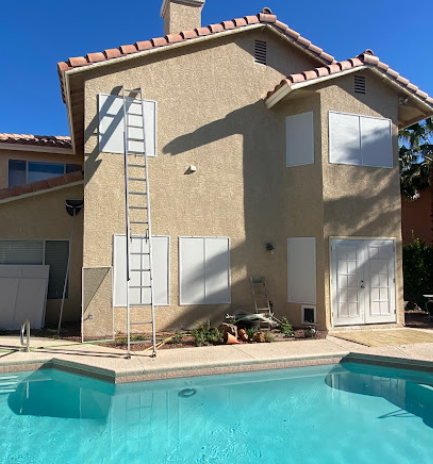
Strong ultraviolet exposure and prolonged heat near the glass can affect fabrics, plastics, coatings, adhesives and motors. West-facing rooms in Summerlin, Spring Valley, Enterprise and Henderson can receive intense afternoon sun. The chosen product should be rated for the exposure and should not be selected solely for its hygiene claim.
Large windows and sliding glass doors are common in newer homes and commercial properties. Oversized shades need correct engineering. A shade that sags, telescopes or jams will be touched more often and may wear prematurely. Proper hardware and installation therefore support both operation and maintenance.
Air-conditioning can create temperature differences near windows. Condensation is less common than in humid climates but can still occur in specific rooms or on inefficient glazing. A window covering should not trap persistent moisture against the glass. Any water intrusion or recurring condensation should be investigated.
HOA communities may regulate exterior solar screens, visible colors and changes to the facade. Properties in The Ridges, Red Rock Country Club, MacDonald Highlands, Anthem and Seven Hills should review current rules before ordering exterior products. Interior treatments may offer more flexibility.
Commercial properties near Downtown Las Vegas, Paradise and Winchester may prioritize storefront glare, customer privacy and daily operation by multiple staff members. A commercial-grade roller system with accessible controls and documented care may be more practical than a delicate residential textile.
Medical offices across Las Vegas and Henderson need privacy as well as maintenance. A transparent solar shade may be unsuitable for a consultation room even if it is easy to clean. A privacy fabric, dual shade or shutter may provide a better combination.
Rental properties in North Las Vegas, Centennial Hills, Skye Canyon and Southern Highlands benefit from products that can withstand repeated turnover. Durable faux-wood blinds, vertical blinds and roller shades are often considered because individual components may be serviceable.
Desert sunlight can fade furniture, flooring and artwork. Antimicrobial treatment does not automatically provide UV protection. Solar performance, openness factor, color and glass type should be evaluated separately.
Local measurement is useful because Las Vegas properties include modern square openings, older uneven frames, deep stucco returns, high clerestory windows and expansive sliding systems. A custom-fit solution can address those conditions more reliably than a standard online size.
Questions to Ask Before Hiring a Window-Covering Company
- What exact problem is the product intended to solve?
- Which component has the antimicrobial treatment?
- What test method and claim are documented?
- Which cleaning products are approved?
- Will sunlight and heat affect the material?
- Does the product provide day and night privacy?
- Is the control cordless, motorized or secured?
- Does the quote include measurement and installation?
- Are removal and disposal included?
- Are electrical services separate?
- Are replacement parts available?
- Will I receive a written estimate and product specification?
Red Flags When Shopping for Antimicrobial Blinds or Shades
- Promises that the product will prevent illness or make a room sterile.
- No technical documentation for the antimicrobial claim.
- No explanation of which component is treated.
- No cleaning or care instructions.
- Claims that cleaning is unnecessary.
- No accurate measurement before ordering custom products.
- Unsupported germ, heat or UV percentages.
- No written product name, material or color.
- Pressure to purchase without comparing alternatives.
- No clear local identity or Google Maps presence.
Why Consider Las Vegas Blinds, Solar Screens & Shutters Window Coverings Center?
Las Vegas Blinds, Solar Screens & Shutters Window Coverings Center is a local option for homeowners and commercial property operators who want to compare custom-fit products instead of relying only on generic online recommendations. The team can help evaluate roller shades, faux-wood blinds, solar screens, plantation shutters, cellular shades, Roman shades, motorized products and other window treatments.
For an antimicrobial or hygiene-focused project, the valuable service is a product-by-product comparison. One room may benefit from smooth composite shutters, while another needs a commercial roller fabric with documented care instructions. Local measurement also accounts for Las Vegas sunlight, heat, dust, large glass areas and HOA conditions.
Call (702) 237-4401, use the contact page, or view the Las Vegas location on Google Maps.
Areas Served From the Las Vegas Location
The business serves customers in Las Vegas and nearby Clark County communities. Service in a neighborhood does not imply a separate office there. Call to discuss current measurement and consultation availability.
Frequently Asked Questions
Do antimicrobial window coverings kill all germs?
No. Claims vary by product, treated material, microorganism and test method. An antimicrobial treatment is not sterilization and does not replace routine cleaning.
What are the easiest window coverings to keep clean?
Flat roller shades with suitable fabrics, wide composite shutters and smooth faux-wood slats are often practical. The correct choice depends on approved cleaning methods and room use.
Are antimicrobial blinds useful in medical offices?
They may be useful when supported by product documentation and combined with cleanable design, safe controls and the facility’s cleaning protocol.
Can antimicrobial shades prevent mold or mildew?
Some treatments may inhibit specified growth on the treated material, but they do not correct water intrusion, condensation or humidity problems.
Are motorized shades more hygienic?
Motorization can reduce touching of fabric, chains and slats. Remotes and wall controls remain contact surfaces that need routine care.
Can antimicrobial coverings also reduce heat and glare?
Possibly, but antimicrobial and solar performance are separate attributes. Heat and glare control depend on material, color, openness factor, mounting, glass and orientation.
How should antimicrobial blinds be cleaned?
Follow the manufacturer’s written care instructions. Avoid bleach, solvents, abrasives or soaking unless the exact material is documented as compatible.
How can I request a Las Vegas consultation?
Call Las Vegas Blinds, Solar Screens & Shutters Window Coverings Center at (702) 237-4401 to ask about current consultation, measurement and installation availability.
Find the Las Vegas Location
3871 S Valley View Blvd #6, Las Vegas, NV 89103. Call before visiting to confirm current availability.
Compare Antimicrobial and Easy-Clean Window Coverings
Call Las Vegas Blinds, Solar Screens & Shutters Window Coverings Center at (702) 237-4401 to discuss custom blinds, shades, shutters or commercial window coverings. Bring the room’s cleaning requirements, privacy goals, sun exposure and maintenance routine into the conversation so the product is selected for real-world use.